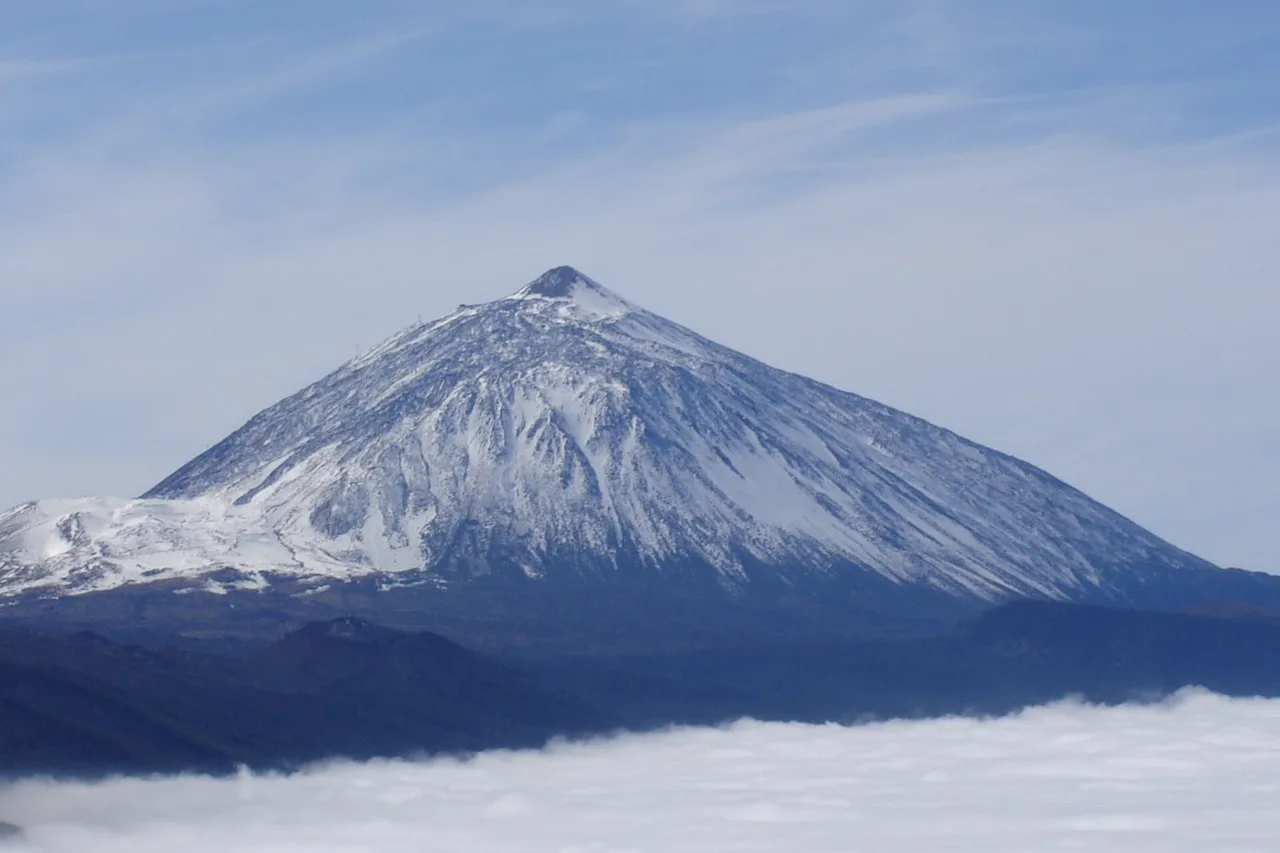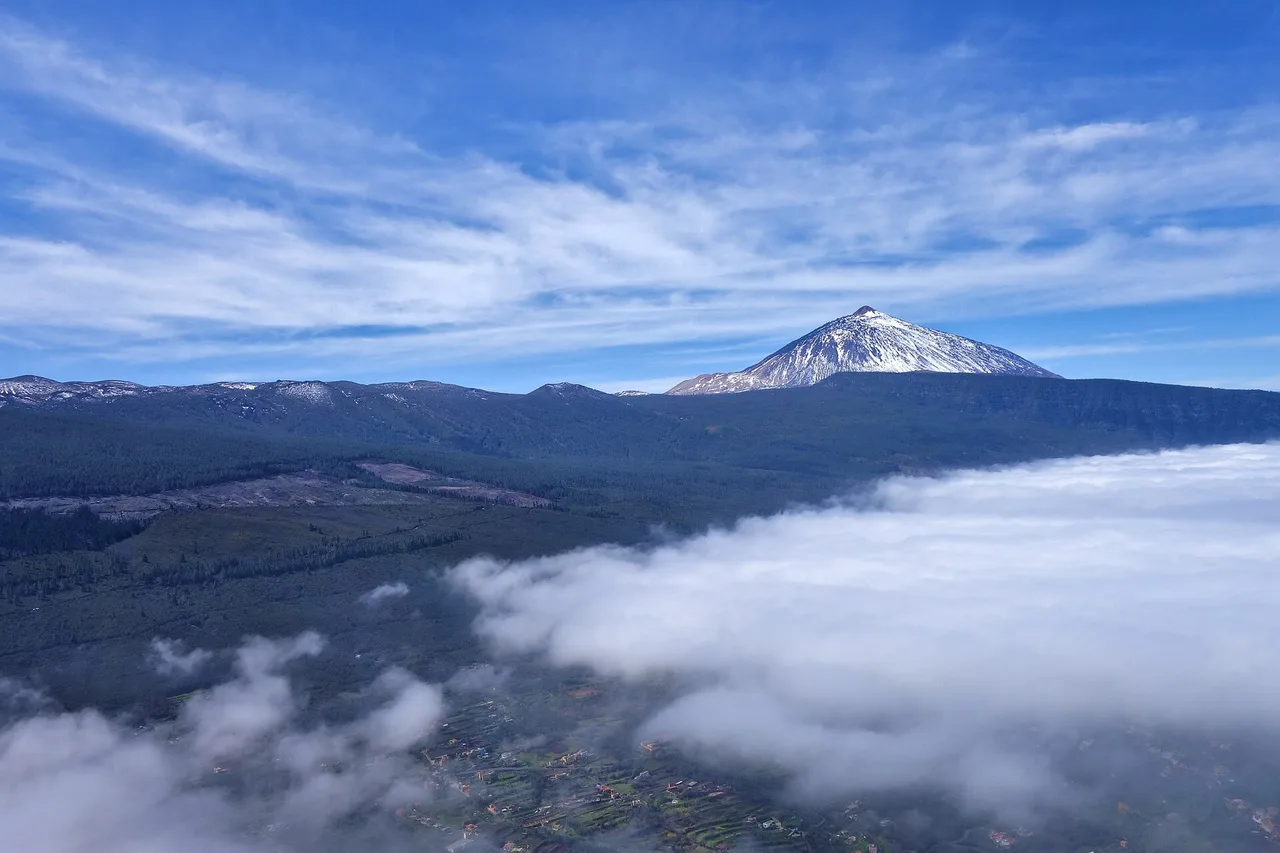
Tenerife has one viewpoint the beach towel never shows: from above. Over Adeje, paragliders launch from the village of Taucho at around 800 m and touch down minutes later beside the Costa Adeje beaches; twenty kilometres east, the trade wind fills the bay of El Médano with windsurf sails and kites almost all year round. This guide covers both, honestly: how a tandem flight works, what booking portals quote for it, where El Médano’s wind belongs to beginners and where to experts — and what surfing in the south is really worth. Facts checked on 20 November 2026.
Two spots, one engine: the trade wind
It is no coincidence that one island is both a paragliding and a windsurfing destination. The trade wind, which reaches Tenerife from the north-east almost all year, leaves the south-west with the calm, thermal conditions paragliders look for above Adeje — and squeezes around the south-eastern tip, where it turns the bay of El Médano into one of Europe’s windiest, most reliable playgrounds.
For trip planning the conclusion is simple: Taucho and El Médano are two faces of the same weather, 25 minutes apart by road. You don’t need luck to experience both — just two free mornings, and the flexibility to follow the wind rather than the calendar.
Taucho: launch at 800 m, land on the beach
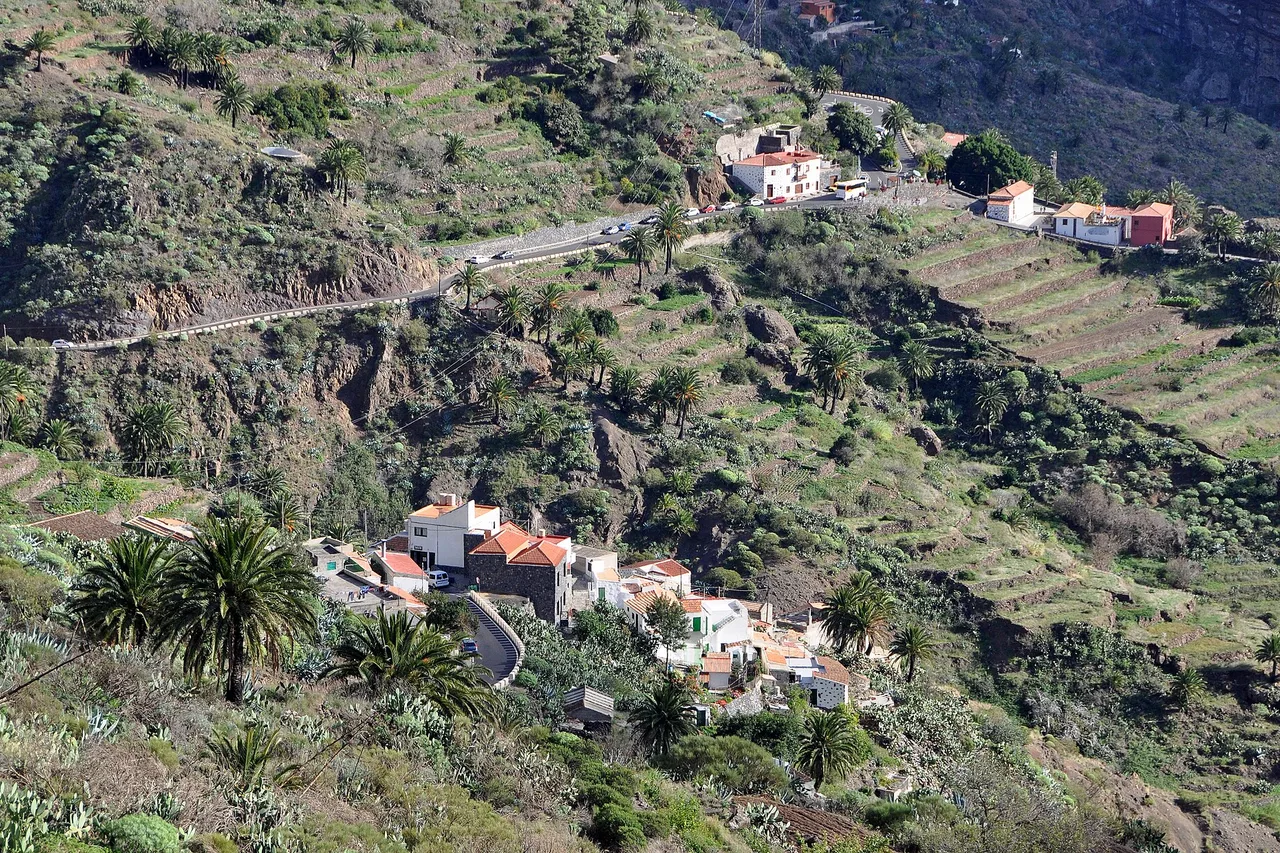
Taucho is a mountain village above Adeje — and the best-known launch site in southern Tenerife. Operators quote a standard take-off at around 800 m; depending on the wind, other ramps between roughly 700 and 1,000 m are used, and Ifonche, at about 1,100 m, serves as the alternative in gentler conditions. Which site it ends up being is decided not by the passenger but by the day’s conditions — a sign of professionalism, not a nuisance.
The flight is plain to describe and extraordinary to live: a few running steps down the slope, and the wing carries — below you the ravines, the white cubes of Adeje, the sea beyond. Depending on the option you stay 15 to 55 minutes in the air before the pilot sets down in the Costa Adeje beach zone, at Playa de la Caleta — in front of the beach-bar terraces, for which the tandems’ arrival is the daily show.
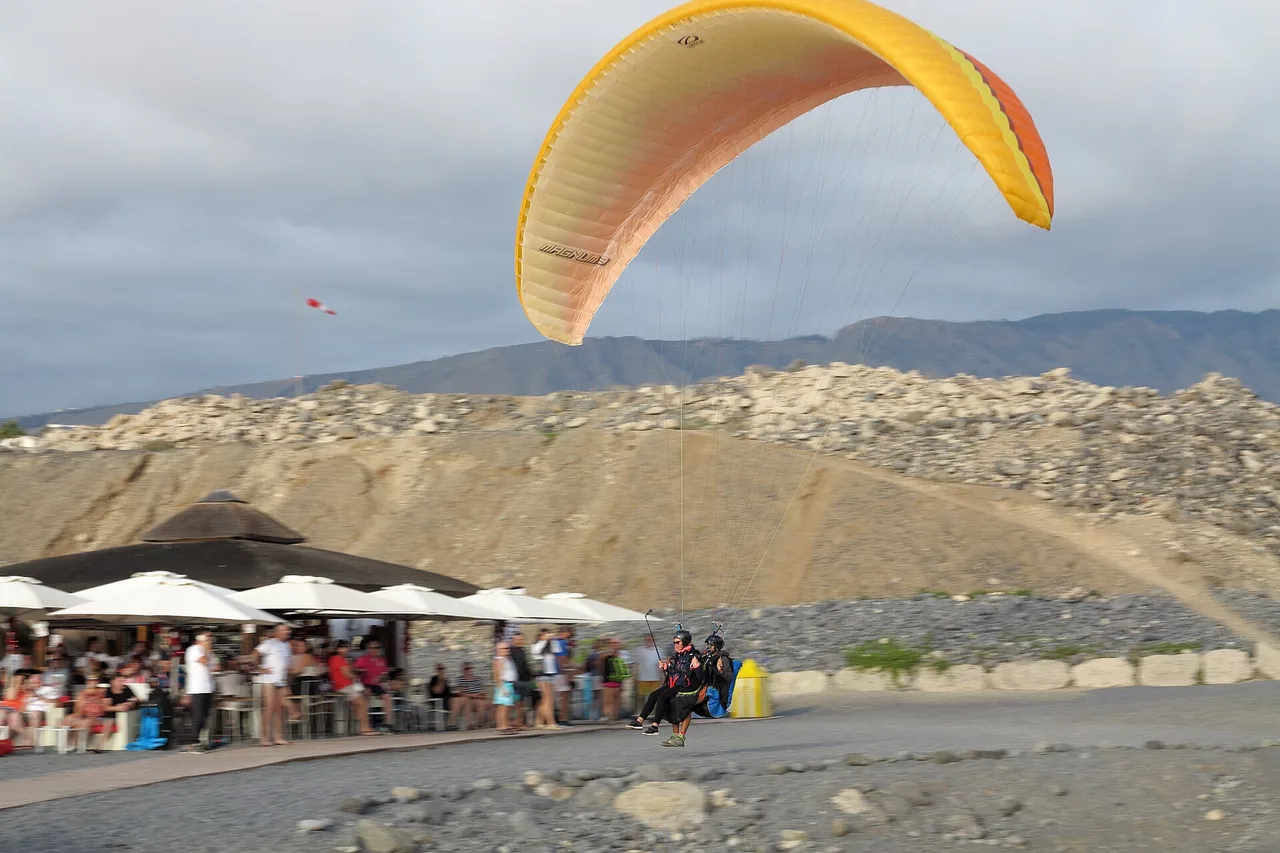
On budget, the honest picture: on booking portals, tandem flights over Taucho were listed at roughly €110–130 on 20 November 2026. These are intermediary prices — the meeting point (often in Adeje or La Caleta, with a shuttle to the launch), exact airtime and photo options are confirmed by the operator.
The flight in practice: weather, timing, honesty
Tenerife flies all year round — but never in all weather. Too much wind, wrong direction, low cloud: the flight is postponed, and that is the most useful rule for your planning. Book the flight early in your stay, not on your last day: a cancellation then simply becomes a new date.
Good to knowFlight prices often rise as departure gets closer: comparing now, and checking nearby dates too, is often enough to bring the bill down.
Compare flightsCompare airlines on AviasalesNo experience is needed: you fly with a licensed tandem pilot, sitting in the harness as in an armchair, with exactly two things to do — run a few steps at take-off, lift your legs for landing. Vertigo, oddly, is weaker in the air than on a ladder: it lacks the visual contact with the ground that triggers it. Bring closed shoes, a windproof layer and sunglasses.
And one point this blog never skips: a serious pilot knows how to say no. One who launches in marginal wind has chosen your schedule over your safety. A postponed flight is not a lost day — the Costa Adeje beach programme starts right below the landing zone.
El Médano: the wind capital of the Canaries
At the other end of the south coast, right next to the South airport, the old fishing town of El Médano has become the Canaries’ great wind arena. The trade wind blows here from east to north-east, almost all year and strongest in summer; the promenade lines up surf, windsurf and kite schools, and there is practically always someone on the water.
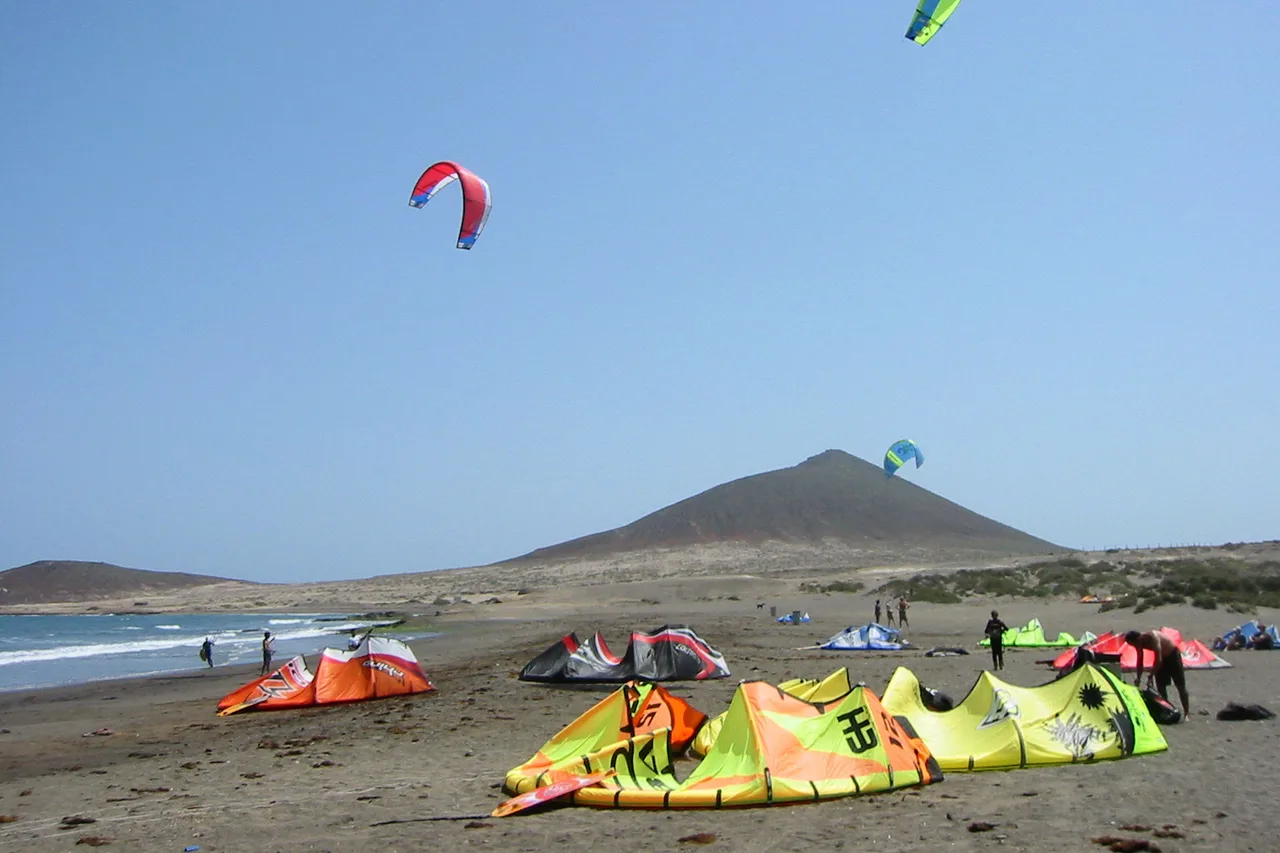
The water here has two clearly separated faces. The bay (La Bahía), in front of the town, is the learning pool: relatively sheltered water, areas where you can stand, schools with equipment — this is where almost everyone starts. El Cabezo, a few hundred metres along, is the exact opposite: a wave spot over rock that belongs to experienced riders — the windsurfing World Cup (PWA) holds wave rounds there. The line between the two is not a formality: ignore it and it introduces itself.
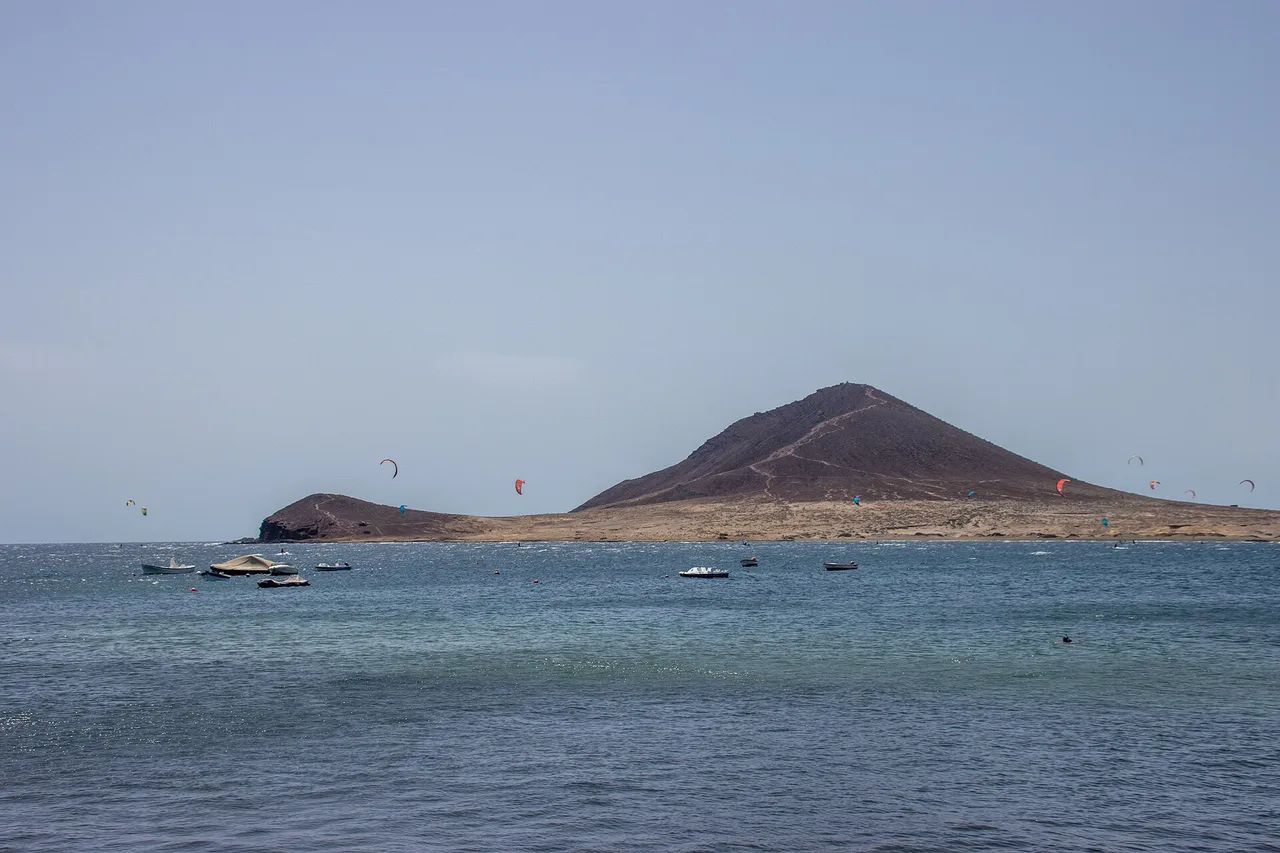
Even without a board the place earns the stop: the promenade is the island’s best grandstand, and El Médano has kept — unlike the resorts further west — the character of a Canarian town. To know when the wind is most reliable and what that means for your dates, see our guide to the best time to visit Tenerife.
La Tejita and Montaña Roja: wind inside a nature reserve
Behind the red volcanic cone of Montaña Roja stretches La Tejita, one of Tenerife’s longest natural beaches — wide sand, no buildings, and a dedicated kite zone with side-onshore wind. The whole sector belongs to the Montaña Roja nature reserve: cars stay away, nobody drives down to the sand.
Good to knowIn high season, cars get booked up fast and prices rise as the dates approach. Comparing local rental companies before you go lets you lock in the car and the rate in Tenerife, with deposit and insurance shown upfront.
Rent a car in TenerifeCompare rental companies on Discover CarsFull guide: Renting a Car in Tenerife: Pitfalls and Smart Tips
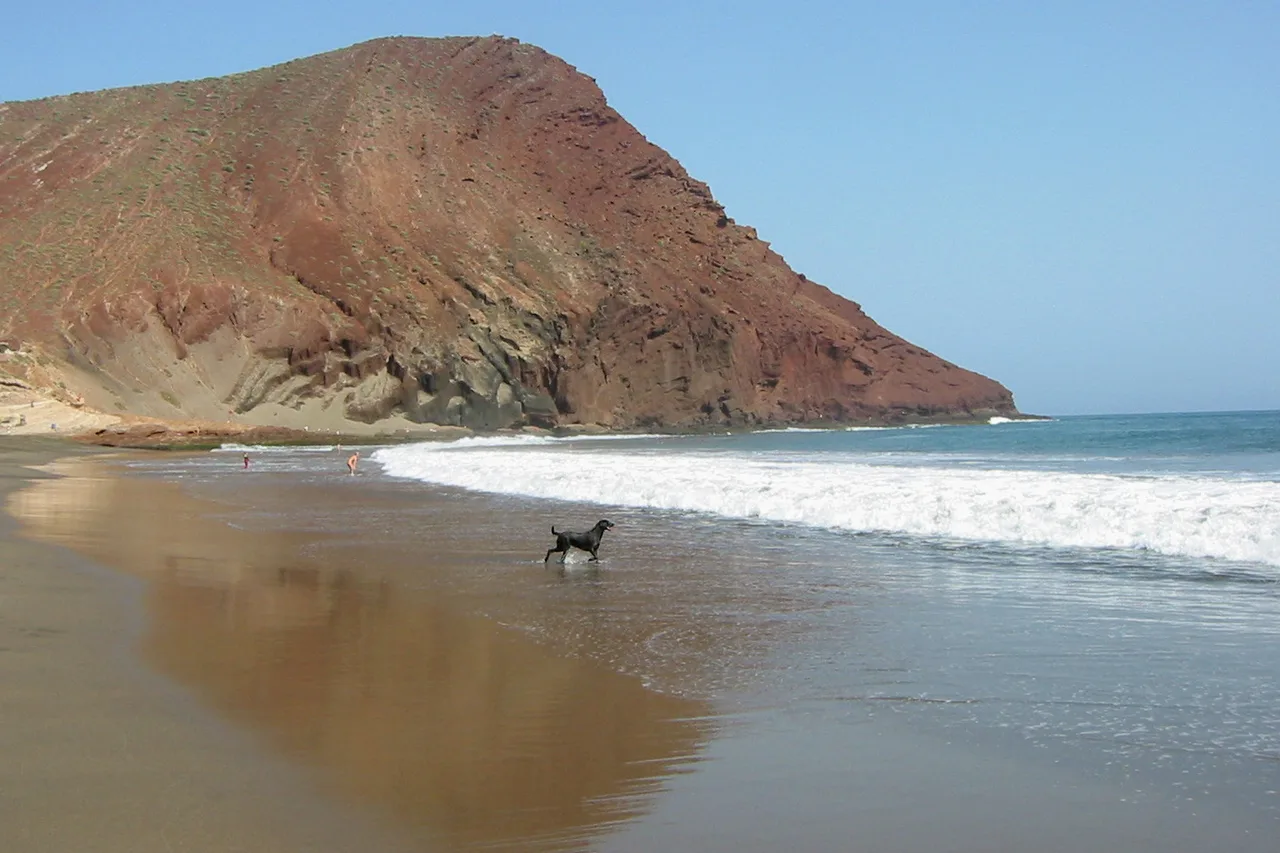
From El Médano, La Tejita is a 15–20 minute walk along the coastal path around Montaña Roja — one of the south’s loveliest short walks, especially in late afternoon. In exchange: keep off the dunes and vegetation, carry your litter out, and don’t underestimate the sand-blasting effect on strong days — La Tejita can be a harsh beach when the wind is up. The full context is in our guide to Tenerife’s best beaches.
And the surf? The south, honestly
Tenerife is a surf island — but with a hierarchy. The most consistent waves run on the north and west coasts, and in winter the Atlantic swell there belongs to the experienced. The south is the learning pool: El Médano has schools in town — lessons were listed from about €24 for 2.5 hours on portals on 20 November 2026 — and when a southern swell arrives, La Machacona offers a wave for accomplished surfers.
The island’s big teaching hub remains Playa de las Américas: mellow beach breaks, plenty of schools and camps, equipment on site. Frankly put: you learn here in one of Europe’s most forgiving playgrounds — the spectacular waves are elsewhere. To shape the rest of the trip, our 7-day itinerary draws the route; and if you come in the cooler season, read Tenerife in winter first.
Finally, the rules this blog writes every time: several beaches are not continuously lifeguarded, the Atlantic has currents, and a red flag means nobody in the water — not even up to the ankles. The wind that makes El Médano a paradise pushes inflatables and beginners’ boards out to sea faster than you can swim. Respecting those two sentences is the whole difference between a superb day and a shortened one.