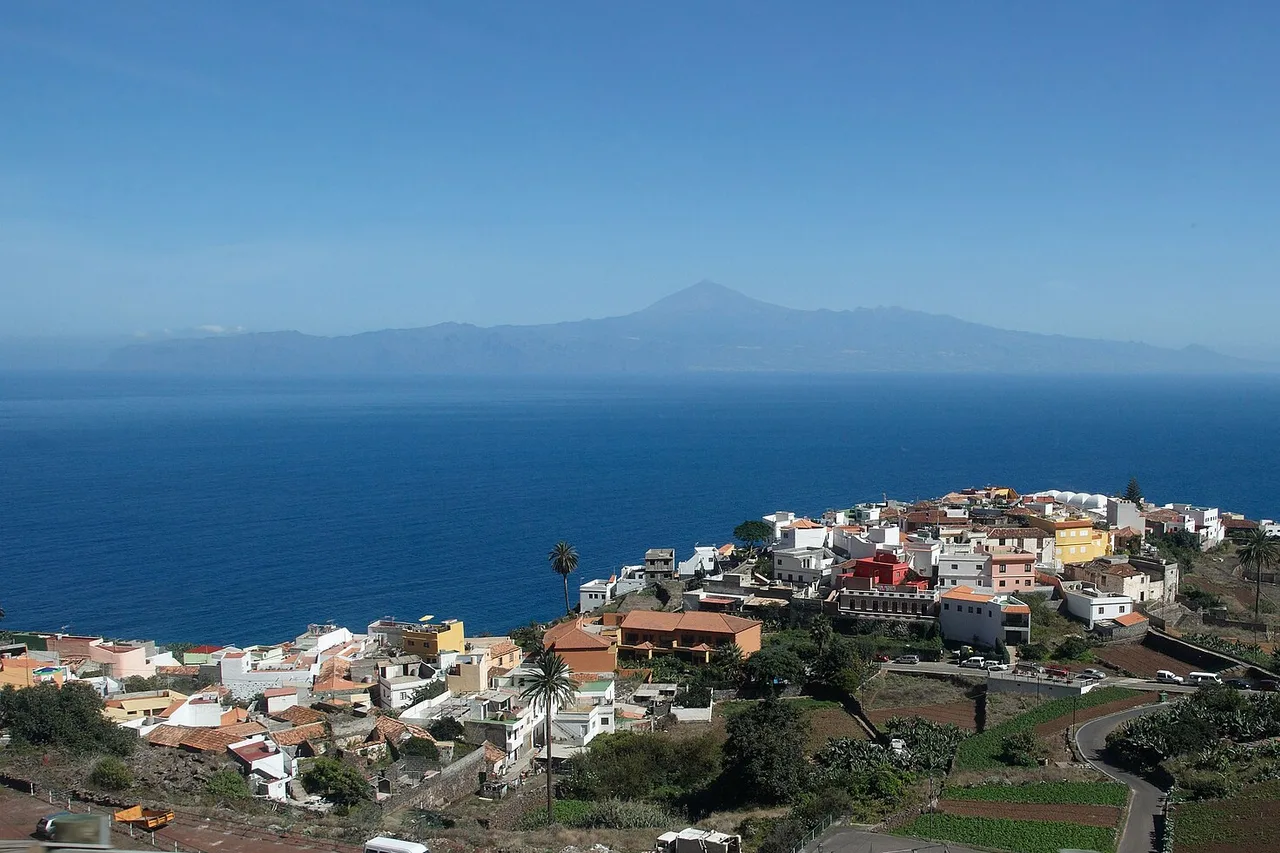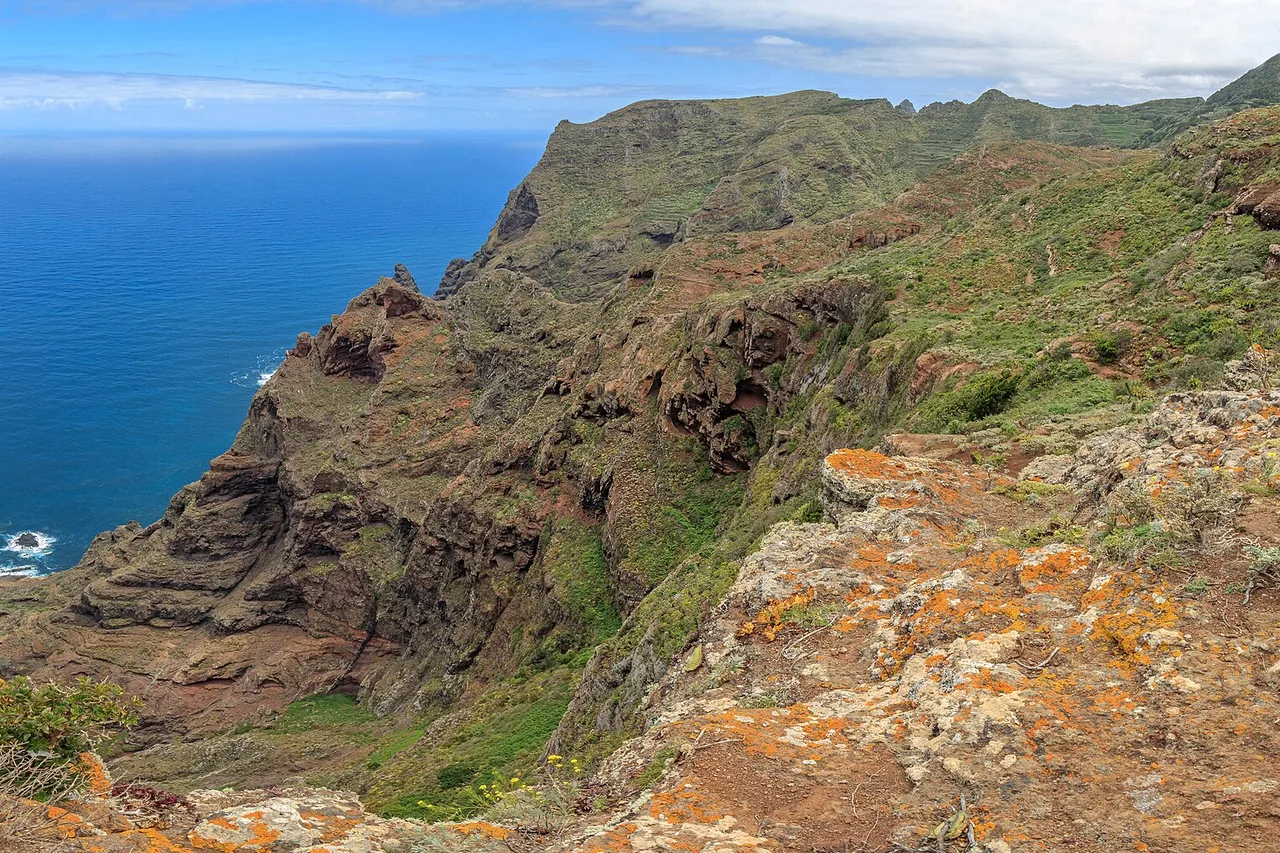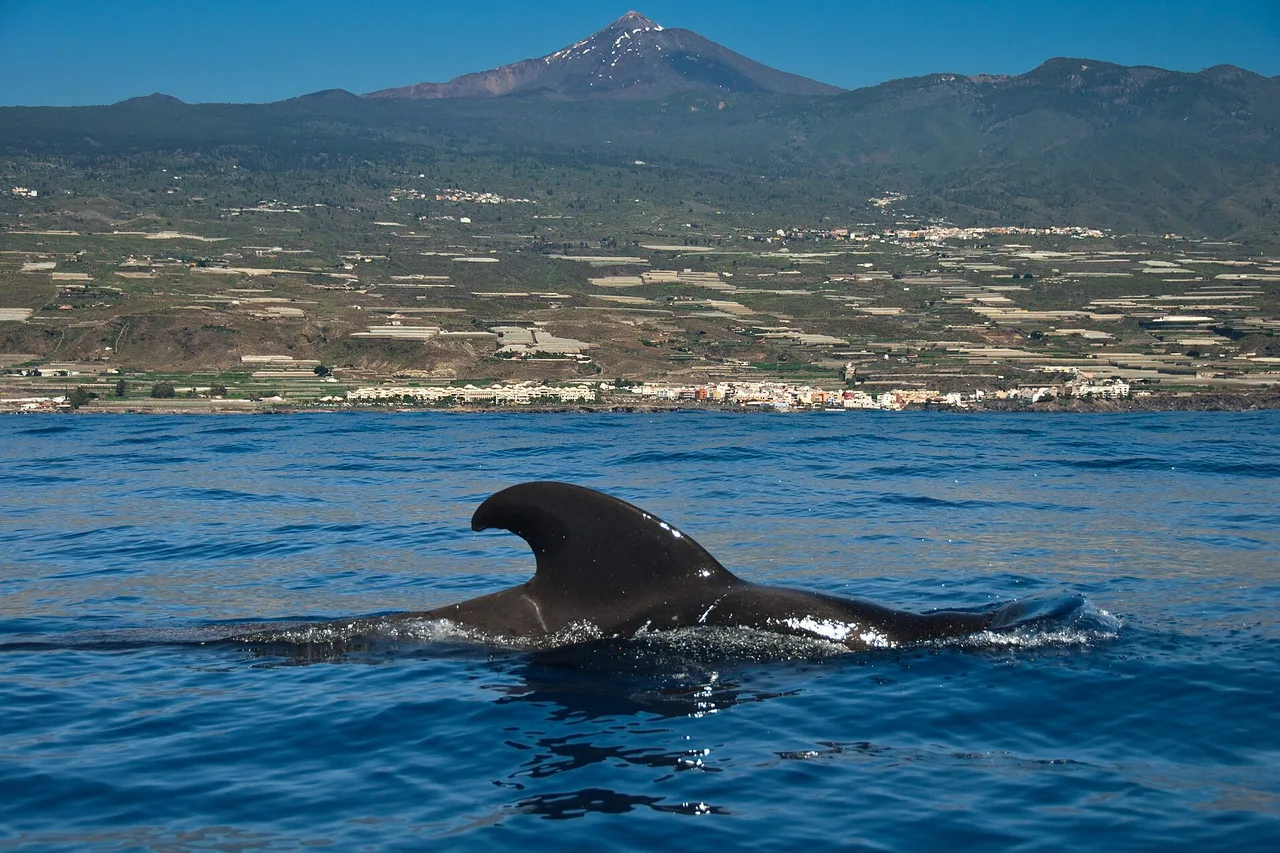
There are very few places in Europe where you can see whales every single day of the year. Tenerife is one of them. Twenty minutes' sailing off the south-west coast live several hundred short-finned pilot whales — round-headed "pilot whales" — that never migrate: they are here in January and in August alike, alongside equally settled bottlenose dolphins. That rarity earned the strip of ocean between Teno and Rasca the title of Europe's first Whale Heritage Site. It also draws crowds, not always for the better. Here is how to do this boat trip properly — the real one, the one that respects the 60 metres — without picking the wrong boat.
A sanctuary twenty minutes offshore
Everything happens in the Teno-Rasca marine strip, a band of ocean of roughly 69,500 hectares running along the island's south-west coast from Teno Point to Rasca Point, off five municipalities (Buenavista del Norte, Santiago del Teide, Guía de Isora, Adeje and Arona). The seabed drops away fast: the squid the pilot whales feed on live only a few kilometres from shore, and that deep-water larder is what keeps the animals here permanently. The strip has been a Special Area of Conservation (Europe's Natura 2000 network) since 2011, and in January 2021 the World Cetacean Alliance declared it Europe's first Whale Heritage Site — a label reserved for places where cetacean watching is done responsibly. More than 20 cetacean species have been recorded here, from Atlantic spotted dolphins to sperm whales, plus the loggerhead turtles that cruise the surface.
The residents: pilot whales and bottlenose dolphins
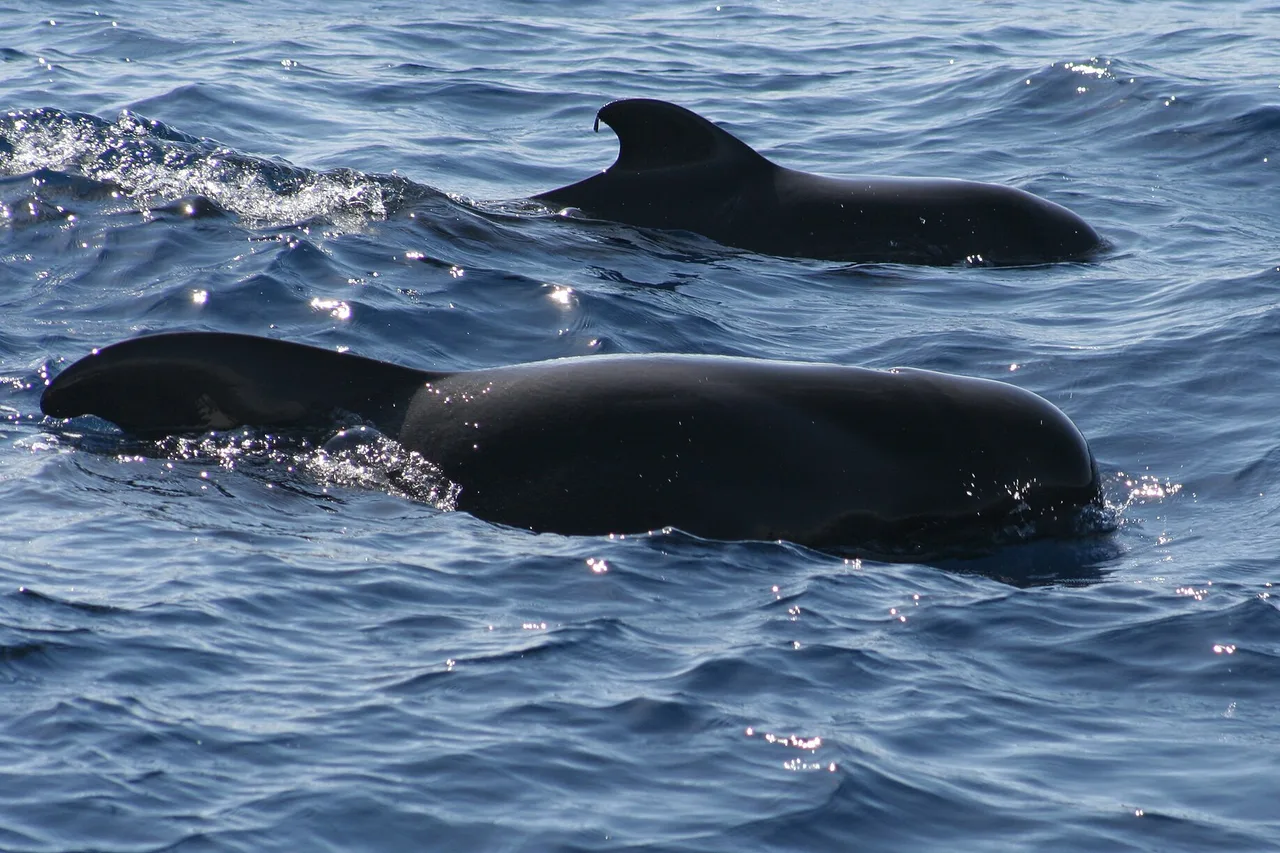
The local star is the calderón tropical — the short-finned pilot whale, Globicephala macrorhynchus. Technically a very large dolphin, socially a whale: matriarchal family pods, males four to five metres long, a bulbous forehead you cannot mistake. The resident population off south-west Tenerife numbers between 200 and 300 individuals depending on the count — the largest in Europe, and one of very few in the world that can be watched close to shore every day of the year. By day the pods rest at the surface between night-time hunts: you will see them "logging", motionless, fins aligned — and that rest is exactly what must be respected. Bottlenose dolphins (Tursiops truncatus) share the same patch of ocean in resident groups, more playful, often curious about boats. These two species are the backbone of every trip: sightings are never guaranteed — it is the sea — but operators report success rates above 90%.
Which season should you choose?
The honest answer: any of them. The pilot whales and bottlenose dolphins never leave, which is precisely what sets Tenerife apart from whale destinations with a season. What changes with the calendar is the passing traffic: from winter to spring, Canarian waters see common dolphins, Atlantic spotted dolphins and rorquals move through — and occasionally a sperm whale out where the seabed plunges. What also changes is the state of the sea: summer brings the calmest water and the best visibility, winter a few windy days — though the south-west coast remains the most sheltered on the island, screened from the trade winds by the mountains. If you are still weighing up when to travel at all, our guide to the best time to visit Tenerife covers the island's microclimates; for the boat trip itself, one flat-calm morning beats a "perfect" month on paper.
Where to sail from: Puerto Colón, Los Cristianos, Los Gigantes
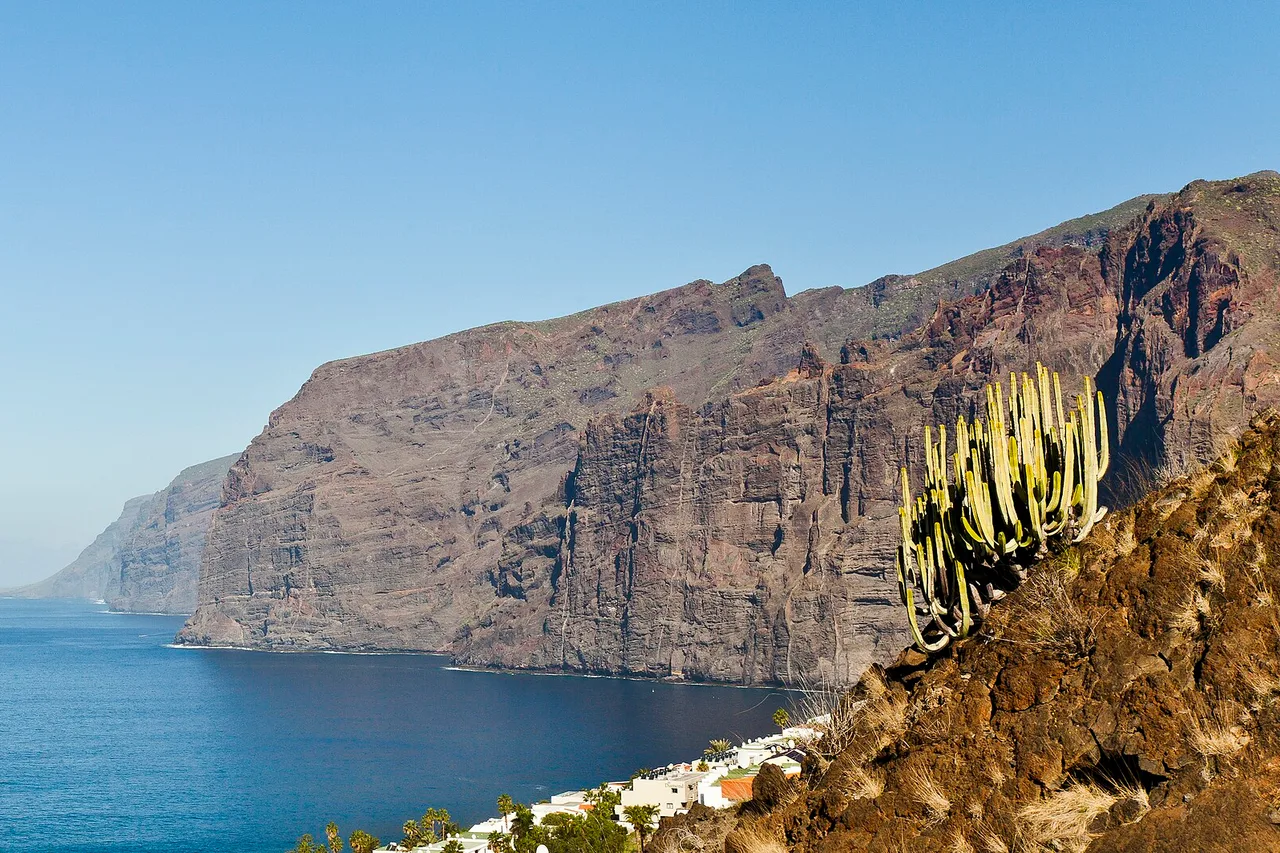
Three ports handle most departures, all in the south-west, facing the protected strip. Puerto Colón (Costa Adeje) and Los Cristianos offer the widest choice, from big cruising catamarans to small-group RIBs; the animals are often met two or three miles off the harbour mouth — which is why two-hour trips genuinely suffice. Los Gigantes, further north, adds scenery: trips run beneath cliffs several hundred metres high that drop straight into the ocean, and the port sits closest to the heart of the Teno-Rasca strip. A few departures also leave from Playa San Juan, halfway between. Pick your port mainly by where you are staying: our guide to things to do in Tenerife places these marinas in the island's geography, and the trip pairs naturally with the nearby coast covered in our beach guide.
Which boat, at what price?
Prices checked in August 2026 give a reliable range: expect €30-40 per adult for two hours on a catamaran or schooner from Puerto Colón or Los Cristianos, €50-60 for two to three hours on a small-group RIB, and around €80 for a half-day sailing trip with food and a swim stop — private charters start at roughly €350. The price buys two things that matter: group size (a 200-seat catamaran and a 10-seat RIB do not tell the same story) and the quality of the guiding — the best companies carry a guide or marine biologist who identifies individuals and explains what you are seeing. Beware of offers that promise too much: swimming among the animals does not legally exist here, and a "guaranteed show" is a warning sign, not a selling point.
The rules of the game: 60 metres, 30 minutes, a yellow flag
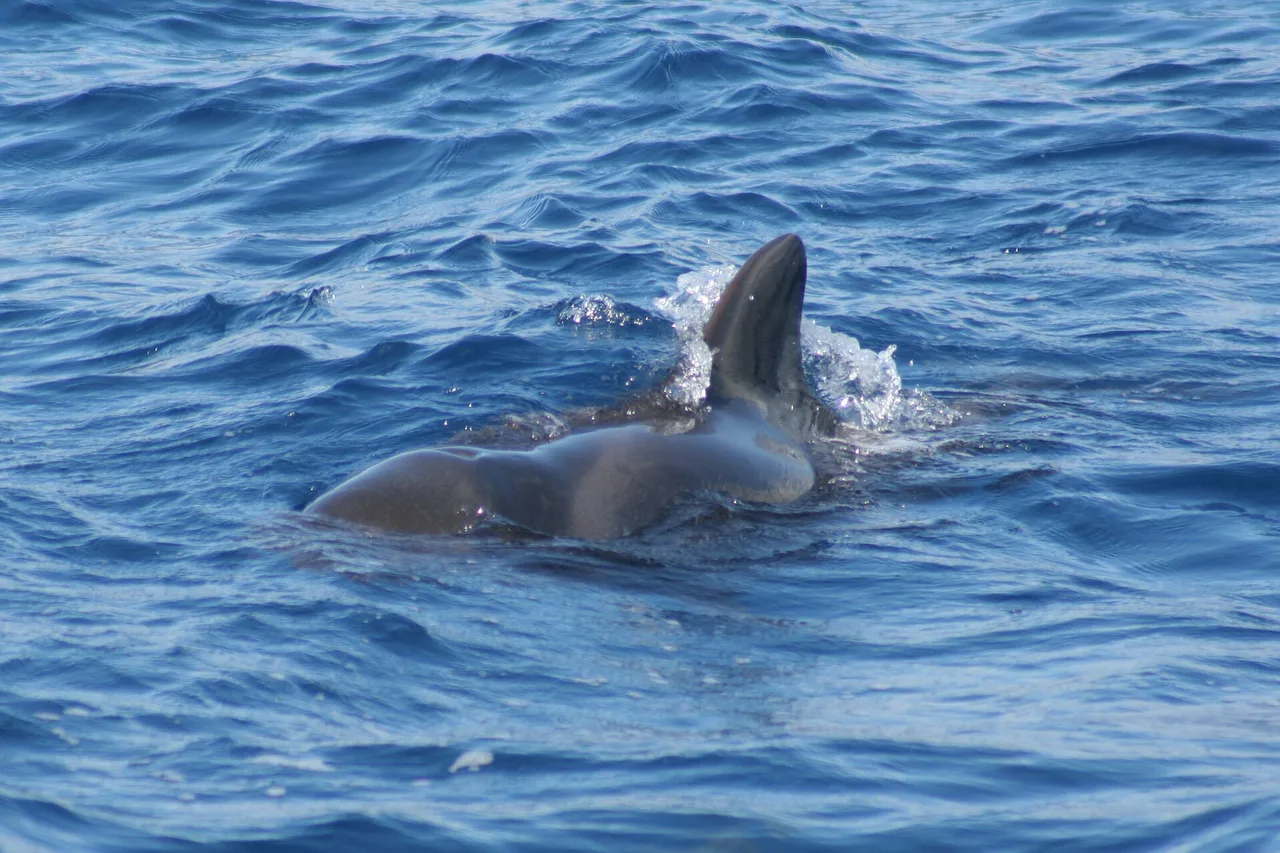
Cetacean watching in Spain is governed by a 2007 royal decree, and Canarian waters are where it is most closely enforced. The rules come down to a few numbers: never approach within 60 metres of the animals (the "exclusion zone"; if a dolphin itself chooses to ride the bow, the boat disengages its propeller), 30 minutes of observation maximum per group, slow speeds, never cut across the animals' path, and leave the area at the first sign of disturbance. Swimming with cetaceans, feeding them or touching them is forbidden — not discouraged: forbidden. Authorised boats are recognisable by the yellow "Barco Azul / Blue Boat" flag, stamped with a blue boat and the validity period of the licence: checking for it on the quay, ticket in hand, should be your first reflex before boarding. And if you ever find an injured or stranded animal, one number: 112.
Watching without harming (and getting more out of it)
It needs saying because it is true: the activity's success weighs on the animals. Studies in the area have documented chronic stress in the resident pilot whales, and in 2023 Spain's ministry for ecological transition froze all new whale-watching licences in the Teno-Rasca strip — a moratorium still in force, while jet-skis and hurried pleasure boats remain the real blind spot of enforcement. Your power is simple and real: choose the right boat. Yellow flag checked, sensible group size, a two-hour trip rather than a marathon, a company that talks about the "chance" of sightings rather than a "guarantee": each of those choices funds the respectful version of the activity. On board, three local reflexes: go in the morning (calmer sea, low light, fewer boats queuing around the pods); take a seasickness tablet an hour before if you are prone — the Atlantic swell exists even in fine weather; and leave the binoculars in the bag for the first minutes, the show plays out to the naked eye. Where does it fit in a one-week itinerary? The morning of your west-coast day, before Masca or the cliffs — that is where it turns a good day into a memorable one.