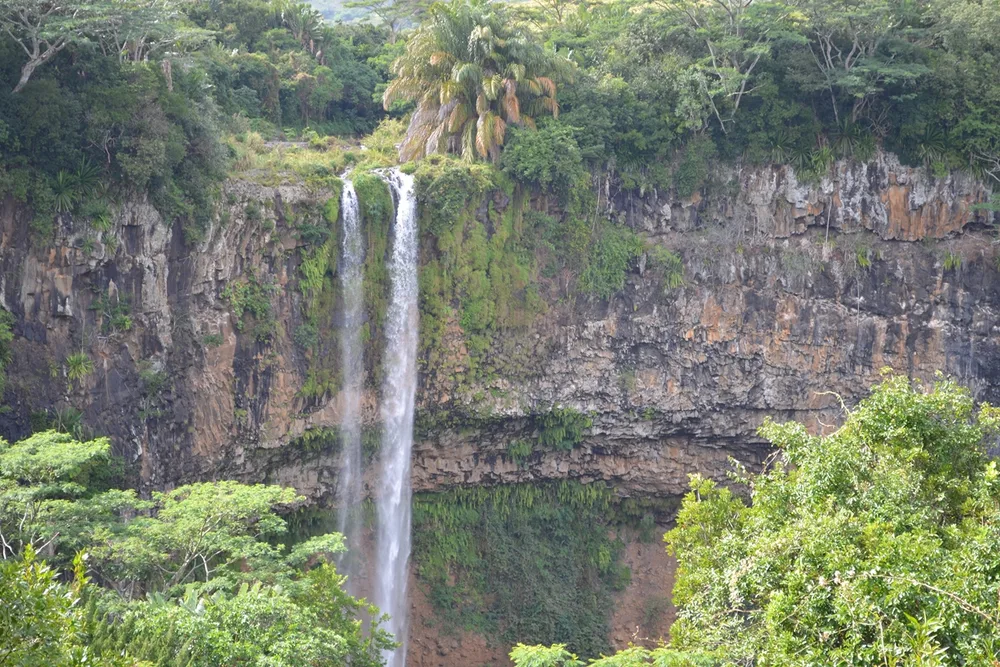
Grand Baie, 8 pm. At the next table, someone mentions a waterfall “near Chamarel” and a market “in Mahé-something”. You keep a piece of the name, not the spelling, and certainly not where it is. I live in Mauritius and I built this app; the magnifying glass at the top of the screen is the tool I use most, precisely for names caught in passing. Three letters are enough, accents are optional, and the place’s page opens with its spot on the map. Here is how it goes, screen by screen.
The real problem: a name, and nothing around it
In Mauritius, names travel by word of mouth: a driver, a waiter, a sign glimpsed from the road. What is missing is everything else. Is it a beach, a restaurant, a hike? Which region? Is it open tomorrow morning?
Scrolling through every list in the app to find a single place takes time. That is what the search is for: you type what you have, and the app does the rest.
What I did, screen by screen
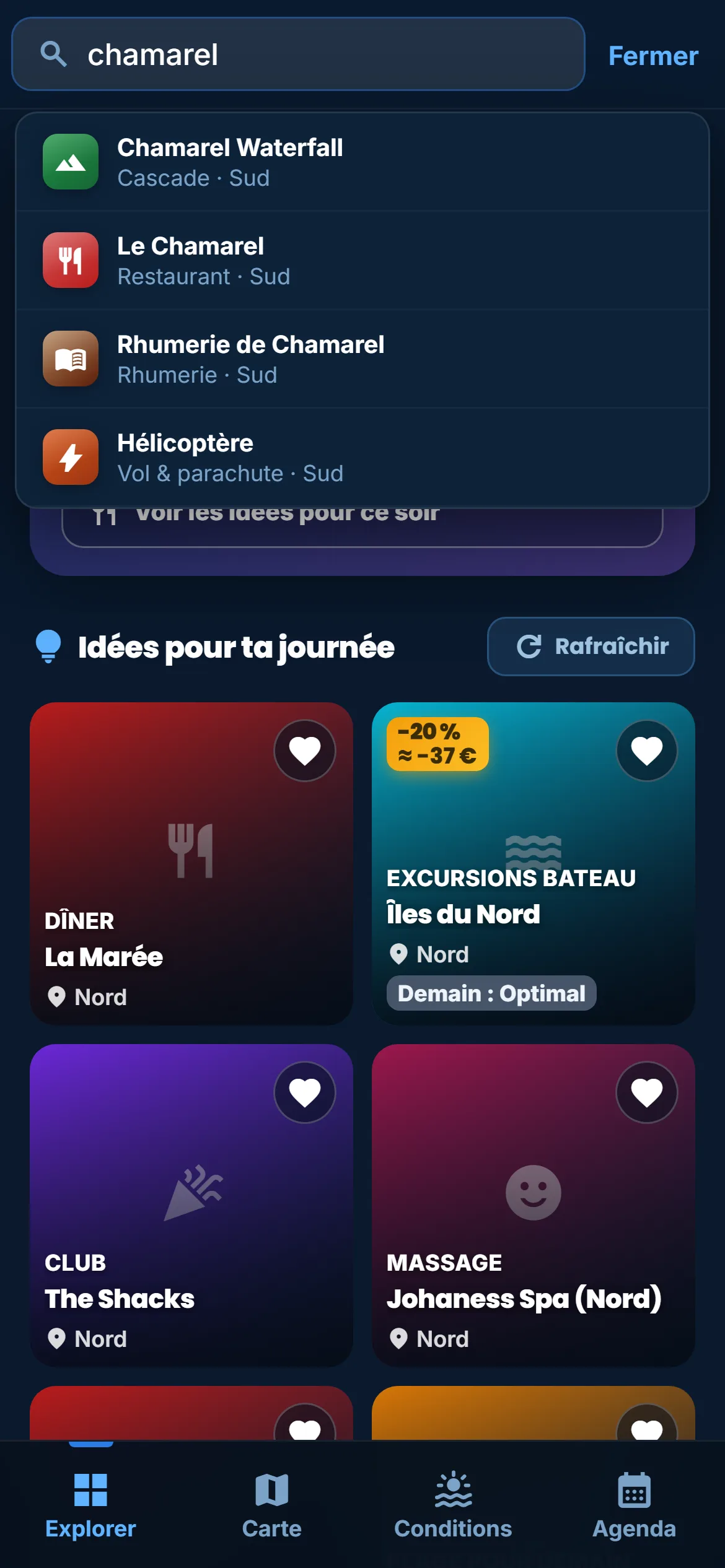
On the evening of Tuesday 3 November, I ran these searches again for this article. The screenshots come from the app itself.
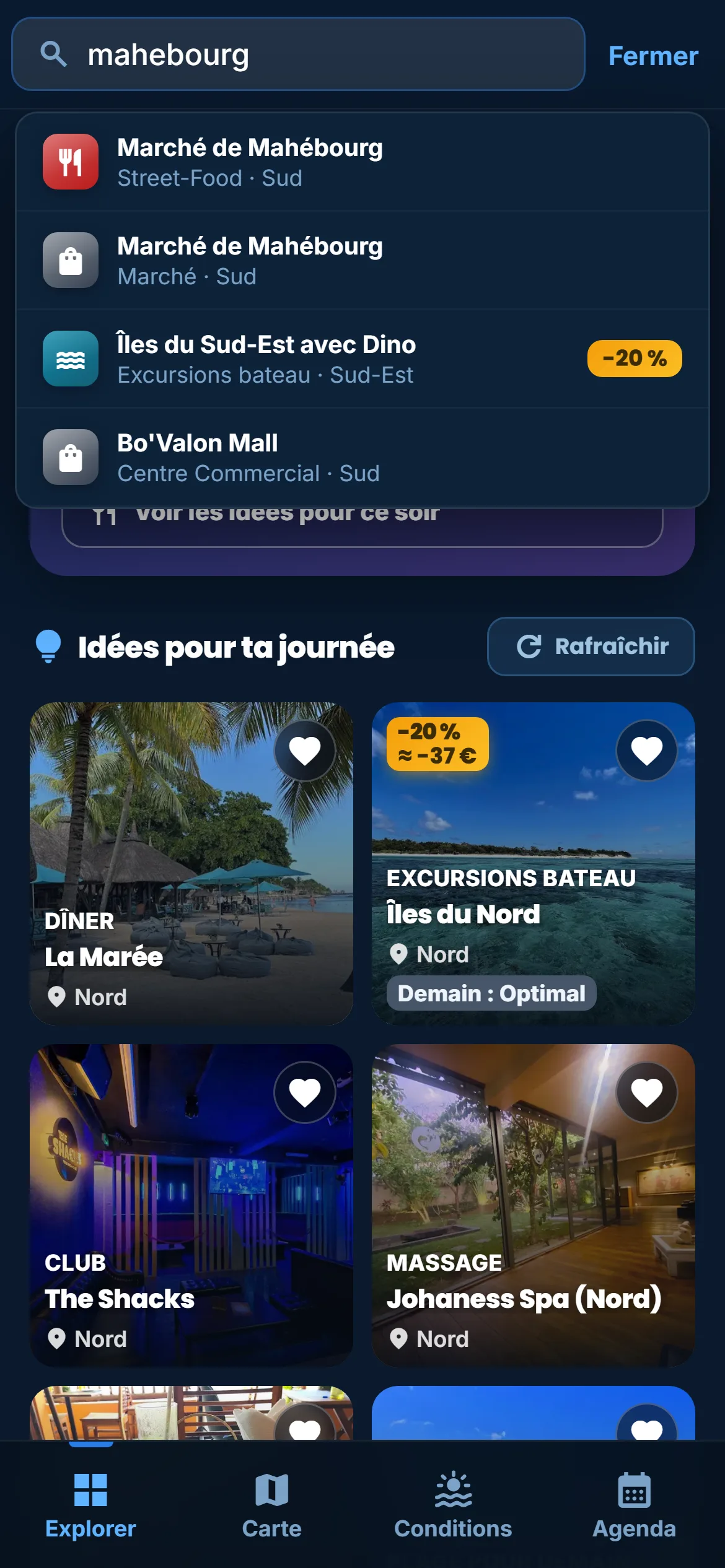
A name, even incomplete. On a phone, the magnifying glass sits at the top right. One tap and the search bar takes the full width, with a “Close” button. Results appear as you type, with nothing to confirm. Places whose name starts with what you type come first.
Without accents. Nobody hunts for accents on a phone keyboard. I typed “mahebourg” without the “é”: the app finds Mahébourg. Capitals and accents do not matter.
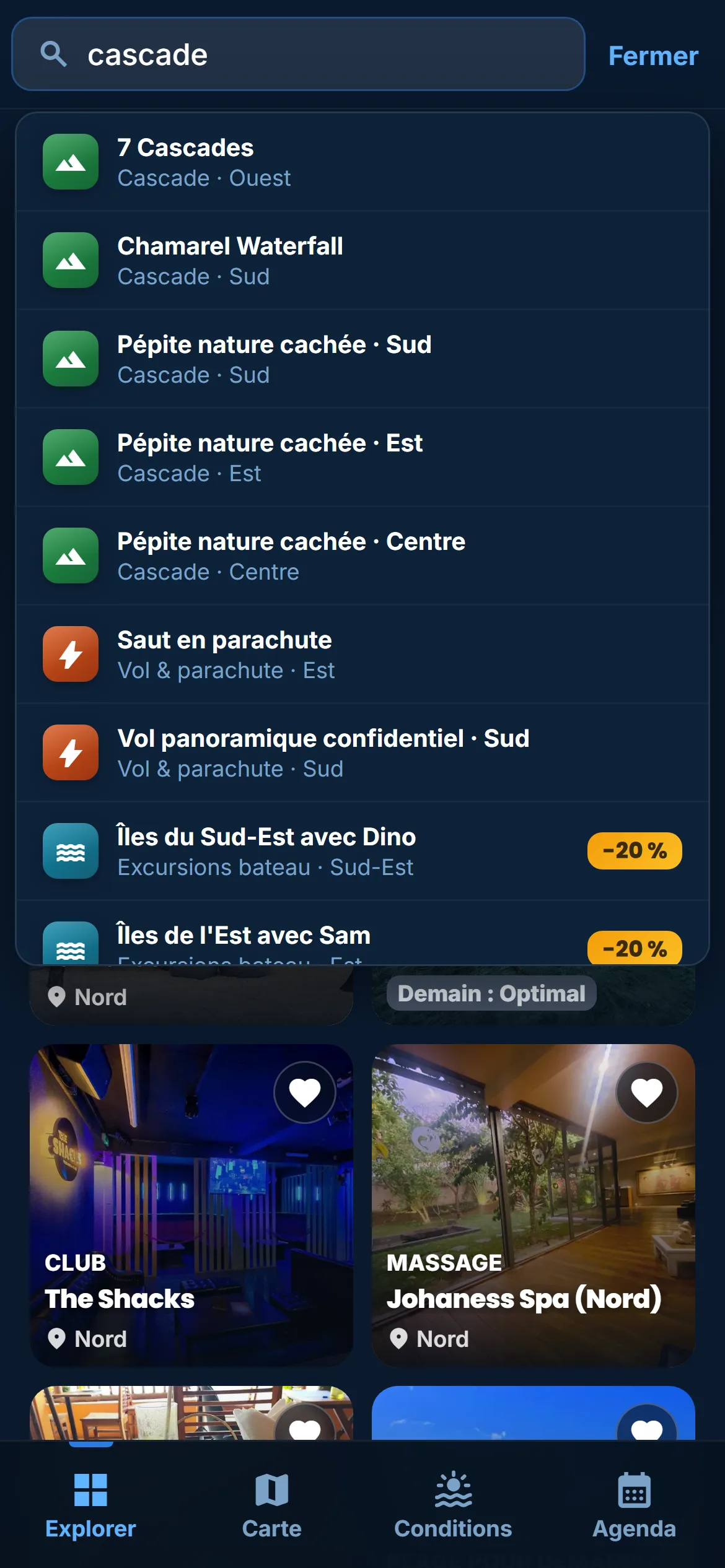
A wish instead of a name. You can also type what you want to do. With “cascade” – French for waterfall – the app lists the waterfalls across the island, then related outings. It also understands everyday French words such as “resto”, “plage” (beach) or “rando” (hike).
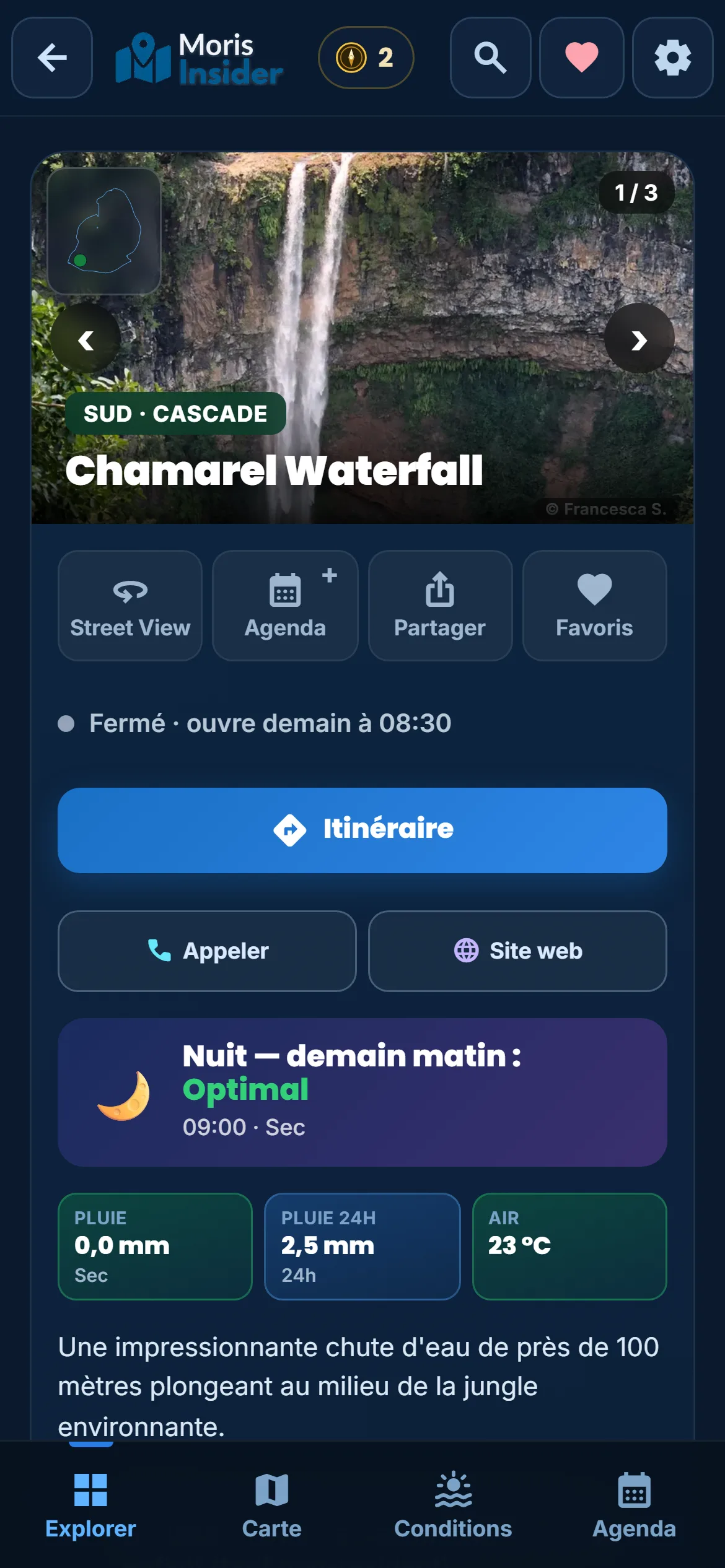
One tap on a result opens its page: photos, today’s opening hours, current conditions, a Directions button, and a way to save it to your favourites or add it to your week’s plan.
What it is, what it allows, what it changes
What it is. A search that reads each place’s name, but also its category, region and description, and ignores accents and capitals. With several words, each one has to match: “plage nord” keeps only the beaches in the north.
What it allows. Going from a name you heard to a full page in a few seconds, without knowing where the place is filed in the app. The ranking puts the name first: a partner of the app is never placed ahead of a better result; it only breaks a tie between two equal places.
What it changes. You keep the tip instead of forgetting it. The name dropped at dinner becomes, before dessert, a page with opening hours, region and tomorrow’s conditions, and one tap adds it to your plan.
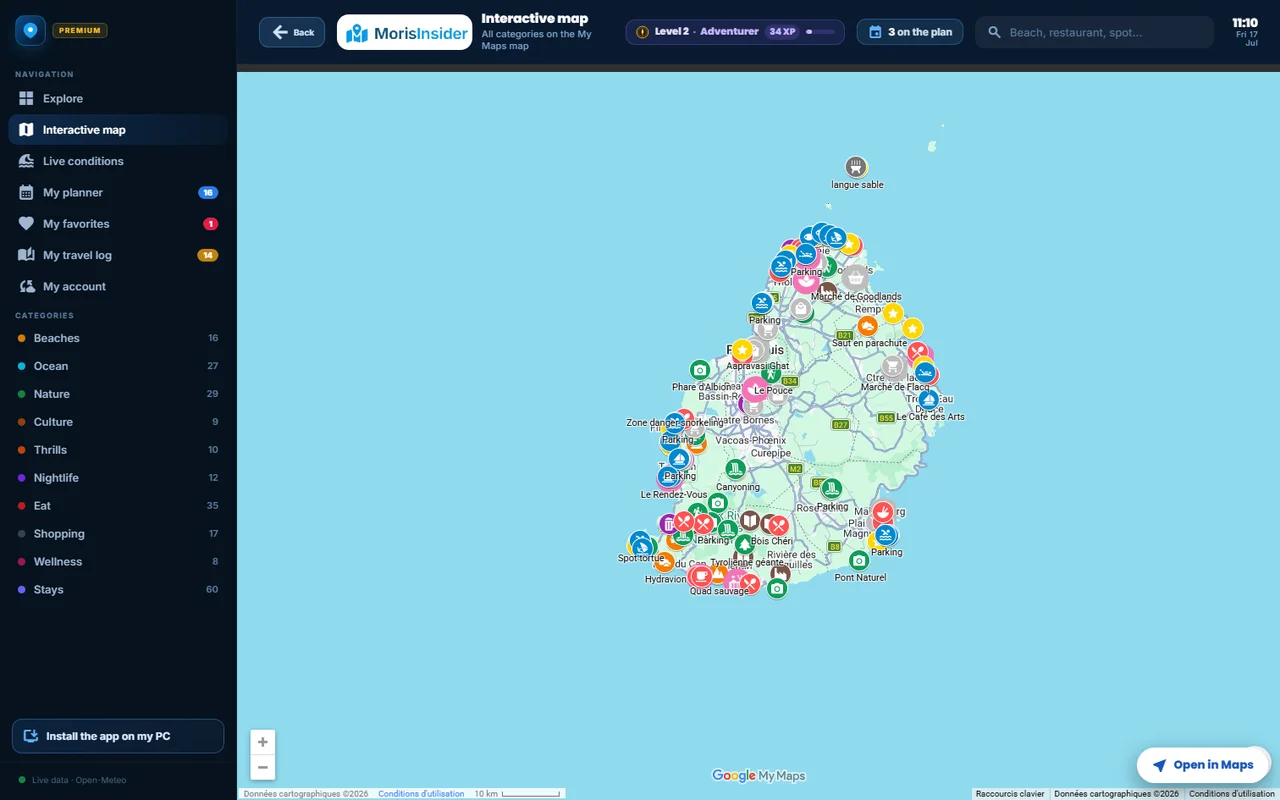
What the search does not do
It only searches inside the app. It does not search the internet: a place the app does not know will not come up. It shows about a dozen results at most, so a vague word (“sud”, south) gives a short list, not the whole south.
It does not find the secret coves by their real name until you have unlocked them. That is deliberate: their name stays hidden until the end, and your travel journal keeps them once found.
It understands keywords in French. Words like “plage”, “resto” or “cascade” are recognised in French; English words such as “beach” are not reliably understood. The safest is to type the name of the place or the region.
For everything else, three letters and the magnifying glass are enough. A good day on the island often starts exactly like that: with a name heard the night before.
€24.90 once, for life · 30-day money-back guarantee