A mask, a snorkel, your face in the water — and the Mauritius lagoon turns into a life-size aquarium. But what exactly is that fish? This guide introduces the species you’ll meet most often while snorkeling, from the striped sergeant major to the anemonefish that exists nowhere else — plus the creatures you admire without touching, the finest lagoons and the rules in the water. All facts checked on 22 November 2026. The beaches and spots are all among the island’s 224 addresses, sorted by category.
Budget tip: in Mauritius, some activities can cost less. See how to save with discounts.
The lagoon: an aquarium at fin height
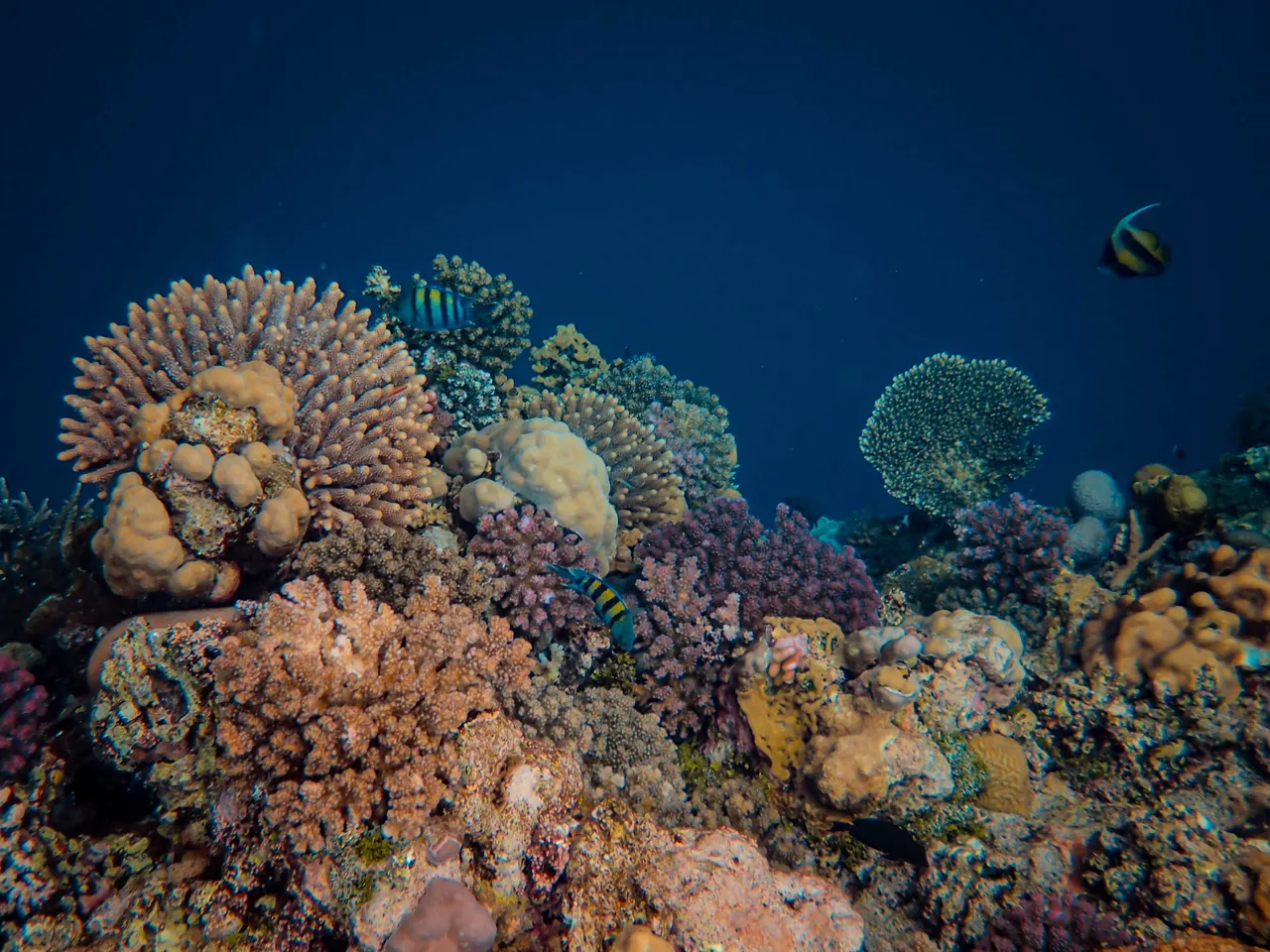
Mauritius is almost entirely ringed by a coral reef. Between the reef and the beach lies the lagoon: shallow, sheltered, often glass-clear — which is exactly why the island is such an easy snorkeling playground. No boat, no diving licence: on many beaches the show starts a few fin strokes from the shore, around the coral heads everyone here calls “patates”.
Mauritian waters are home to several hundred fish species. You don’t need to know them all: with half a dozen familiar faces, the joyful colourful chaos becomes a meeting with acquaintances. That is exactly what this guide is for.
The species you’ll recognise at first glance
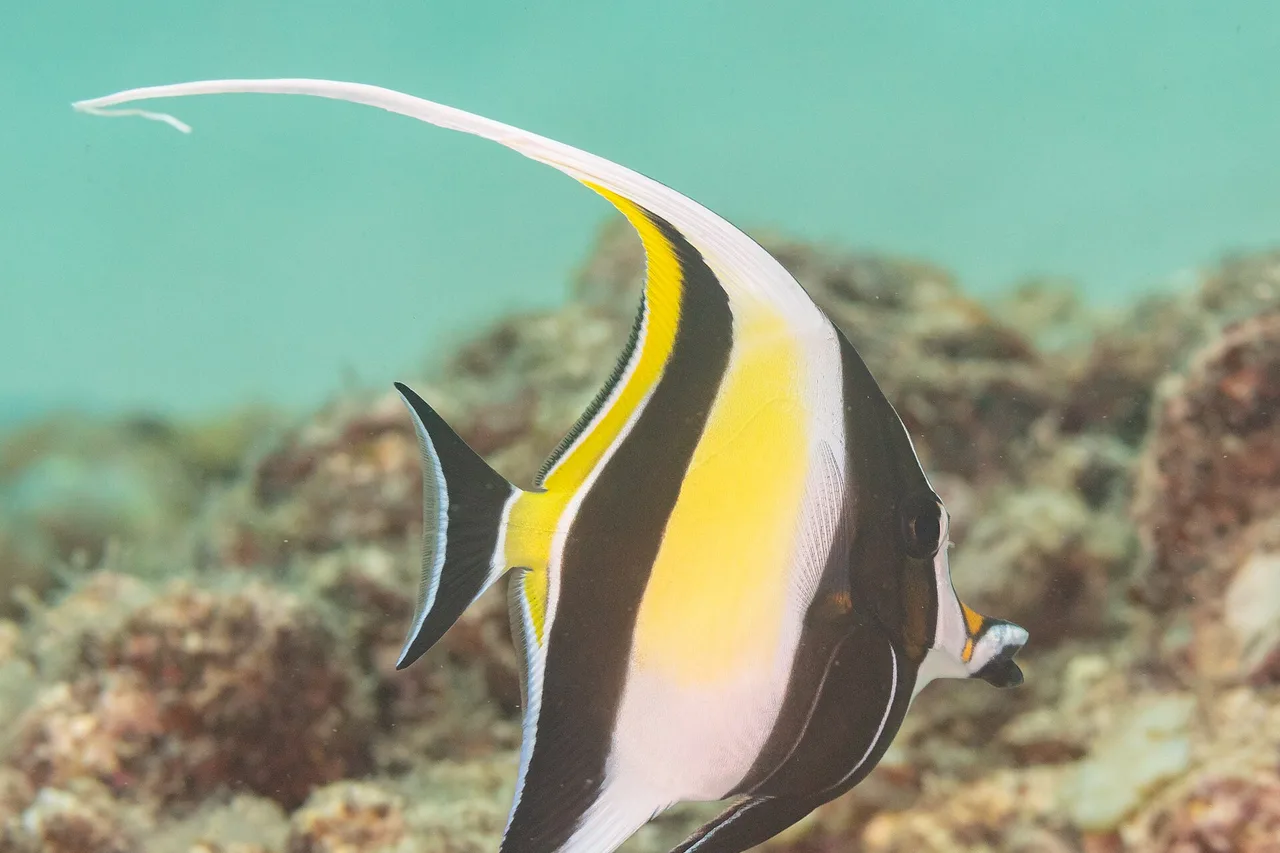
The Moorish idol (Zanclus cornutus) is the star of the photo at the top of this article: a black, white and yellow disc trailing a long dorsal streamer, often seen in pairs. It glides between the corals with regal composure and is surprisingly unbothered by snorkelers.
Butterflyfish (Chaetodon) are the butterflies of the reef: palm-sized, patterned in yellow and white, almost always in twos. Where butterflyfish swim, the reef is usually in better shape — they are considered good indicators.
The sergeant major (Abudefduf) owes its name to the dark vertical bars on its silver-and-yellow body, like stripes on a uniform. It is snorkeling’s most loyal companion: curious, in schools, glued to the coral heads.
Parrotfish — “cateau”, as Mauritians say — are recognised by their beak and their colours, from turquoise to rust. You can even hear them: that crunching sound underwater is their beak scraping algae off the coral. In passing they produce fine sand — part of the white beach where you spread your towel has been through a parrotfish.
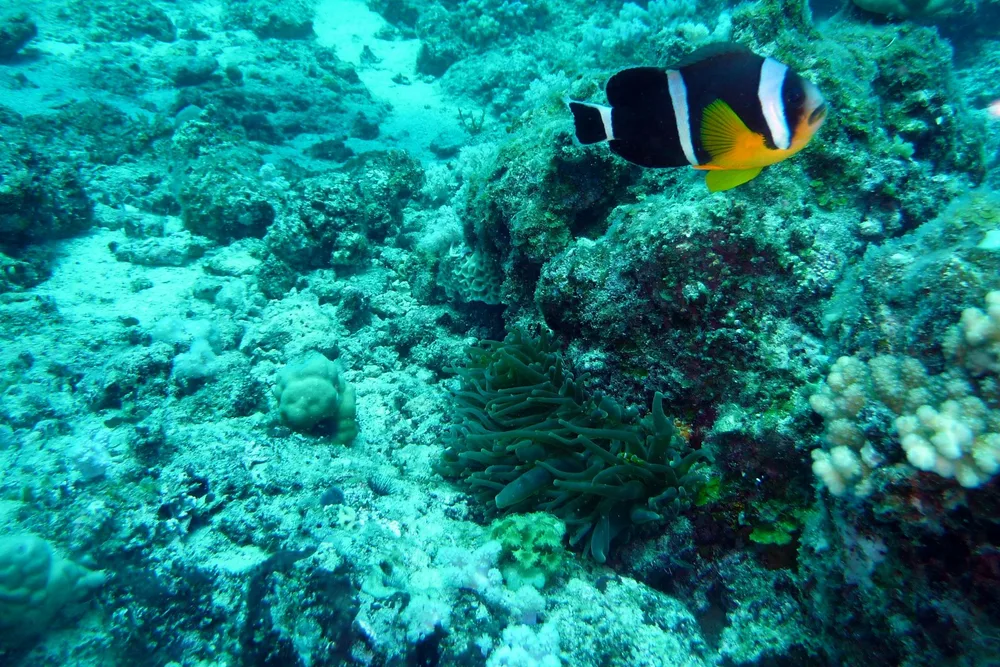
And then there is the clownfish that exists only here: the Mauritian anemonefish (Amphiprion chrysogaster), endemic to Mauritius and probably Réunion. Darker than the cartoon clownfish, nearly black, with three white bars and an orange snout, up to about fourteen centimetres. It never strays far from its anemone — if you spot a large one, stop for a minute and watch without moving. The anemone itself is never to be touched.
Add the regulars: damselfish in every shade of blue, wrasses such as the slender cigar wrasse, the long thin trumpetfish “hiding” vertically among coral branches, and silvery schools in open water above the sand.
Look, don’t touch: stonefish & co.
The reassuring news first: no fish in the lagoon attacks people. The few real risks come from contact — and two habits remove almost all of them: wear closed water shoes, and never touch anything underwater.
The name to remember is the stonefish, “laf labou” in Creole: a master of camouflage lying on the bottom, looking like an algae-covered rock. Step on it barefoot and you meet its venomous dorsal spines. Prevention is mundane: closed shoes, never set foot on coral or rocky blocks, slide your feet rather than lifting them in shallow water. If stung: get out of the water immediately, immerse the area in hot water at about 45 degrees (without scalding yourself — the venom is heat-sensitive) for 30 to 90 minutes, disinfect, and see a doctor promptly, even once the pain fades.
The lionfish is the stonefish’s opposite: flamboyant, striped, with fan-like fins — and venomous spines too. It is slow and peaceful; it becomes dangerous only to those who touch it or reach into a crevice. Sea urchins are far more common and far less serious: their spines break off in the skin and get infected easily — the same shoes solve that problem as well. Moray eels look fearsome but stay in their holes; simply never put a hand into cavities. And if a large triggerfish swims towards you instead of away, it is probably guarding its nest: swim away horizontally, give it room, done.
Currents, reef passes and coasts without a lagoon are covered in detail in our guide Swimming and snorkeling in Mauritius: the real risks.
And the turtles? The law comes first
Yes, with a little luck a green turtle will cross your path — in the North it happens regularly. But a rule applies here that many tour sellers keep quiet about: the Fisheries Act 2023 forbids swimming with sea turtles for recreational purposes, chasing, touching or feeding them — with fines of up to 25 million rupees and up to two years in prison. The ministry restated it publicly on 23 March 2026: commercial “swim with turtles” outings are illegal. A chance encounter while snorkeling is allowed: you watch the turtle pass, keep your distance and leave it a clear path to the surface. Species, places, giant tortoises on land — it is all in our turtle guide.
Where to see them: the lagoons that matter
The classic is the Blue Bay Marine Park in the south-east: a protected area since 1997, 353 hectares, listed since 2008 as a Ramsar wetland. The inner bay grows the coral gardens above which butterflyfish, parrotfish and wrasses hover; glass-bottom boats head out from the shore, and snorkeling works straight off the beach. The calmer you swim, the more you see.
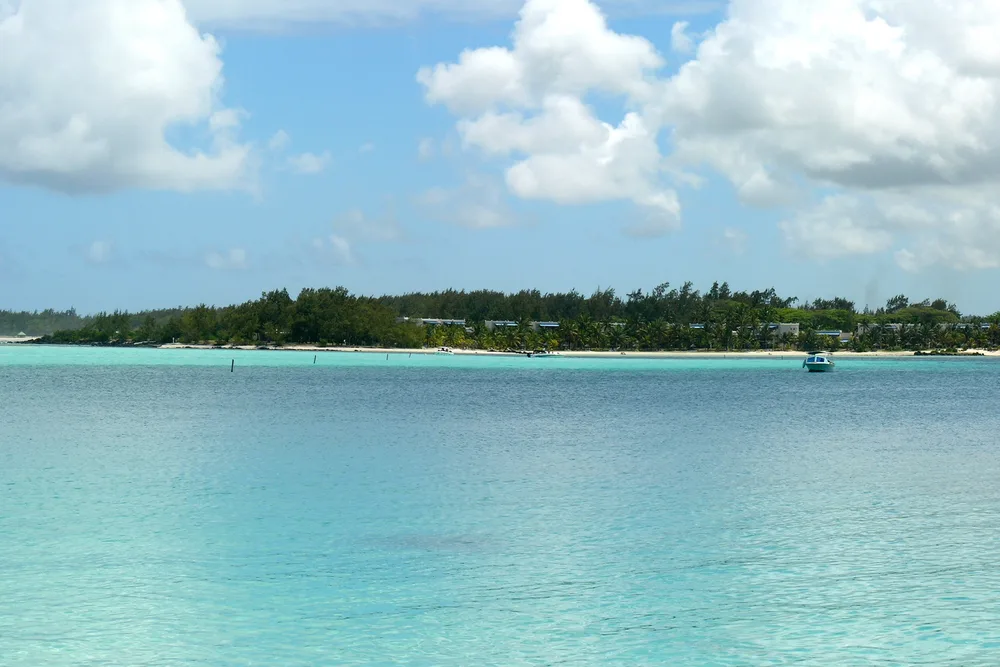
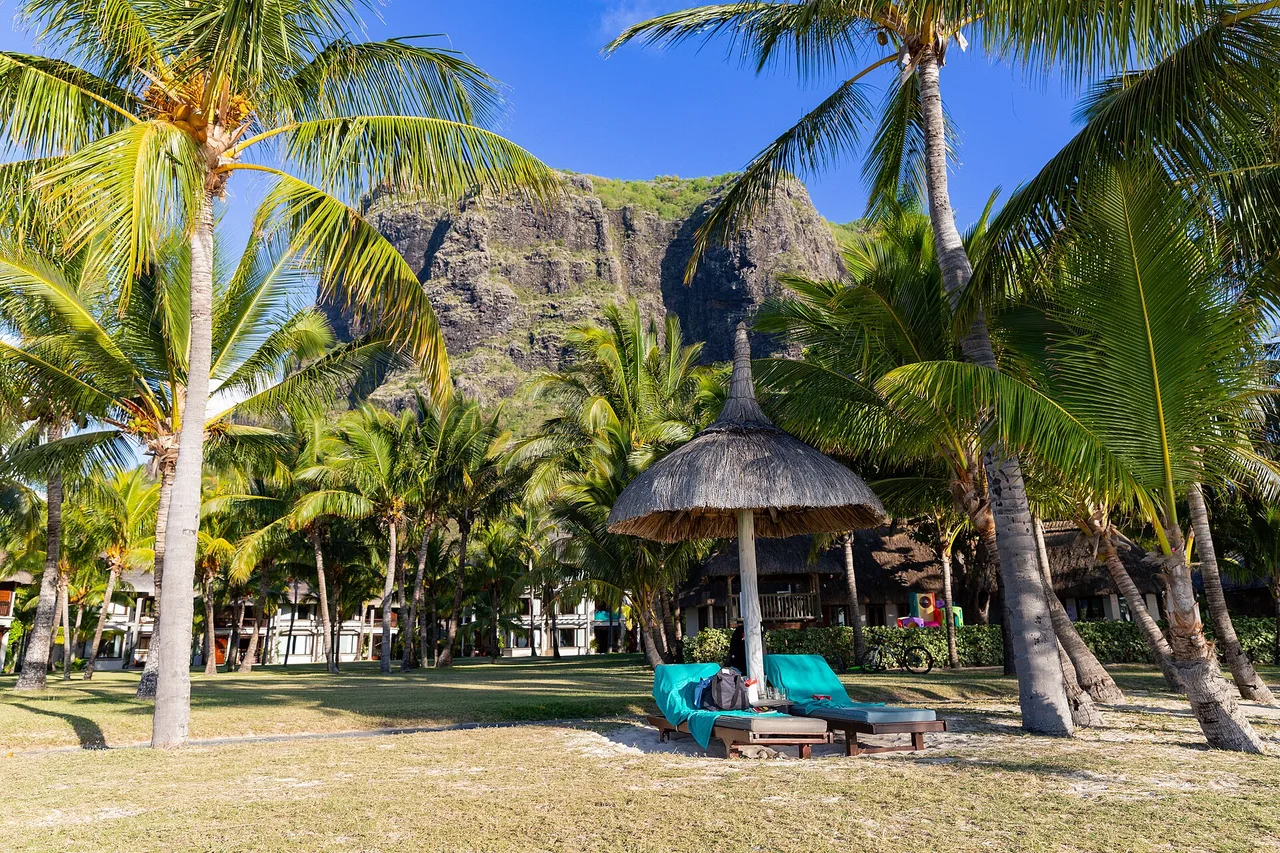
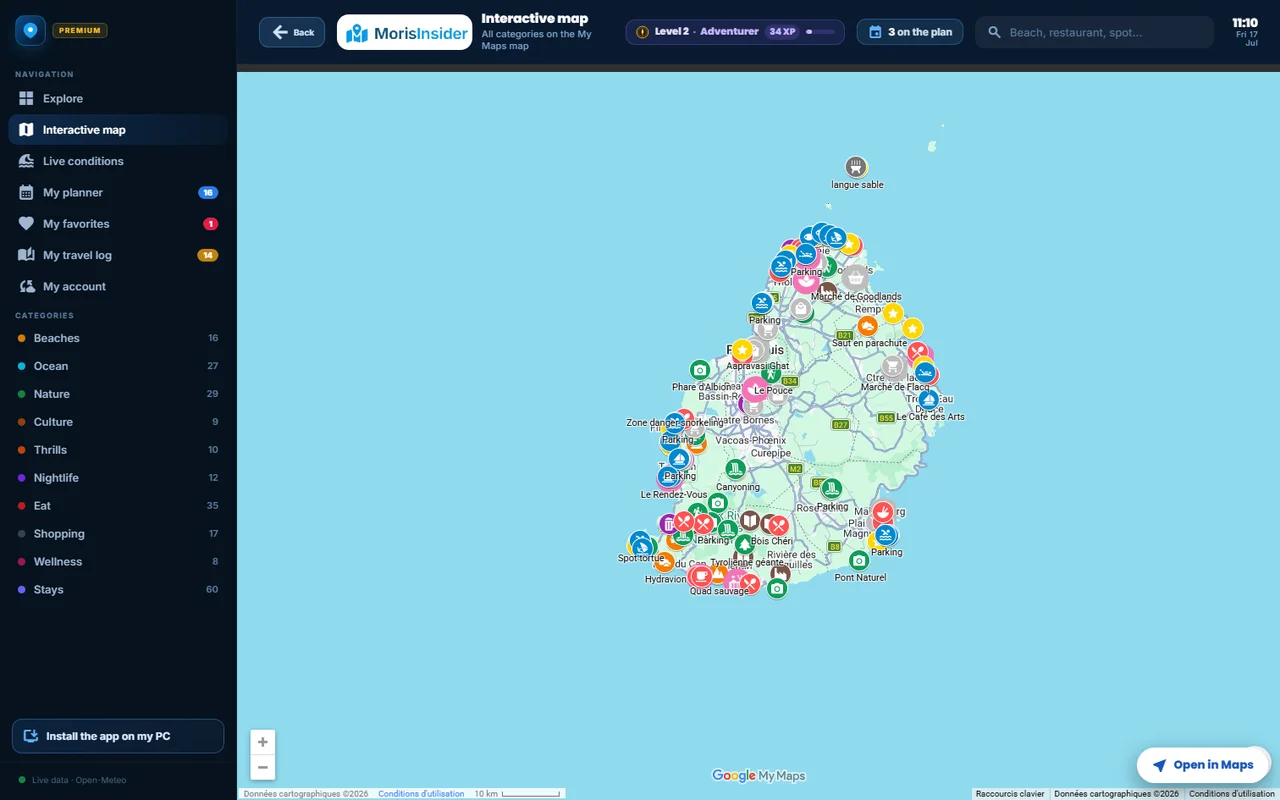
In the North, Trou aux Biches is the perfect starter lagoon: shallow, calm, clear, the reef within fin reach. Right next door, Pereybere with its rocky blocks, then the Balaclava marine park, where turtles sometimes graze between the corals. On the west coast, the Flic en Flac reef; in the south-west, the great lagoon of Le Morne with its mountain backdrop. Every spot, with access, parking and quirks, is on the interactive map of spots.

Which coast on which day? The wind decides. The twelve finest spots are detailed in our guide Snorkeling in Mauritius: the best spots; all the island’s beaches with their quirks are gathered in the app.
When, at what time, with which habits
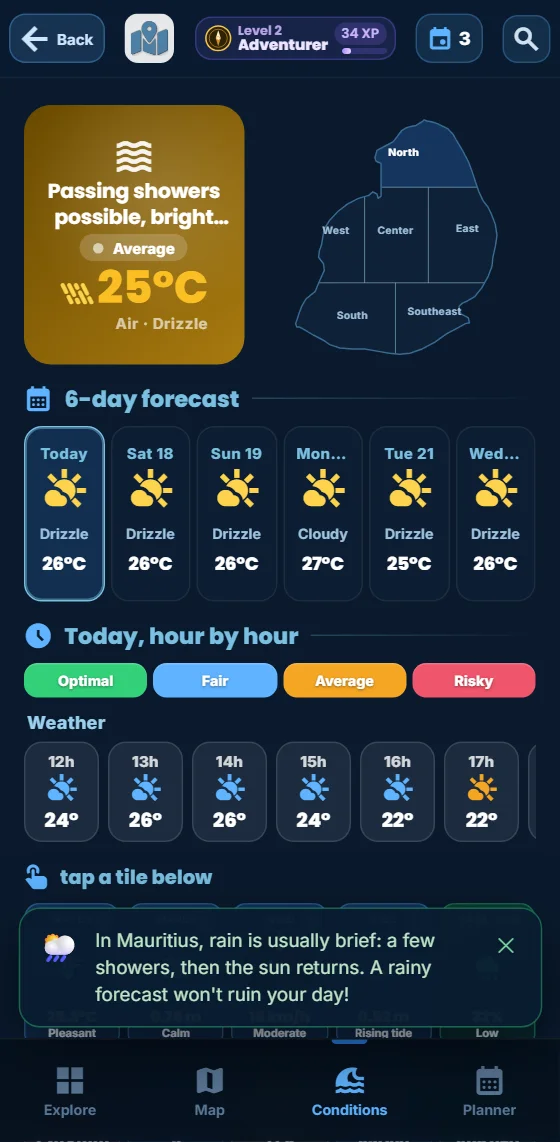
The best time is the morning: the sea is usually calmer, the water clearer, the beaches still quiet. As for seasons: from May to September the trade winds blow from the south-east — the North and the West (Trou aux Biches, Balaclava, Pereybere, Flic en Flac) then sit in the lee. From November to April the water is at its warmest; after heavy rain, though, rivers cloud the bays, especially at the estuaries. A glance at the sea weather zone by zone, with underwater visibility and current, spares you many disappointments.
The rules in the water are learnt in one sentence: touch nothing, feed nothing, take nothing. Bread changes the fishes’ behaviour and damages the reef. Never stand on coral — not even “just to catch your breath”: one step destroys decades of growth, and when in doubt, a sea urchin or a stonefish sits underneath. A UV shirt protects your back better than any cream and keeps sunscreen off the reef. Finally, plan the snorkeling day first: the weekly planner puts it on the calm coast, and keeps the land outings for windy days.
FAQ
Which fish do you see most often while snorkeling in Mauritius?
Sergeant majors, butterflyfish, parrotfish (locally called cateau), damselfish and Moorish idols are the most frequent encounters in the lagoon. With a little luck, the endemic Mauritian anemonefish shows itself in its anemone.
Are there dangerous fish in the Mauritius lagoon?
No lagoon fish attacks swimmers. The real risks come from contact: the camouflaged stonefish (wear closed water shoes, touch nothing), the lionfish with its venomous spines, and sea urchins on rocky bottoms.
Where is the best snorkeling in Mauritius?
In the Blue Bay Marine Park in the south-east, at Trou aux Biches and Pereybere in the North, in the Balaclava marine park, on the Flic en Flac reef in the west and in the great lagoon of Le Morne in the south-west.
Can you feed the fish?
It is strongly discouraged: bread and leftovers change the fishes’ behaviour and damage the reef. Feeding sea turtles is even forbidden by Mauritian law.
Can you swim with turtles in Mauritius?
No. The Fisheries Act 2023 forbids swimming with sea turtles for recreational purposes, harassing or feeding them — with fines of up to 25 million rupees and up to two years in prison. A chance encounter while snorkeling is allowed, as long as you keep your distance.
Is the app paid?
Yes. Everything is included — the island’s 224 addresses, hour-by-hour weather zone by zone, routes, the weekly planner, the trip journal and partner discounts. The plans (one destination for life, a 3-day pass, a yearly subscription) and their prices are on the website.
One destination for life, a 3-day pass or a yearly subscription