For a first trip to Japan, a data-only eSIM with 5 to 10 GB for 30 days is usually enough – at Saily those two tiers cost $10.99 and $17.99 (list prices per comparison sites, September 2026). Install it at home on wifi a few days before you fly and switch the line on only after landing. The biggest trap is the network: for Japan, Saily names KDDI (au) and SoftBank, not docomo. For Tokyo, Kyoto and Osaka that hardly matters; for the Japanese Alps, the Kumano Kodo or inland Hokkaido it does.
The essentials in numbers (read on 6 October 2026, sources in the text):
- Saily Japan: 5 GB / 30 days $10.99 · 10 GB / 30 days $17.99 (list prices per comparison sites, September 2026).
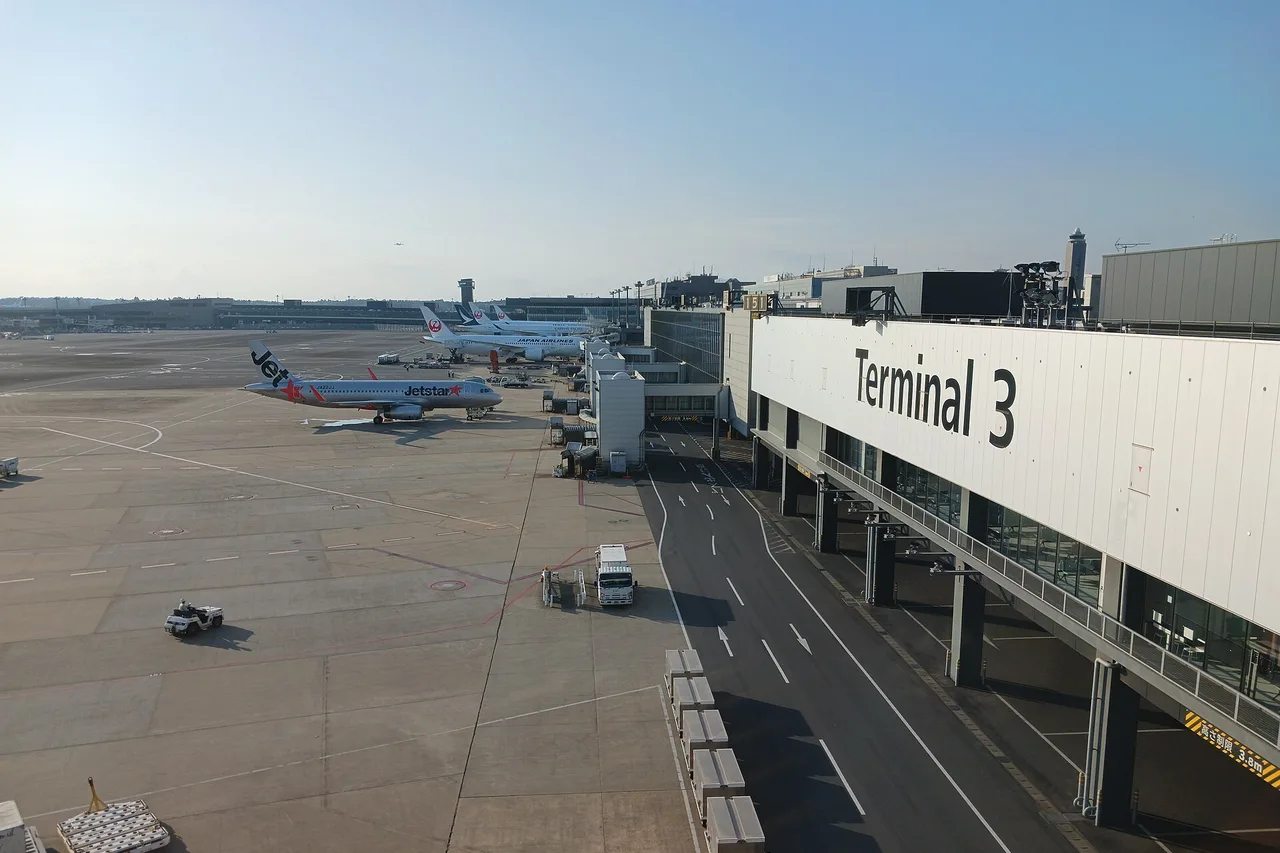
- Alternatives: pocket wifi ¥18,300 for 14 days (docomo network) · SIM card at Narita $16 to $33.
- Reviews: 4.7 out of 5 on Trustpilot, 31,968 reviews.
- The network: KDDI (au) and SoftBank according to Saily’s page – not docomo.
What to book – and when
If you are doing classic Japan – Tokyo, Kyoto, Osaka, maybe Hiroshima, as in our two-week itinerary – and use a single smartphone, you do not need a Japanese phone number. A data-only eSIM is enough: a plan that loads onto the phone as a profile. No plastic card, no counter at the airport, no swapping of SIMs.
How much data? That depends on you, so this is a rule of thumb, not a measurement: for two weeks of maps, messaging, a translator and photos, 5 to 10 GB for 30 days is a sensible starting point. If you stream video on the move or share the connection with a laptop, go up a tier. The current Japan plans from Saily come in 3, 5, 10 and 20 GB for 30 days, plus an unlimited version – prices are further down.
The timing is simple: order a few days before you fly, install at home on wifi and leave the line switched off until the plane has landed in Japan. That way you have maps, messaging and a taxi app from the terminal, and nothing to buy or compare at the airport.
eSIM, pocket wifi, SIM card or roaming?
Four routes lead to mobile internet in Japan. The table puts them side by side; the sources and dates of the prices are in its caption.
| Option | Price (read on 6 Oct 2026) | Network | Worth knowing |
|---|---|---|---|
| Data eSIM (Saily) | 3 GB / 30 days: $7.99 · 10 GB / 30 days: $17.99 | KDDI (au) and SoftBank per Saily’s page, no docomo | Installable before departure · hotspot allowed · no phone number |
| Pocket wifi (Sakura Mobile) | 7 days: ¥9,900 · 14 days: ¥18,300 · 30 days: ¥37,500 | docomo 4G/LTE | Unlimited, up to 15 devices · return by envelope in a postbox · one more device to charge |
| Pocket wifi (Japan Wireless) | from $4.7 a day | SoftBank 4G | Pick-up at six airports · return in a prepaid envelope |
| Prepaid SIM at Narita Airport | $16 to $33 · about $26 for 7 days | depends on the operator | Passport required (not for SoftBank prepaid) · you have to swap the card |
| Roaming on your home plan | per your operator’s price list | your operator’s partner network | EU roaming at domestic prices does not apply in Japan |
Pocket wifi makes most sense when several devices or several people share one unit, or when you specifically want the docomo network. The price is one more device to charge, carry and drop into a postbox at the end. For a solo traveller or a couple with a phone each, the eSIM is simpler: there is nothing to send back.
Roaming on your home plan is the most convenient option and often the most expensive. According to the European Commission, “Roam like at Home” applies in the 27 EU countries plus Iceland, Liechtenstein, Norway, Ukraine and Moldova – not in Japan. What your operator charges there is in its price list; look before you rely on it.
docomo, au, SoftBank: which network matters?

Japan has four mobile operators: NTT docomo, au (KDDI), SoftBank and Rakuten Mobile. A travel eSIM has no antennas of its own; it borrows one of these networks. For measurements we rely on Opensignal and its April 2026 report (data collected from 1 January to 31 March 2026).
The results are spread out: au wins the awards for consistent quality (88.3%, one point ahead of SoftBank) and reliability (967 points out of 1,000). SoftBank wins on download speed. docomo wins coverage and, according to Opensignal, has the widest geographic footprint in populated areas. For video streaming, Opensignal rates all four operators “Very Good”.
For a traveller that means: in cities and along the main routes, any of the three big networks is good enough. The difference appears away from them, and there docomo has the edge. Two comparison sites – both sell eSIMs themselves, so neither is a neutral witness – name docomo as the strongest in the Alps, on mountain and pilgrimage trails and in inland Hokkaido; SoftBank is said to be thinner there.
And Saily? On its Japan page the company names KDDI (au) and SoftBank as partner networks, with 4G/LTE and 5G where available – that is how a 15 September 2026 comparison reports the page; we could not read it ourselves because it is closed to robots. docomo is not listed, and an older comparison from May 2026 names SoftBank only. In the cities that fits the measurements above: au leads on reliability and consistent quality, SoftBank on download speed. Opensignal measures the operators’ own subscribers, though, not travel eSIMs. For Tokyo, Kyoto, Osaka and the Shinkansen corridor between them, we consider the network question settled. If you are heading far from the cities, ask customer service before buying which network the plan uses there – or choose a docomo solution (details in the last section).
The prices: what Saily charges for Japan
The table shows Saily’s plans for Japan as independent comparison sites confirm them. Saily’s own page is closed to robots, so we could not re-read it; the price on the checkout screen is the one that counts.
| Plan | List price (USD) | European storefront (EUR) |
|---|---|---|
| 1 GB · 7 days | $3.99 | €3.49 |
| 3 GB · 30 days | $7.99 | €6.99 |
| 5 GB · 30 days | $10.99 | €9.99 |
| 10 GB · 30 days | $17.99 | €15.99 |
| 20 GB · 30 days | $24.99 | €21.99 |
| Unlimited · 5 to 30 days | $18.99 to $71.99 | €16.99 to €63.99 |
What is included, according to those comparisons: hotspot and tethering are allowed and draw on the same allowance. The plans are data plans, with no number, SMS or calls. On unlimited plans you get 5 GB a day at full speed, then at most 1 Mbps until the end of the day. One comparison writes that the validity only starts at the first connection in Japan; another, that an unused plan waits up to 180 days before activating itself. Re-read those conditions on the checkout screen.
Against the market, Saily is not a bargain: a Japan Wireless guide (24 September 2026) gives $16 to $18 for 10 GB / 30 days, and Saily’s $17.99 sits in the middle. The reasons to pick it lie elsewhere: on Trustpilot, Saily shows 4.7 out of 5 from 31,968 reviews on 6 October 2026, and according to Trustpilot the company usually replies within 24 hours. Support is reachable around the clock by chat and email according to a July 2026 review, and Saily is a Nord Security service, the company behind NordVPN. Compare anyway: that is what the table above is for.
In the overall cost the eSIM is a small line – see the two-week Japan budget.
The traps – and how to avoid them
A compatible, unlocked phone. According to Apple, the iPhone XS, XS Max, XR and every later model support eSIM; for iPhones sold in mainland China only certain models do, and in Hong Kong and Macao some models have two nano-SIM slots instead of eSIM. For Android, a Japan Wireless guide lists the Pixel 4 and later and the Galaxy S20 and later. The phone must also be free of an operator lock: ask your operator before you buy.
No phone number. These plans are data plans. Calls and messages go through WhatsApp, Messenger and the like; your usual number stays reachable on the home SIM. If you need a Japanese number, for example for a service that sends an SMS code, you need another solution.
Data roaming on your home SIM. According to Japan Wireless, leaving it switched on risks roaming charges. Turn it off there and on only for the Japan line.
Do not delete the profile. An eSIM profile can usually be downloaded only once. If you delete it, the provider has to reissue it – not a nice moment at the airport.

Tunnels and trains. If you take a lot of trains, read getting around Japan and is the JR Pass worth it? for routes and fares. In Shinkansen tunnels one comparison reports only brief drops; docomo and au are said to keep the signal longest between stations.
Unlimited is not limitless. Beyond 5 GB a day, only 1 Mbps remains until the end of the day, according to the comparisons. For video calls and streaming that is tight; a fixed 10 or 20 GB plan then makes for a clearer calculation.
A law in motion. Today Japan requires no identity check for a data-only SIM. A law promulgated on 29 May 2026 extends verification to data SIMs; the start date will be set by decree, within a year at the latest, and a passport is said to be enough for short stays. Whether it will reach eSIMs bought abroad and used in roaming is open, according to one source. Check just before you leave.
Installing the eSIM before you fly
- At home, on wifi: open the QR code or link from your order, add the profile in the “Cellular” or “SIM” settings and name it “Japan”.
- Leave it off: the Japan line stays switched off until you land; the home SIM keeps calls and messages.
- On landing: switch the line on, enable data roaming for that line alone and move mobile data onto it.
- Check quickly: open a map, send a photo; keep the order confirmation for customer service.
Before you pay: the checks
Five questions, five minutes:
- Does my phone qualify? eSIM-capable, no operator lock.
- Which network? If your route leaves the cities, ask before you pay.
- How much, until when? GB, days and when the validity starts.
- Is hotspot allowed? Useful for a laptop or a shared line.
- Which currency, what final price? Dollars or euros, and the amount charged.
When another solution is better

If your trip takes in the Japanese Alps, the Kumano Kodo, inland Hokkaido or remote islands, docomo is the safer choice: Opensignal measures its coverage as the widest in populated areas, and the comparison sites name it the strongest beyond them. You then need either a pocket wifi on the docomo network, like Sakura Mobile’s in the table, or an eSIM whose listing names docomo outright. If you need a Japanese number, a data-only eSIM is not the right answer anyway. Beyond 30 days you need a second plan, as Saily’s plans run 30 days at most. And with four of you, do the sum: four eSIMs against one shared pocket wifi, which ties everyone to the same device.
Free wifi is a good complement: the tourism organisation JNTO lists three apps with 138,000, 200,000 and 400,000 spots. On its own it falls short on the move.
If your route stays in the cities and along the Shinkansen corridor, the sum is simple: a data eSIM of 5 or 10 GB for 30 days, installed at home, switched on at landing. The Japan plans from Saily are one option for that; check the network and the price on the checkout screen before you pay. And to pick the right moment for the trip itself, read when to visit Japan.