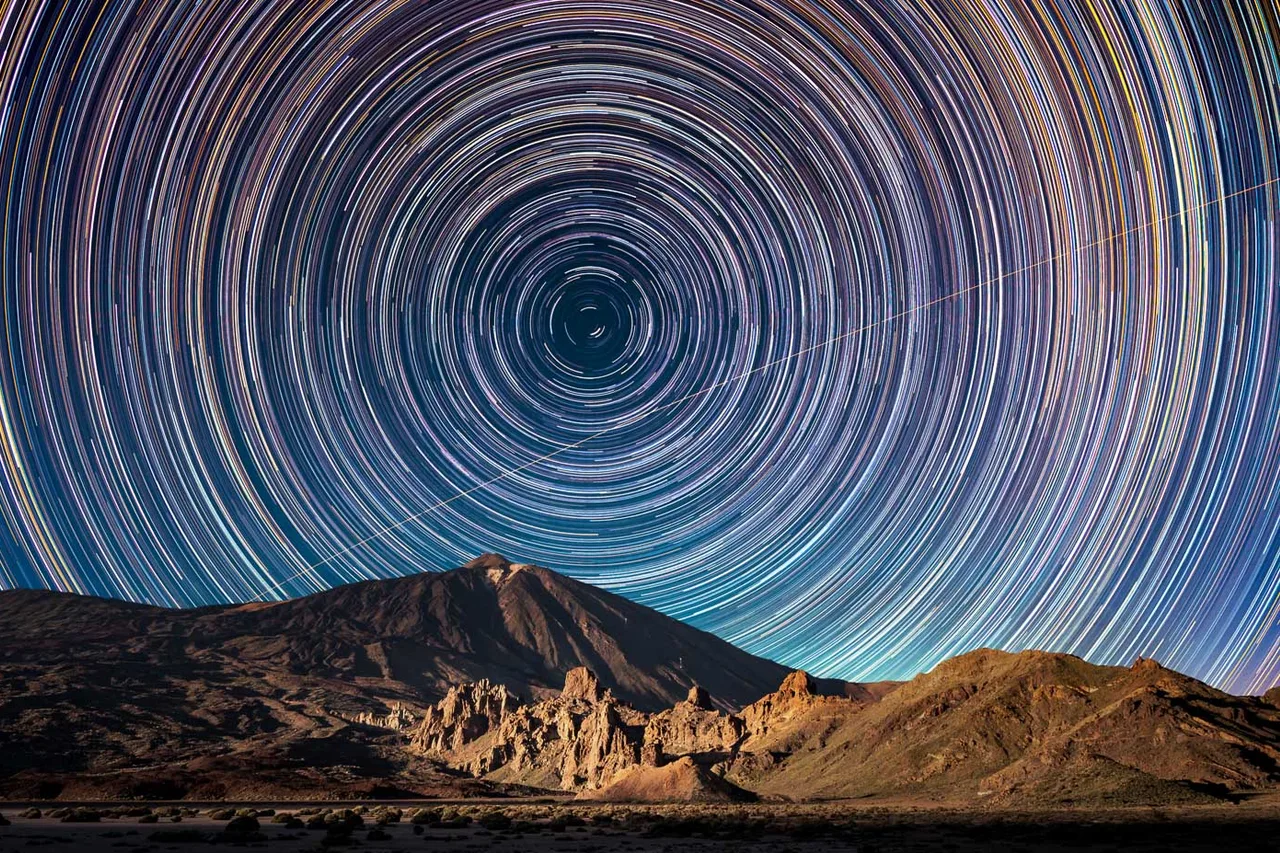
From the beach you never see Tenerife’s second face: above the clouds, at over 2,000 m in the Teide caldera, one of Europe’s finest starry skies begins after sunset. The national park roads stay open at night, the best lookouts are steps from your car, and if you watch the lunar calendar you will see the Milky Way with the naked eye. This guide tells you honestly what works and where: the spots, night access, the observatory (daytime only!), picking the right night — and the cold that almost everyone underestimates. Facts checked on 23 November 2026.
Why this sky ranks among Europe’s best
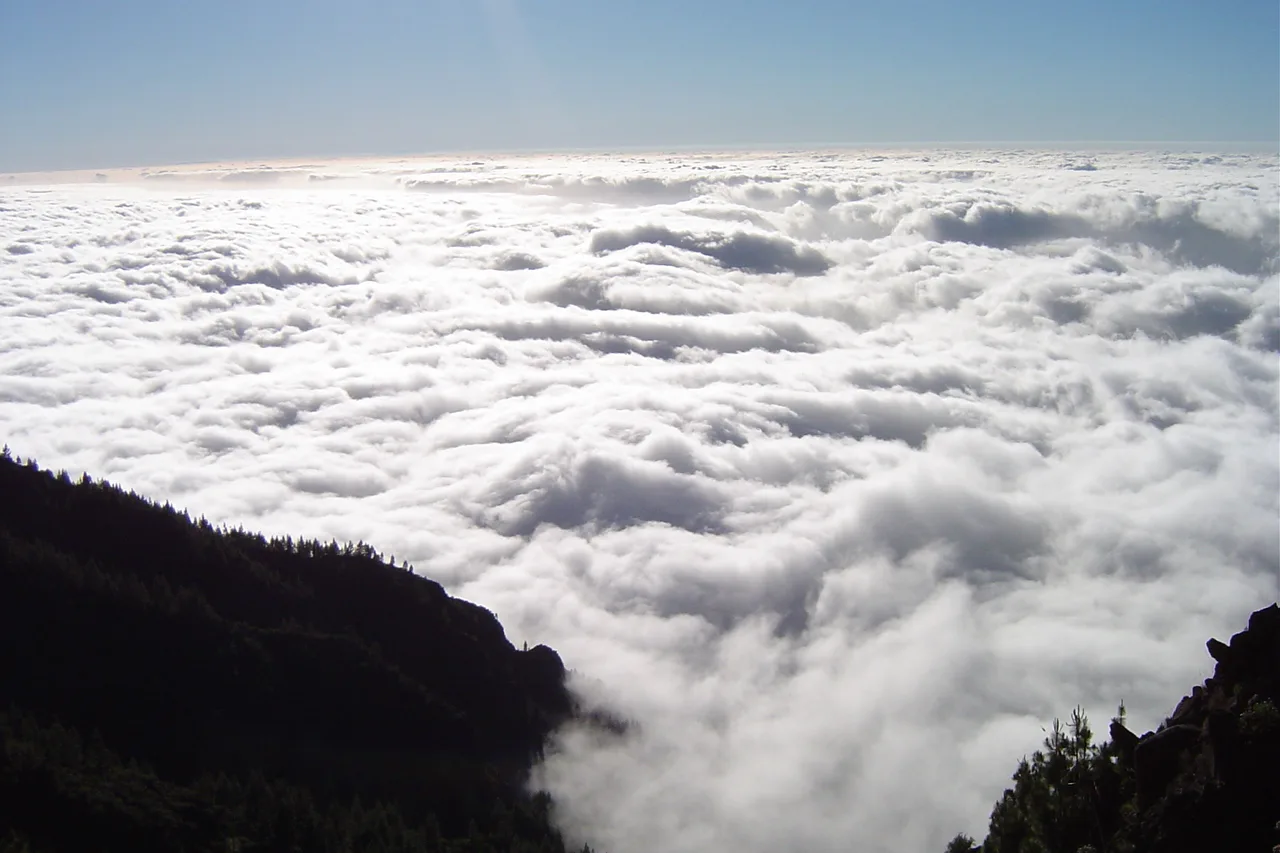
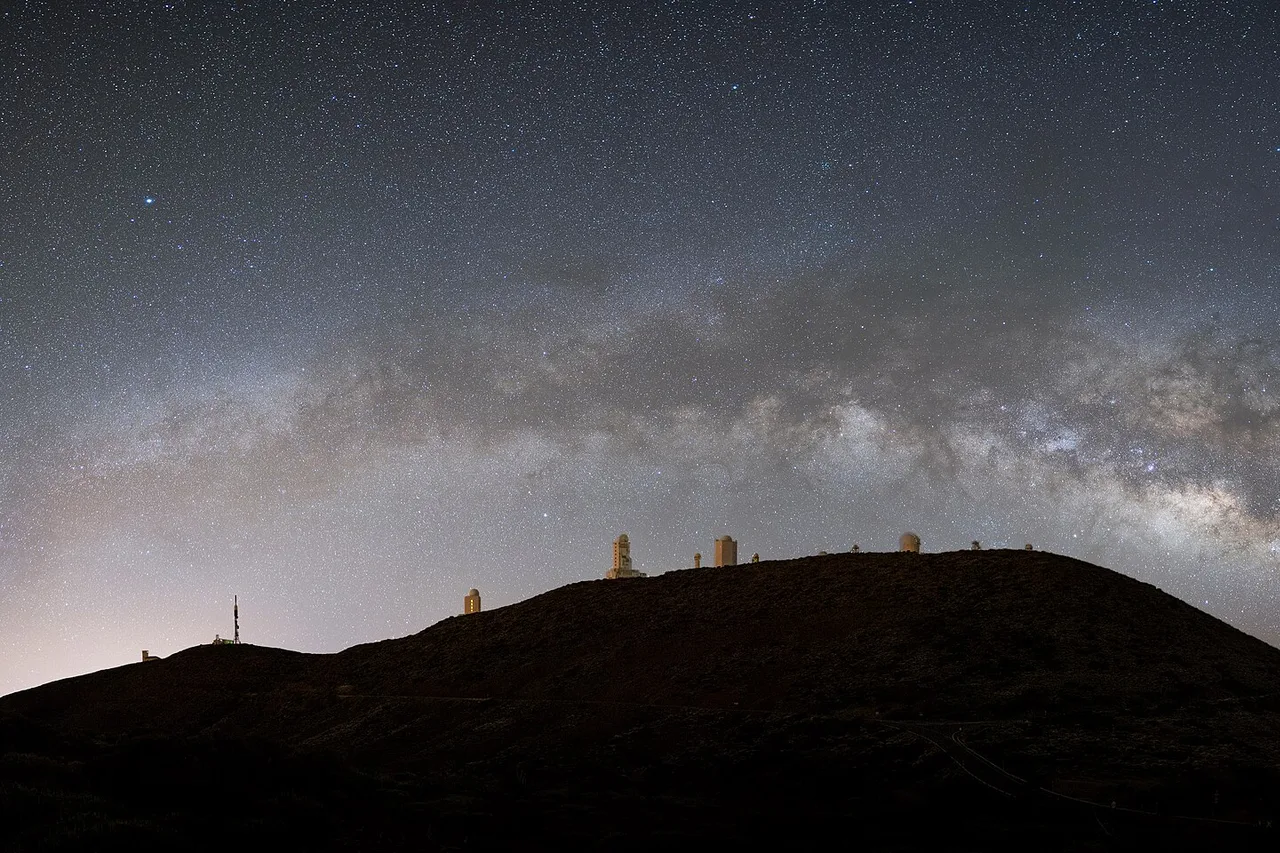
Three things come together at Teide that rarely meet anywhere else. First, altitude: the caldera sits at around 2,000 m, above the cloud layer the trade wind presses onto the north slope — the famous sea of clouds stays below you, and the air above it is dry and steady. Second, darkness: the park is free of buildings, and a Spanish law of 1988 — the "Sky Law" (Ley del Cielo) — has limited light pollution for decades to protect the Canary Islands’ observatories. Third, latitude: at 28° north, southern constellations climb above the horizon that mainland Europe never sees in full.
The result is officially recognised: Teide National Park — a UNESCO World Heritage Site since 2007 — has held the Starlight Foundation’s certification for the quality of its night sky since 2014, and certified Starlight guides run observation evenings here. In short: you don’t need to be an astronomer. You just need to be up there after dark.
The best spots: where to stand when night falls
Good news first: the best places are right off the TF-21 — no hiking required. The Minas de San José viewpoint is the classic: a wide, open pumice landscape with no cliff walls nearby and a clear horizon in almost every direction. A few kilometres further south, the Llano de Ucanca lookout overlooks the caldera’s largest plain (the plain itself is a protected zone — stay at the mirador). And at the Roques de García, from the Mirador de la Ruleta opposite the Parador, the park’s most famous silhouette becomes your foreground under the stars.
Full guide: Things to Do in Tenerife: 25 Unmissable Spots, Chosen by Locals
If you want more: Montaña de Guajara, above the Parador, is considered one of the island’s finest observation points — but the ascent is a genuine mountain hike, and at night it belongs to experienced, well-equipped walkers only. As for the Parador, the only hotel inside the park, it is the most comfortable base: sleep there and the night sky is outside your door, with no drive back down in the dark.
The park at night: access, driving, rules
Teide National Park has no gate: the through-roads TF-21 and TF-24 stay open at night, the viewpoints are free, and independent stargazing needs no permit and no ticket. Closed at night: the visitor centres, the cable car base station — and the observatory grounds, more on that below. Only the summit crater is permanently regulated: the final metres above the upper cable car station require a free but strictly limited permit — full details in our Mount Teide climbing guide.
Good to knowIn high season, cars get booked up fast and prices rise as the dates approach. Comparing local rental companies before you go lets you lock in the car and the rate in Tenerife, with deposit and insurance shown upfront.
Rent a car in TenerifeCompare rental companies on Discover CarsIn practice, night means above all: your own hire car (no bus runs at night) — and respect for the drive up. On the way you punch through the cloud layer: expect fog banks, leave with a full tank (there is no petrol station in the park) and, in winter, check road conditions before setting out — after snowfall the Cabildo sometimes closes the access roads. Once there, national-park discipline applies: no fires, no camping, no drones, take nothing away but your own rubbish — and headlights off whenever other observers are nearby. A red-light head torch preserves night vision; your eyes need a good twenty minutes before they truly see the sky.

Picking your night: moon, season, meteor showers
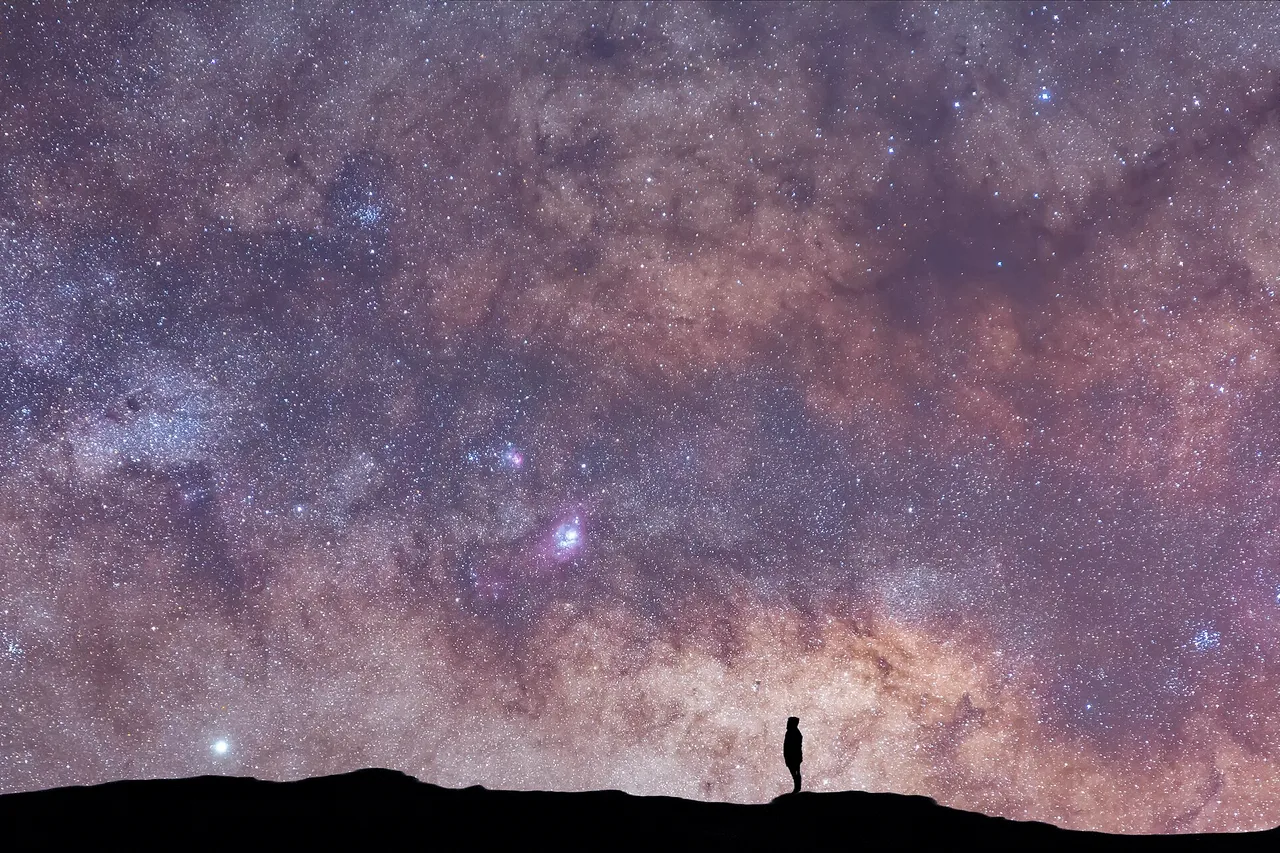
The biggest "light polluter" at Teide is the moon. Aim for the new moon — or at least for the hours before moonrise. That is when the band of the Milky Way unfolds, at its most impressive from roughly April to September, when its bright core stands over the southern horizon. The winter sky argues back with the purest air of the year and Orion in full glory.
Two dates for the diary: the Perseids around 12–13 August and the Geminids around 13–14 December — on a moonless night, these meteor showers at Teide rank among the island’s greatest natural spectacles. A latitude bonus: at 28° north, southern-sky objects rise that are never visible from the UK or most of Europe. To line the weather up with your dates, see Best time to visit Tenerife.
The Izaña observatory: a daytime visit
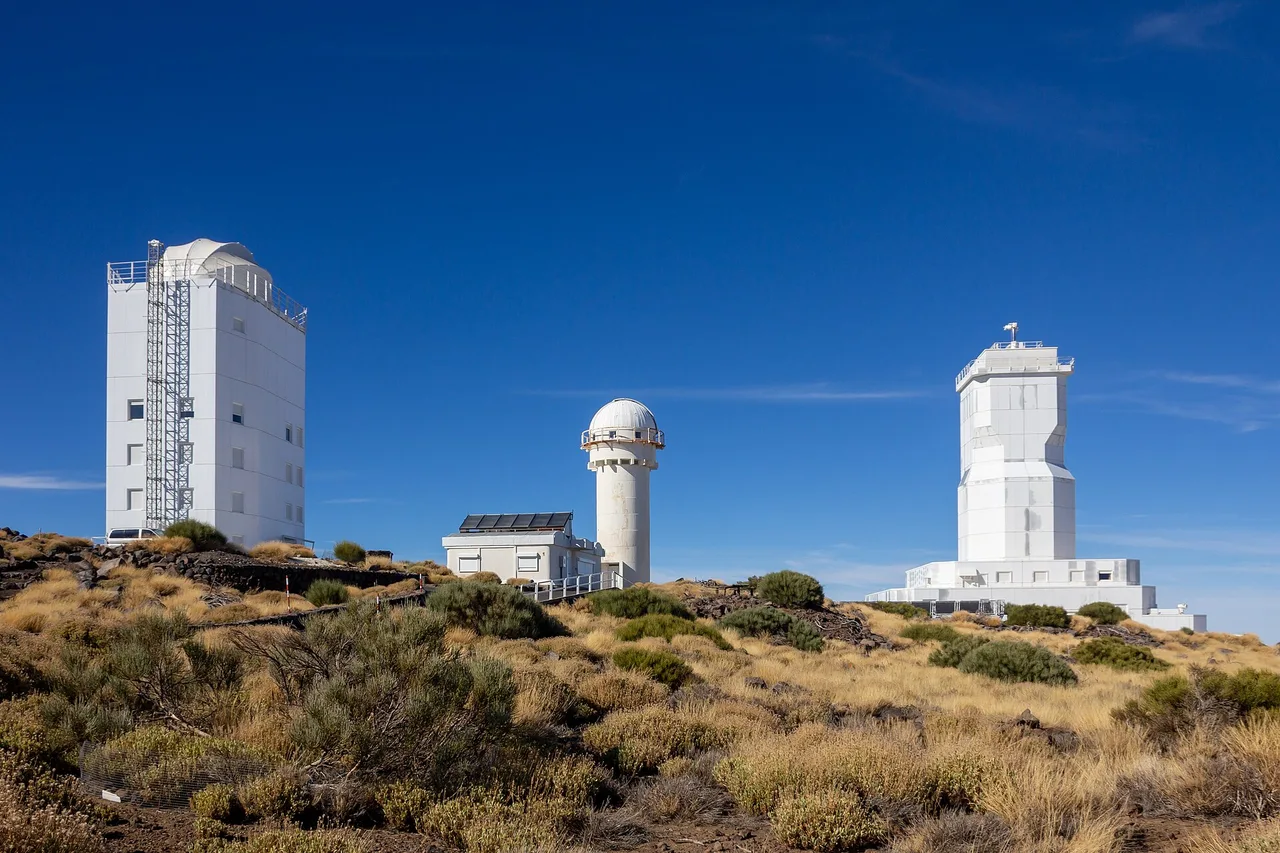
The white domes and towers on the eastern ridge belong to the Observatorio del Teide at Izaña, at 2,390 m — run by the Institute of Astrophysics of the Canary Islands (IAC) and one of the world’s leading centres for solar observation. Hence the surprise for many visitors: you visit by day. Guided tours last about an hour and a half, show you the telescope facilities and let you look — safely filtered — through a solar telescope. On the booking portals, tickets were around €21 per adult on 23 November 2026; book ahead, and in winter dates are sometimes cancelled for weather.
At night the site is closed — the instruments demand total darkness. If you want the sky explained, book an observation evening with a Starlight guide in the park instead: telescopes, laser pointer, constellations and mythology, from about €42 per person on the portals as of 23 November 2026. Those are intermediary prices — meeting point and programme to be confirmed with the operator.
Cold and altitude: the honest checklist
The most common mistake is not astronomical but meteorological: people freeze. Above 2,000 m the temperature drops fast after sunset, the wind makes it feel colder still, and in winter it goes below 0 °C — while down on the coast it is still terrace weather. Pack as you would for the mountains: warm layers, a hat, gloves, a flask. Anyone driving up from the beach in shorts rarely lasts more than a quarter of an hour.
Second point: the altitude itself. Above 2,000 m some visitors feel head pressure or shortness of breath — take it slowly, drink water, and don’t schedule your stargazing night right after a hard summit day. In passing: the historic Altavista refuge (built 1892) reopened in July 2026 after renovation — an option for summit candidates, unnecessary for pure stargazers: the best posts are reached by car. And if you would rather have the night organised for you, the evenings with certified guides take care of driving stress and equipment. For the car itself, see Renting a car in Tenerife — and for what winter means up on the volcano, Tenerife in winter.
From sunset to the stars: the ideal sequence
The finest evening up there begins before dark: drive up about an hour before sunset, watch the sea of clouds turn orange, and simply stay put as the blue hour tips into night. The fog question solves itself — you cross the cloud layer in daylight, and your eyes are already adapted to the dark by the time the first stars appear.
For photos: night forgives nothing without a tripod. With one, a wide-angle lens, a 15–20 second exposure and high ISO are enough for the Milky Way — and recent smartphones, propped on a wall or a mini-tripod in night mode, deliver surprising results. At full moon the roles reverse: fewer stars, but a brightly lit lunar landscape you can walk through as if by day. In truth there is only one mistake you can make on such an evening: driving back down too early.
And the sentence this blog always adds: the park is a protected area and the volcano a high mountain. Take the cold seriously, stay at the viewpoints and shield your light, and you get something no city break can offer — a sky Europe keeps in only a handful of places.