These two escapes are often presented as interchangeable. They are nothing of the sort. Nusa Penida is a high, rocky, spectacular island — and its sea is difficult. The Gilis are three flat discs resting on a sandy shelf, where you swim from your first step and where no car runs. Choosing between them is not choosing between two beaches: it is deciding whether you are coming to look, or to swim.
The real difference is not the distance, it is the sea
On a map, Nusa Penida and the Gilis look alike: islands a few kilometres off Bali, reached by boat, covered in bungalows and dive centres. In practice they offer opposite experiences, and the difference comes entirely from what the water around them does.
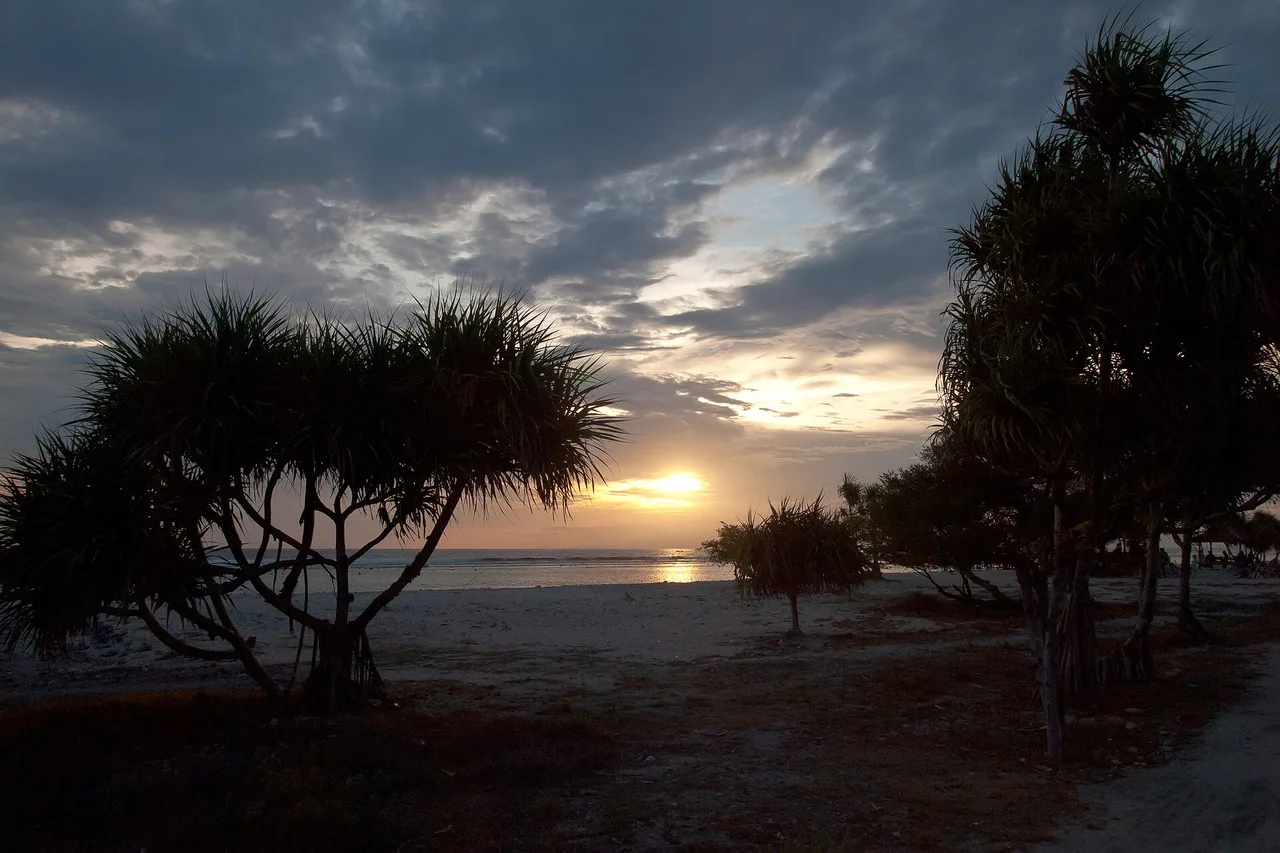
Nusa Penida sits at the edge of the Lombok Strait, a corridor carrying the Indonesian Throughflow — a current that moves roughly fifteen million cubic metres of water per second between the Pacific and the Indian Ocean. That current is what makes its reefs extraordinary, and it is the same one that makes its coast dangerous. The Gilis, by contrast, sit sheltered behind Lombok on a shallow sand shelf. You walk into the water as you would into a swimming pool.
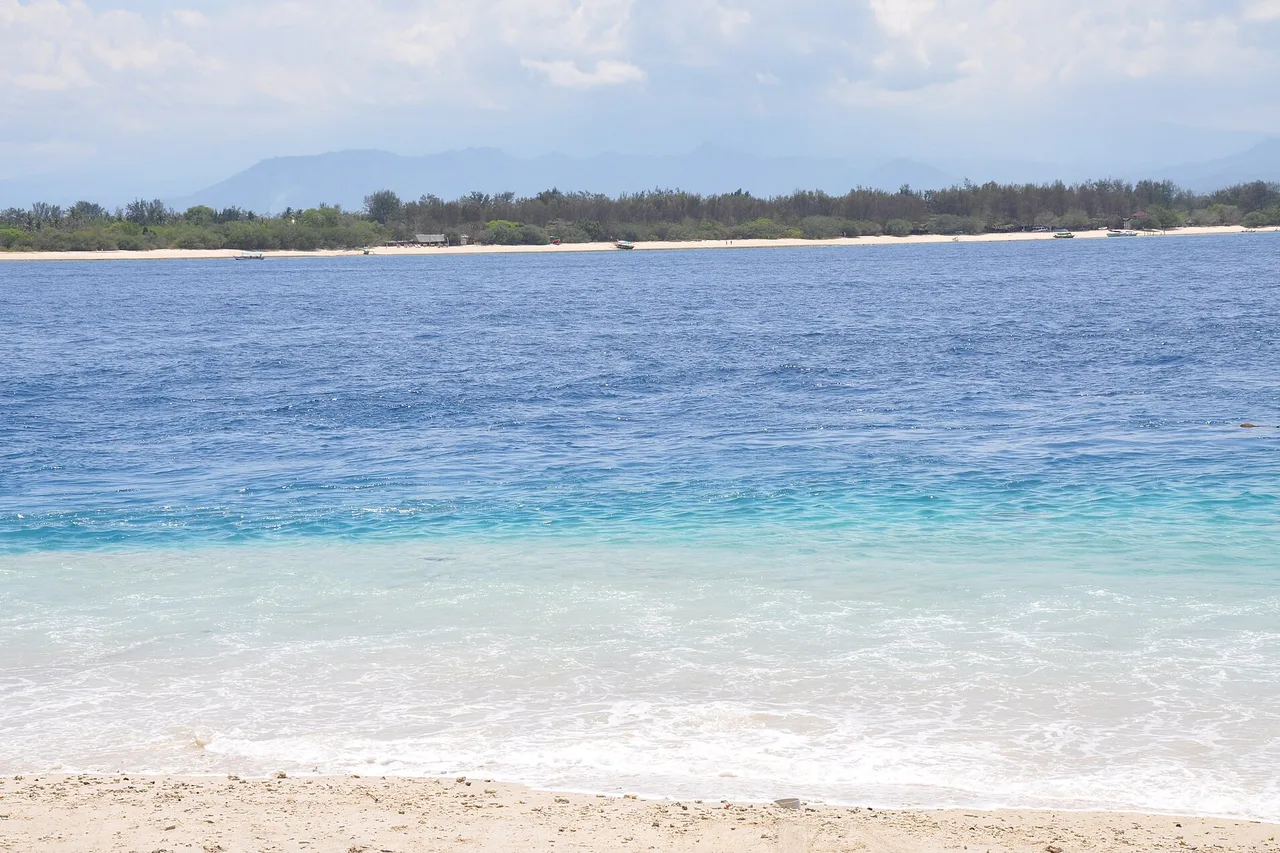
Everything else follows: the terrain, the roads, the pace, right down to the kind of traveller who feels at home. Here is the comparison, line by line.
| Nusa Penida | The Gilis | |
|---|---|---|
| Getting there from Bali | 30 to 45 min by boat from Sanur | 1 hr 30 to 2 hrs from Padang Bai |
| The setting | Cliffs, arches, viewpoints | Flat islands, white sand, palm trees |
| Swimming | Few safe beaches; Kelingking off limits | Shallow, calm water on the sheltered side |
| Underwater | Manta rays all year, mola mola in the austral winter | Sea turtles a few metres from shore |
| Getting around | Narrow, broken roads — a driver is wiser | No motor vehicles: on foot, by bike, by cidomo |
| After dark | Very little nightlife | Trawangan buzzes, Air is milder, Meno sleeps |
| A length that works | 2 to 3 nights | 3 to 5 nights |
Getting there: forty-five minutes against two hours
This is the first argument, and it is a heavy one. From Sanur, Nusa Penida is thirty to forty-five minutes away by fast boat, for 150,000 to 250,000 rupiah one way. Departures run roughly from six in the morning to six in the evening, which makes a day trip possible — rather too possible, as we shall see.
The Gilis require a real transfer. The shortest crossing leaves from Padang Bai, in east Bali: one and a half to two hours, from around 400,000 rupiah. From the south (Sanur or Serangan), reckon on two hours fifteen to three and a half hours. One useful 2026 detail: there is no longer a direct service from Amed — even if you are staying in the north-east, you must come back down to Padang Bai. The public ferry to Lembar, on Lombok, takes four to five hours, with departures every sixty to ninety minutes.
Then add the road journey to the port, which is never trivial in Bali: from Ubud or Canggu, simply reaching Padang Bai is half a day. Our guide to getting around Bali has the road times in detail. Simple rule: never put a crossing on the day of your international flight, in either direction.
A word on booking these crossings, true on both sides: the same boat sells at very different prices depending on whether you buy at the pier, in a street agency or online, and it is the departure port — not the operator — that you should check first. Comparing the connections before you go at least means leaving with a written departure time.
Nusa Penida: what the photo shows, and what it hides
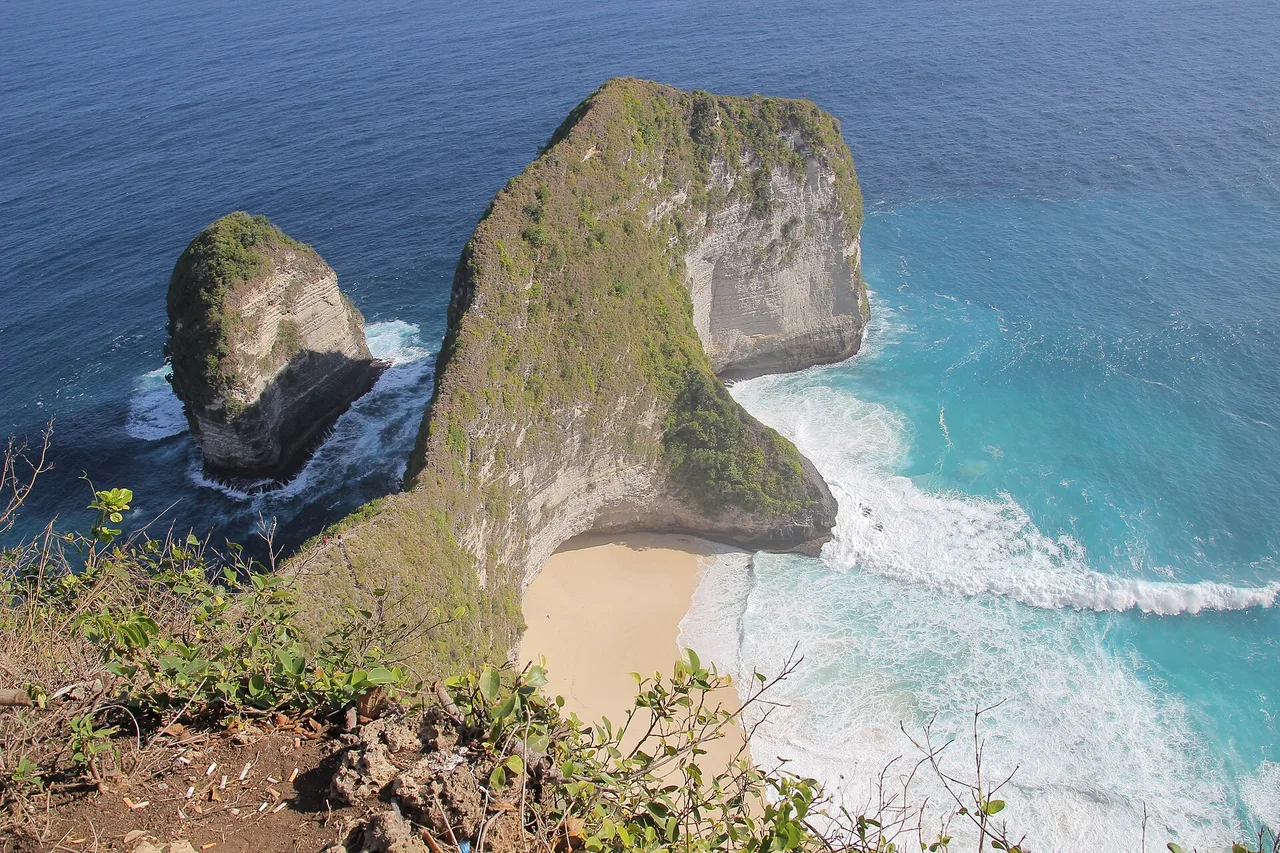
People come for Kelingking, the cliff whose profile suggests a dinosaur’s head, and for two or three other set pieces of the same calibre: Broken Beach and its collapsed arch, Angel’s Billabong, the sea stacks at Atuh. These are first-rate landscapes and nothing here takes that away.
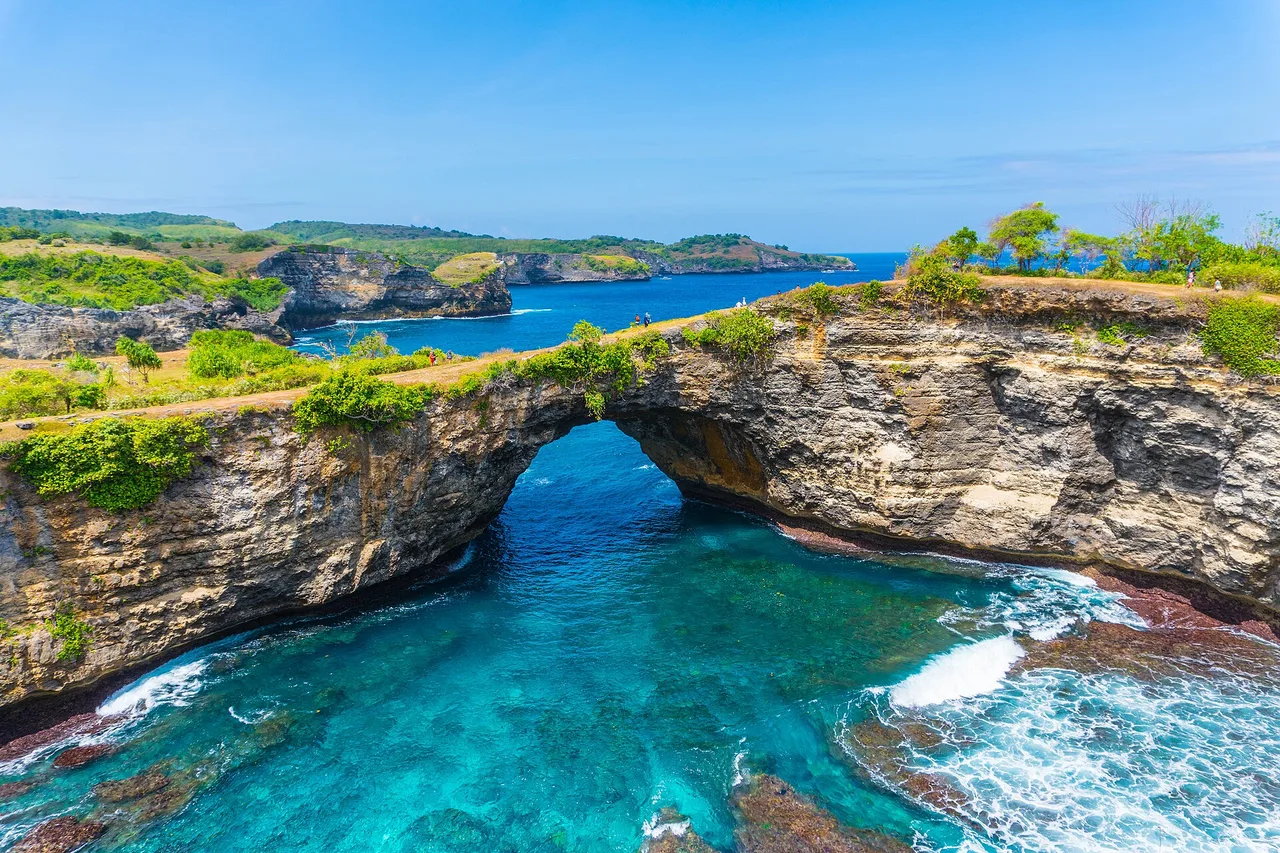
What the photo leaves out comes down to three things. First, you do not swim at Kelingking: swimming has been prohibited since 2023 because of violent currents and unpredictable waves. The path down to the sand exists, it is steep and physical, but it leads to a beach you look at, not one you swim from.
Second, the crowds. The site fills very quickly after ten o’clock, when the day groups arrive from Bali. Being there by eight thirty changes the experience completely — better light, room at the viewpoint, bearable heat for the walk. That is the decisive argument for a night on the island rather than a day trip.
Third, the lift. A glass lift meant to serve the beach was started in 2024, then suspended on 31 October 2025; in November 2025 the governor of Bali called for it to be dismantled. As of mid-2026 the structure is still standing, unfinished and out of service. You will see it in recent photographs; do not count on it, and know that it remains contentious on the island.
The Gilis: three islands, and they are not alike
First thing to absorb: the Gilis are not in Bali. They belong to Lombok, in the province of West Nusa Tenggara. This is more than an administrative footnote: the culture there is largely Muslim and Sasak, where Nusa Penida is Balinese and Hindu, with its temples and ceremonies. You are not simply changing island, you are changing world.
Second, and this is what people come for: no motor vehicles run there. You move on foot, by bicycle, or by cidomo, the horse-drawn cart. One honest qualification for 2026: electric bikes and scooters are multiplying on Trawangan, and the silence is no longer quite what it was.
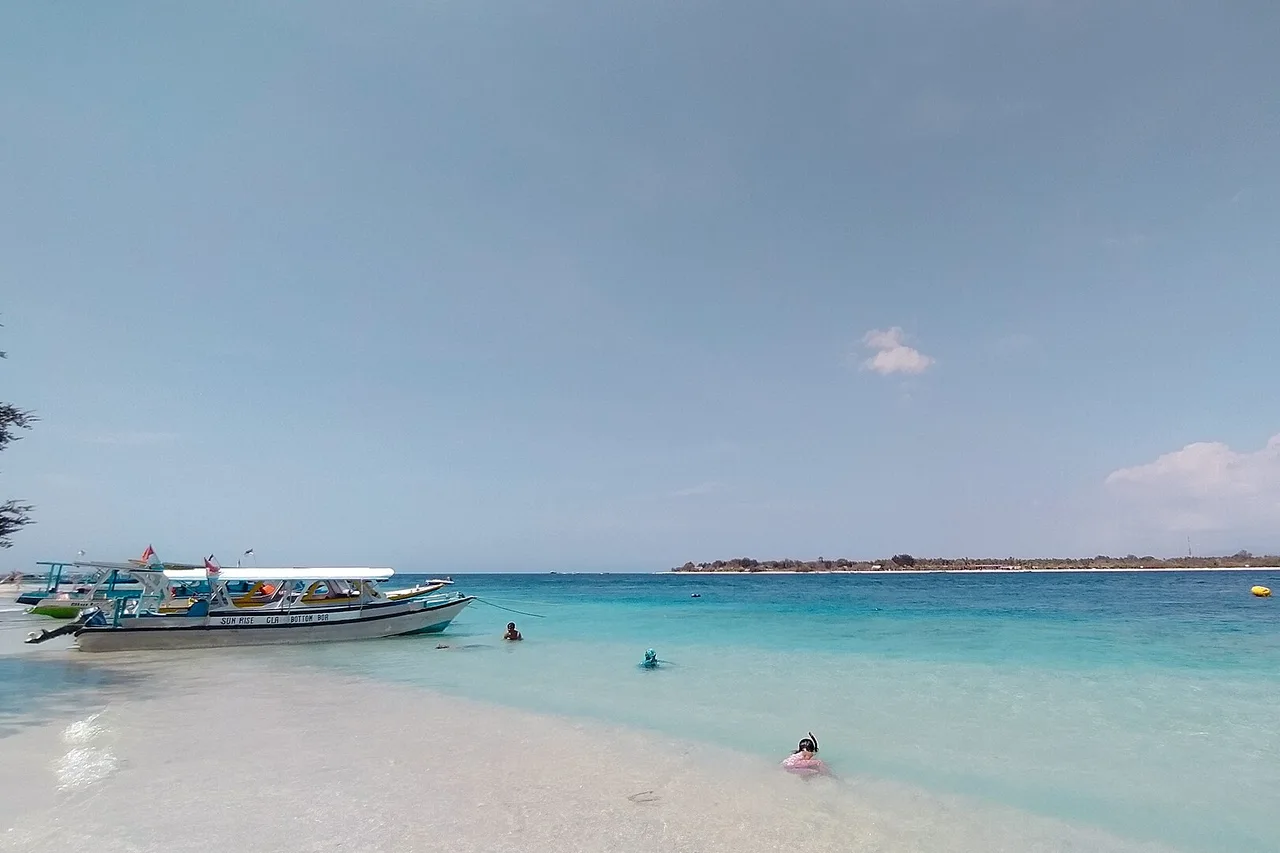
Which of the three you pick depends on what you want from your evenings. Gili Trawangan is the largest and liveliest: the most restaurants, the most bars, the most dive centres. Gili Meno is the smallest and quietest — honeymoon country, with its bird sanctuary, its turtle wall and the Bounty wreck offshore. Gili Air holds the middle ground: good places to eat, people to meet, without Trawangan’s bass lines.
One safety point, which matters more than anything else here. The channels between the islands run strong currents, particularly on incoming and outgoing tides. The islands look close; they are not close by swimming. Stay on the sheltered side of your island, wear fins, and never cross other than by boat.
Underwater: manta rays on one side, turtles on the other
This is where the decision is genuinely made, because the two destinations speak to different swimmers.
Nusa Penida plays in a higher league. Manta rays are present all year on the southern plateaus, with the best window from April to October at Manta Point; those sites lie in sheltered bays, so rarely in current, but often stirred by swell. And from July to October, when the cold upwellings arrive, it is mola mola season — the giant sunfish, one of the most sought-after encounters in diving anywhere.
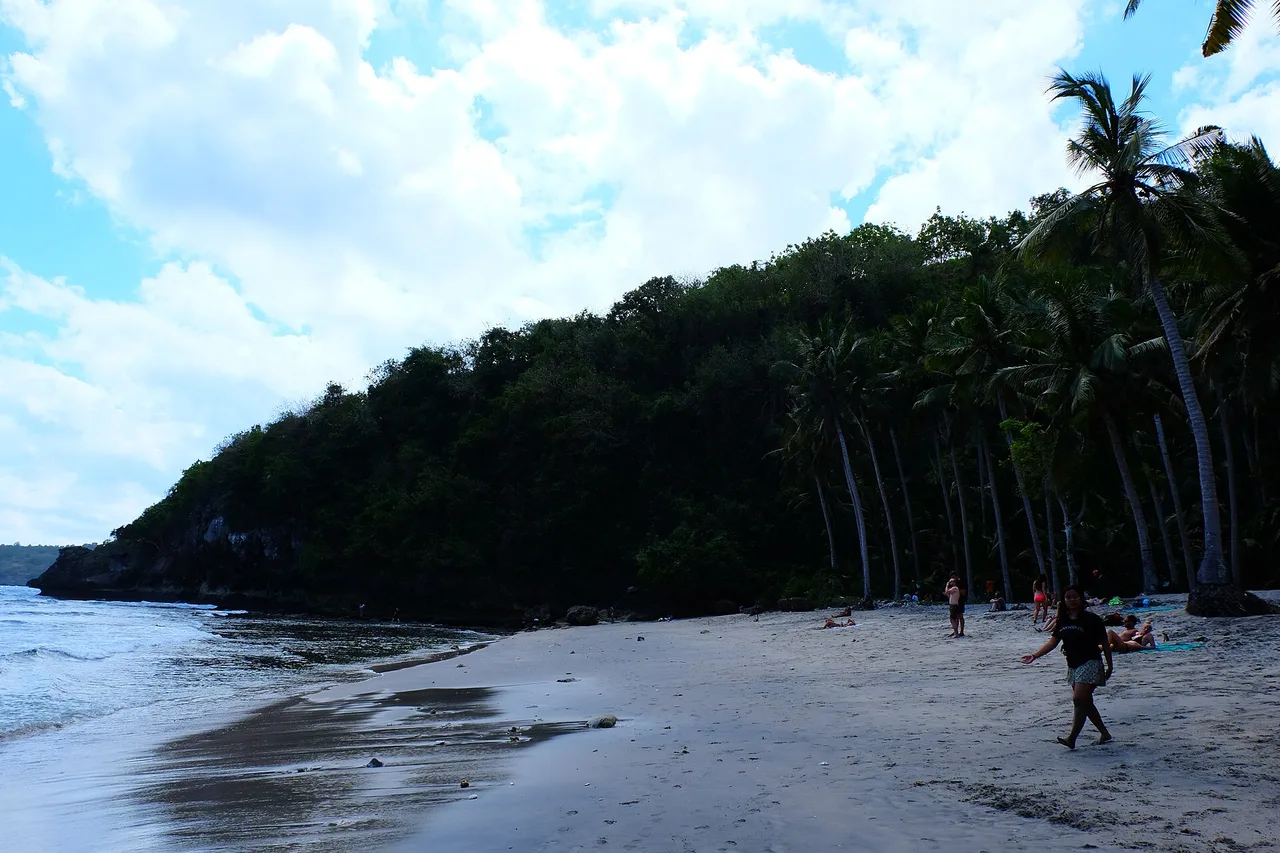
The trade-off is serious and must be said plainly: most Nusa Penida sites are drift dives, the currents are unpredictable, and strong down currents can start suddenly. This is not a place for a first try-dive. Dive it with a centre that knows the tides, and accept that a trip may be cancelled.
The Gilis, by contrast, are where you learn. Shallow reefs, easy visibility, sea turtles a few metres from shore — you see them with mask and fins, no boat and no certification required. It is the best place in the region for a first dive qualification, for taking children into the water, or simply for swimming every day without mounting an expedition. What you will not see are Penida’s big animals.
Getting around once you are there
On Nusa Penida, this is the weak point. The roads are narrow, steep and riddled with potholes, sometimes gravelled or unsurfaced on the outer routes. Worse: the joins between new and old surfacing are abrupt and have caused serious accidents. Tourist scooter accidents happen every week on the island.
If you take a scooter anyway, the local advice is consistent: stay under 30 to 35 kph — above that, potholes stop being visible in time — never overtake a truck or a van on these widths, wear a helmet and proper shoes. And remember the general Indonesian rule set out in our transport guide: a national licence is not enough, you need your motorcycle licence and an international permit. The markedly safer option, barely dearer between two people, is a car with a local driver for the day.
On the Gilis, the question disappears. You can walk around Trawangan in one to two hours, around Meno in far less. A bicycle covers everything, the cidomo handles luggage. It is genuine mental rest after two weeks of Balinese traffic — and an argument few destinations can offer.
Levies, entrance fees and grey areas
The Bali tourist levy is 150,000 rupiah per person, paid once per trip and in force since 14 February 2024. It covers Bali and the Nusa islands — Penida, Lembongan, Ceningan. Keep the QR code to hand: checks are made at ports and at some sites. The Gilis fall outside it, since they belong to Lombok; but as you enter Indonesia through Bali, it is settled anyway.
Beyond that, sources diverge, and we would rather say so than pick a side. Several guides report an additional local charge of about 100,000 rupiah collected at Nusa Penida’s harbour or by the boat operator; others state that the provincial levy already covers the island. The same haze surrounds Kelingking: one source gives “no entrance fee, parking 5,000 rupiah for a scooter and 10,000 for a car”, another “25,000 rupiah per person plus parking”. The gap is most likely explained by when you visit and by who is collecting.
Full guide: Car Rental in Bali: Prices, Licence and Pitfalls
The practical conclusion holds either way: carry cash in small notes, cards are accepted almost nowhere at these sites, and do not be surprised to be asked for a few tens of thousands of rupiah at the entrance to a viewpoint. Our detailed orders of magnitude are in the two-week budget.
How many days, and can you do both
For Nusa Penida, two to three nights is the right shape. The day trip is possible, it is sold everywhere, and it is precisely the format that produces the poor experience: arriving after ten, four sites against the clock, hard roads, an exhausting return. A single night on the island turns it around — you are at the viewpoint before the boats have landed.
For the Gilis, three to five nights. Less than that and the transfer eats the stay; more depends entirely on your appetite for doing nothing, which there is the main and unapologetic activity.
And yes, you can string the two together without going back through Bali. Boats link Nusa Penida directly to the Gilis — reckon on about one hour forty-five on the direct service, otherwise a transit via Padang Bai. The logical order is Penida first, the Gilis second: begin with the effort and the spectacle, end with the rest. That is exactly how our two-week itinerary is built.
Two seasonal caveats. The Lombok Strait can force a crossing to be cancelled, particularly from December to March; and on Nyepi, the Balinese day of silence, every boat stops — this year’s date is in our guide to when to visit Bali.
So, which one?
You want images and walking: Nusa Penida, two nights, with a driver. You will come back with the photographs you came for, and you will have seen Kelingking without the crowd.
You want to swim every day: the Gilis, without hesitation. Nusa Penida is frustrating for a swimmer — its sea is beautiful and rarely usable from the shore.
You dive, and you have experience: Nusa Penida, between April and October for the mantas, between July and October if mola mola is the goal. No other island in the region plays at that level.
You are new underwater, or travelling with children: the Gilis. The turtles are a few strokes from the sand and the water stays waist-deep for tens of metres.
You only have three days: Nusa Penida, because the transfer to the Gilis would eat half of them.
You are ending a long trip and you are tired: the Gilis, for the absence of engines. It is the one place nearby where you can genuinely stop — and the best choice of final base before the flight home.
Top-rated activities in Bali, bookable online: