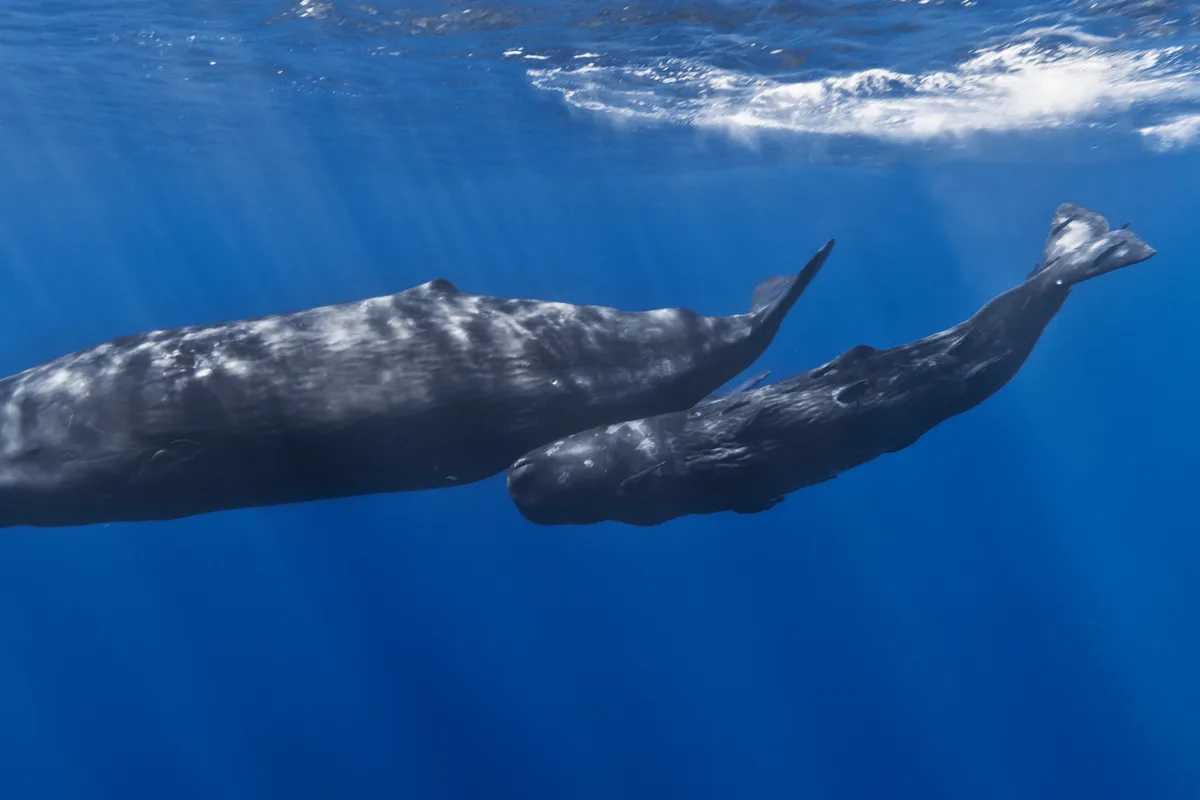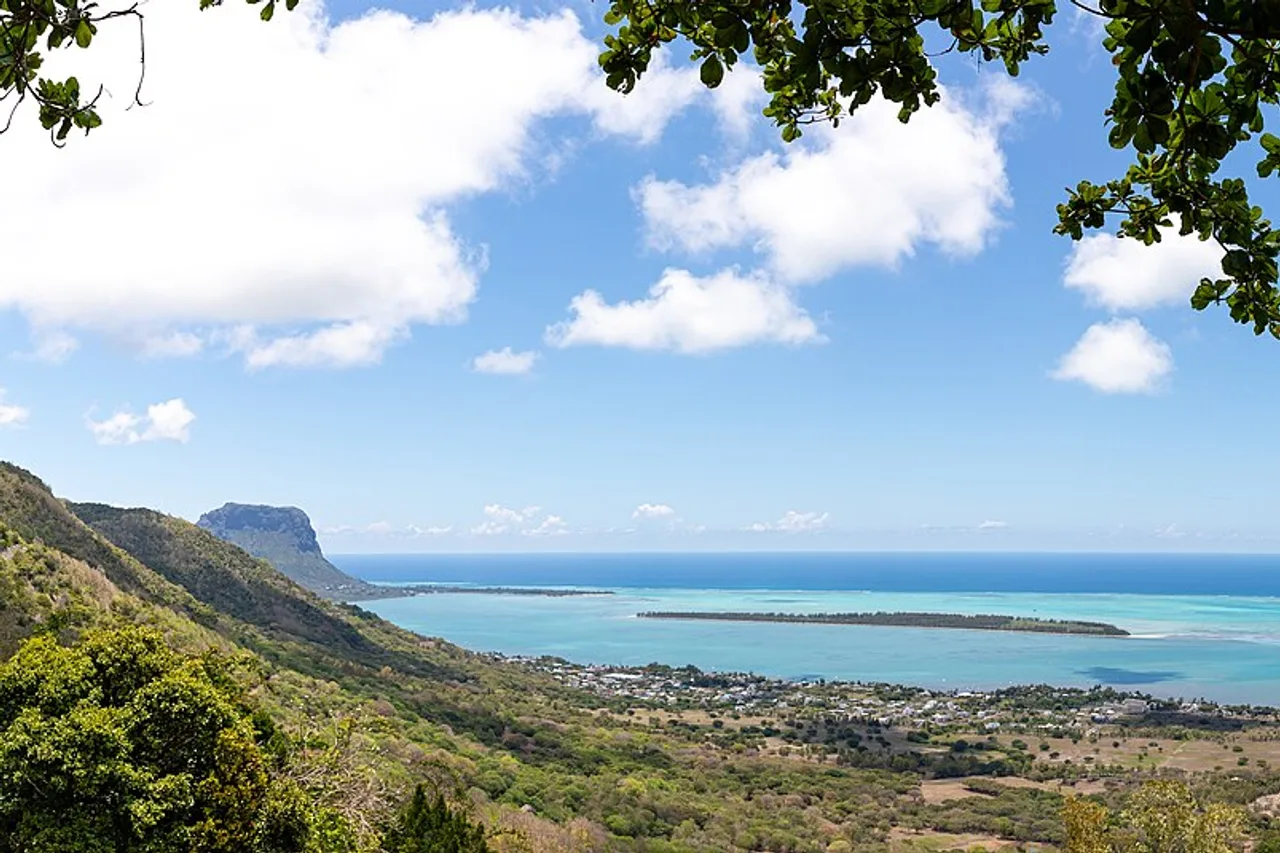
Yes, you can see sea turtles in Mauritius — with a bit of luck, on an ordinary snorkel in the lagoon. What many excursion sellers leave out: organised “swimming with turtles” is against the law in Mauritius, and the fisheries ministry spelled it out again in March 2026. Here are the species you may meet, where you are likely to cross paths, how to behave in the water and where the giant tortoises live on land — every fact checked on 3 November 2026. The right beaches are among the island’s 225 addresses, sorted by category.
Budget tip: in Mauritius, some activities can cost less. See how to save with discounts.
Which turtles live in Mauritius?
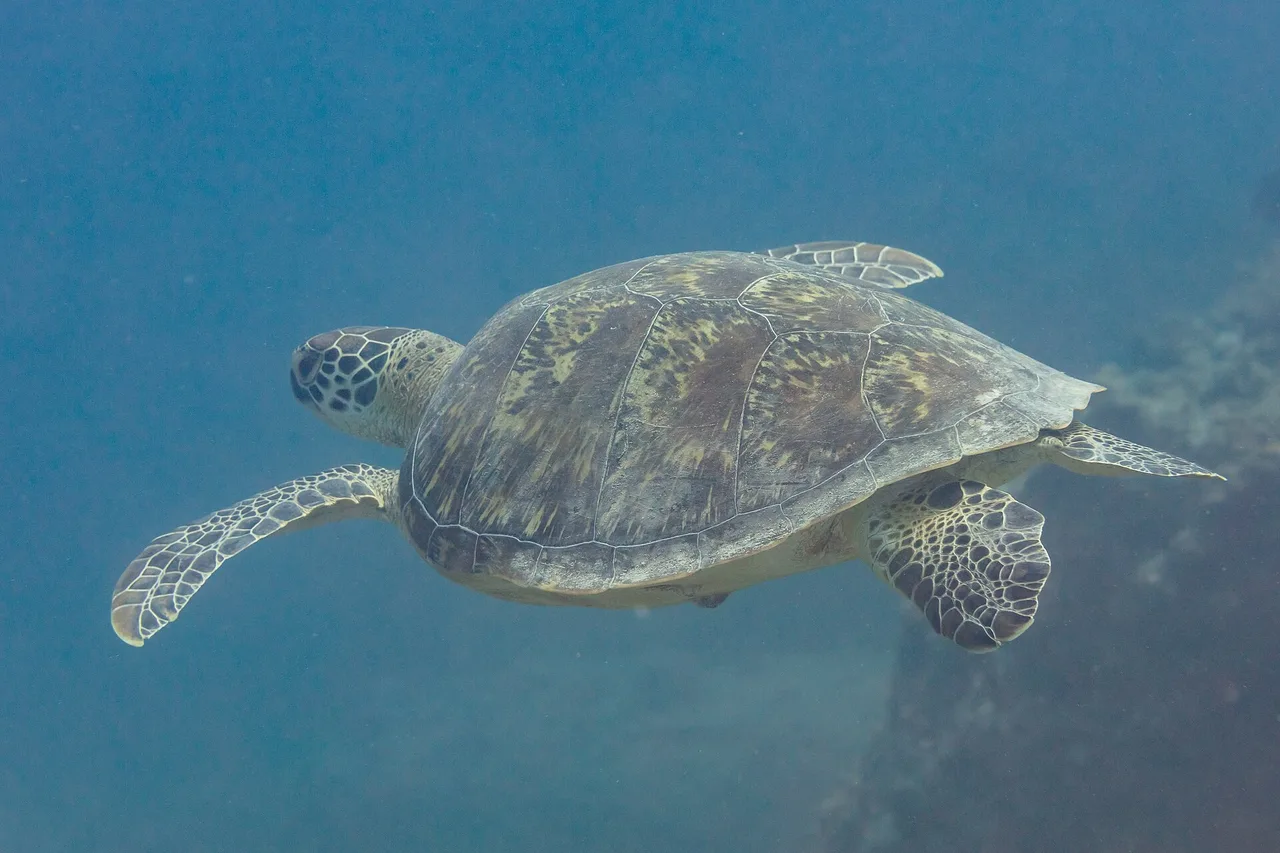
When people search for “turtles in Mauritius”, they usually mean one of two very different encounters. In the sea there are two species of sea turtle: the green turtle (Chelonia mydas), by far the most common in the island’s waters, and the rarer hawksbill turtle (Eretmochelys imbricata), recognisable by its narrow, hooked beak. According to Mauritius’s national report to the Indian Ocean marine turtle agreement (IOSEA), only these two species are regularly recorded; a loggerhead has been found stranded just once, in 2019.
On land you meet giant tortoises — though not the original ones. Mauritius’s native giant tortoises were wiped out by sailors and early settlers. The giants grazing in parks and reserves today are Aldabra giant tortoises from the Seychelles, deliberately introduced to Mauritius and Rodrigues — partly because, like their extinct predecessors, they spread seeds and help the forest regrow.
The law: “swimming with turtles” is banned
This is the part no advert mentions. The Fisheries Act 2023, Mauritius’s fisheries law, states in section 33 (3) that no person may take a marine turtle, “swim with” it “as a recreational activity”, harass it, intentionally feed it or kill it — on shore or at sea. Breaking the rule is a level 3 offence: a fine of up to 25 million rupees and up to two years in prison.
On 23 March 2026, the ministry in charge (Blue Economy and Fisheries) issued a public notice warning the tourism industry that commercial activities involving sea turtles are illegal. The trigger: boat trips “to swim with turtles”, for example at Trou aux Biches, Le Morne or Balaclava, still advertised online. So our advice is simple: don’t book any excursion that promises to “swim with turtles” — not even on the big booking sites. An ordinary snorkelling or catamaran trip is perfectly legal; if a turtle happens to pass, you watch it go by — nothing more.
Where to see sea turtles while snorkelling
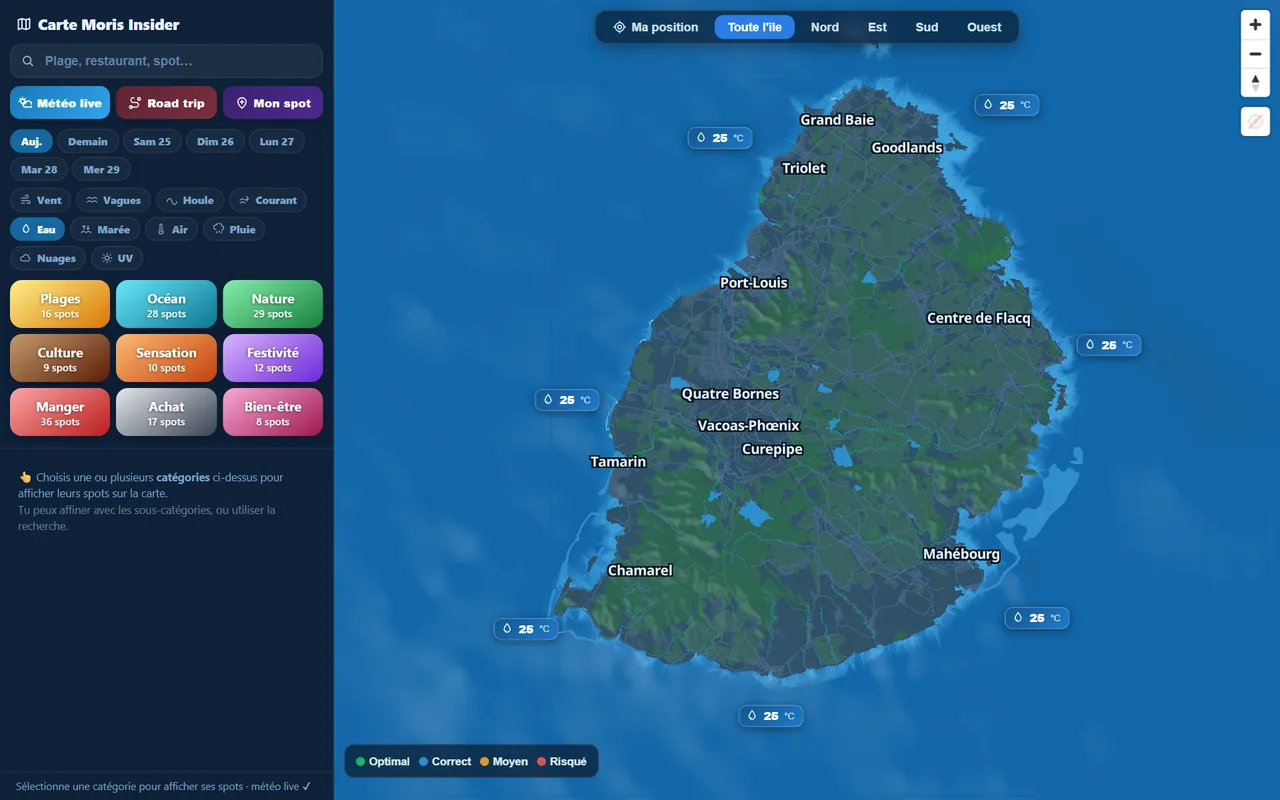
There’s no guarantee — turtles are wild and come when they please. But some lagoons are known for encounters, because the turtles graze on seagrass and algae there. Trou aux Biches in the north is the classic start: shallow, calm, clear water, a reef within fin’s reach, ideal for a first snorkel. A few minutes away lies Balaclava Marine Park, nicknamed Turtle Bay: a sheltered bay at the mouth of the Citron River, where you drift over coral while a turtle grazes nearby. The app lists every beach on the island with its quirks, from access to parking.
Other good chances: Pereybère, near Grand Baie, where turtles sometimes surface surprisingly close to the shore; the reef off Flic en Flac on the west coast; and the wide lagoon of Le Morne and La Prairie in the south-west. By boat you can reach Flat Island (Île Plate), about eleven kilometres off Cap Malheureux: popular with snorkellers, it is one of the few places where turtle nests have even been recorded. The full list of spots is in our guide Snorkeling in Mauritius: the 12 best spots.

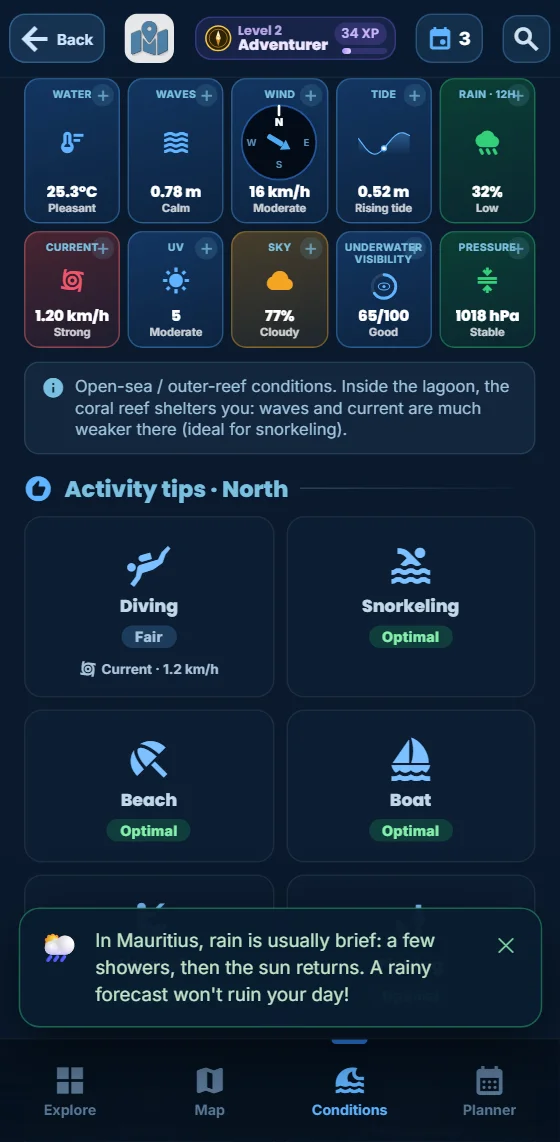
Conditions are best in the morning: the sea is usually calmer, visibility clearer and the well-known beaches still quiet. Whether a coast is any good for snorkelling that day is down to the wind — a look at the sea weather, zone by zone before you set off saves a lot of disappointment.
How to behave when a turtle appears
The encounter often lasts only seconds — and that’s exactly how it should be. The rules the ministry recalls fit in one sentence: the turtle decides how close it comes, not you. In practice:
- Keep your distance and stay calm — don’t swim towards the animal.
- Don’t follow it and don’t surround it, even as a group.
- Never touch it, never feed it — not even “just for a second” for a photo.
- Leave its way to the surface clear: turtles have to come up to breathe; hovering right above them stresses them.
- At the helm of a boat, slow down where turtles have been seen.
If you find an injured or stranded turtle, or see someone harassing animals, alert the Fisheries Protection Service — the easiest way is through your hotel reception or the police. To protect the reefs, the same logic applies: don’t stand on coral and don’t take coral or shells.
Giant tortoises on land: where to see them
For children (and most adults), the giant tortoises are often the highlight — and here, getting close is part of the visit, under the parks’ supervision. In the south, La Vanille Nature Park is the best-known address: founded as a crocodile park and tortoise reserve, you walk among its Aldabra giant tortoises. A smaller giant tortoise enclosure is part of the geopark at Chamarel’s Seven Coloured Earth — handy if you’re exploring the south-west anyway. Both are in the south and fit into a single day; the route can be worked out to the minute on real roads.
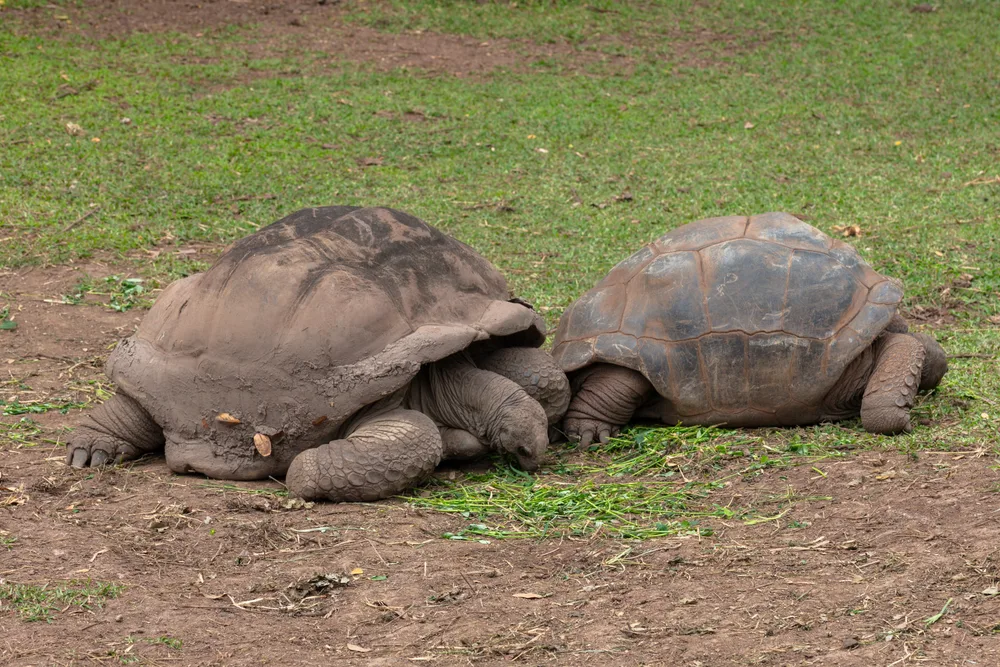
For conservation up close, there’s Île aux Aigrettes, off Mahébourg: the Mauritian Wildlife Foundation released twenty Aldabra giant tortoises there in 2000; they have roamed the islet freely ever since, spreading the seeds of rare coastal forest plants. The island can only be visited on a guided tour. And if you fly on to Rodrigues, the François Leguat Reserve keeps Aldabra giant tortoises among limestone caves where fossils of the extinct giant tortoises have been found.
Nests and hatchlings: rare, but real
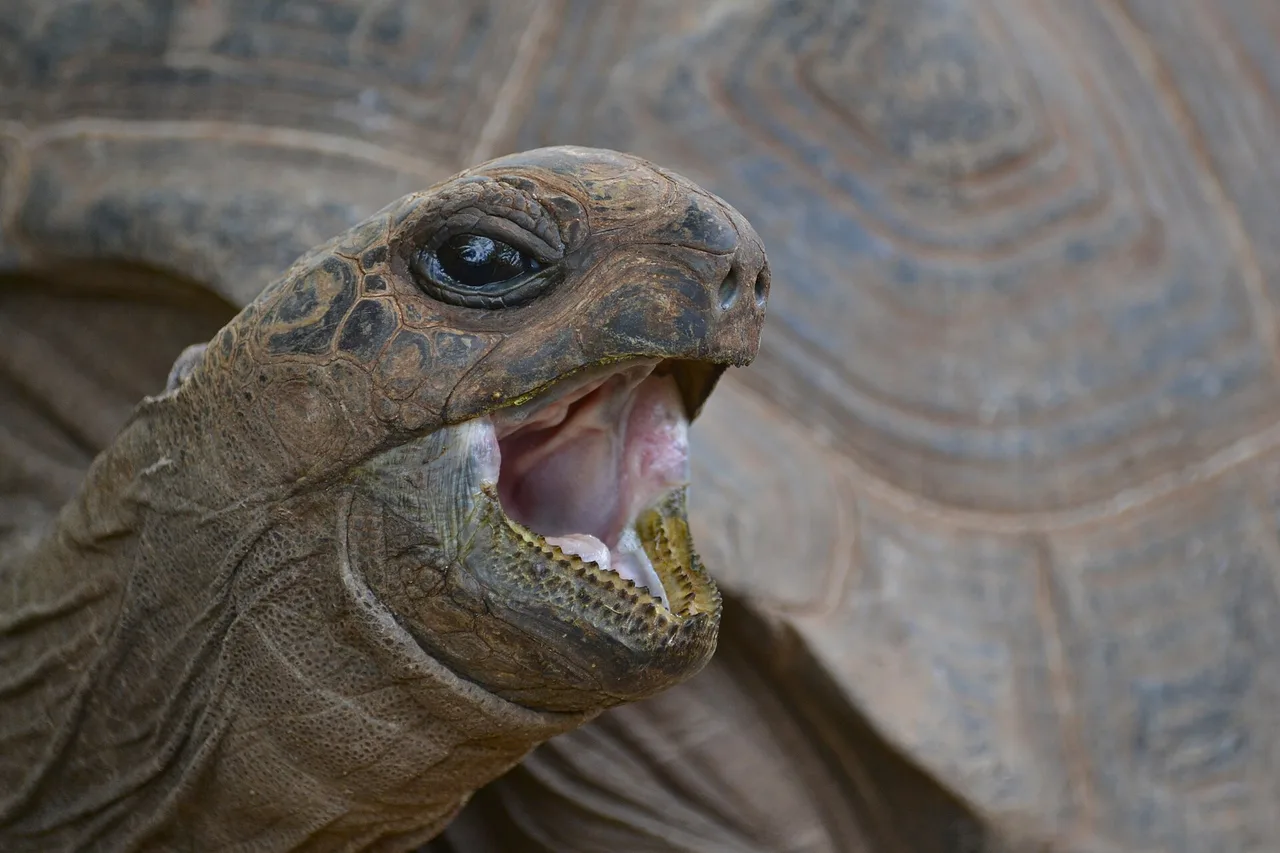
Sea turtles nesting on Mauritius has become rare: decades of hunting and coastal development have erased many former nesting beaches. Nests have still been recorded on the main island — according to the national report, at Gris Gris in the south and at Savinnia beach, as well as on Flat Island. Nesting is far more common on the remote outer islands of St Brandon and Agaléga; the hawksbill is thought to nest only on St Brandon.
February 2026 showed how seriously the authorities take it: on 24 February, a hotel guest found a fresh nest on a hotel beach on the west coast. The ministry activated the national action plan for stranded marine mammals and turtles, covered the nest with sand, cordoned off the area and had it checked several times a day until hatching, about 45 days later. If you come across a nest or tracks in the sand yourself: keep your distance, touch nothing, shine no light on it and tell the hotel or the authorities.
Good to knowFor accommodation, booking early pays off: the best-located places go first, and prices often climb as the dates get closer. Here you can check availability in Mauritius and current rates for your dates.
Compare places to stay in MauritiusHotels and apartments on Booking.comFull guide: Where to Stay in Mauritius: Which Coast to Choose
The right season and the right coast
Sea turtles live in Mauritius’s lagoons all year round — there is no “turtle season” for snorkellers. What changes is the sea. From May to September, the trade winds blow from the south-east: the north and west (Trou aux Biches, Balaclava, Pereybère, Flic en Flac) are then usually calmer than the east. From November to April, the water is at its warmest, but it’s cyclone season, and after heavy rain the rivers cloud the water — especially at river mouths such as Balaclava.
In practice: pick your coast the evening before, get in early and plan the day around the snorkel. The weekly planner puts the snorkelling days on the calm coast, and the outings on land on the windy days.
FAQ
Is it legal to swim with turtles in Mauritius?
No. Section 33 (3) of the Fisheries Act 2023 bans swimming with sea turtles as a recreational activity, harassing them or feeding them; offences carry a fine of up to 25 million rupees and up to two years in prison. Seeing a turtle on an ordinary snorkel and keeping your distance is allowed.
Where can you see turtles while snorkelling in Mauritius?
With some luck at Trou aux Biches, in Balaclava Marine Park (Turtle Bay), at Pereybère, off Flic en Flac, in the Le Morne lagoon and around Flat Island. Best in the morning, on a calm sea.
Which turtle species are found in Mauritius?
At sea, mainly the green turtle and, more rarely, the hawksbill. On land live Aldabra giant tortoises, which replace the island’s extinct native giant tortoises.
Where can you see giant tortoises in Mauritius?
At La Vanille Nature Park in the south, in the enclosure of the Chamarel geopark, on a guided tour of Île aux Aigrettes and, on Rodrigues, at the François Leguat Reserve.
Are “swim with turtles” excursions legal in Mauritius?
No. On 23 March 2026 the ministry publicly reminded operators that commercial activities involving sea turtles are illegal — even though such trips are still sold online.
Is the app paid?
Yes: €24.90 once, for life, no subscription. Every function included — the island’s 225 addresses, hour-by-hour weather zone by zone, routes, the weekly planner, the trip journal and partner discounts. 30-day money-back guarantee.