Yes, you can see whales in Mauritius — humpbacks in season, and sperm whales all year round. The island is one of the few places in the world with a group of sperm whales living permanently off its coast. What many boat operators don’t say: swimming, diving or snorkelling with a whale has been banned in Mauritius since 2012, and boats must stay 100 metres away. Here is when the whales are around, where to see them, exactly what the rules say and how to spot a decent trip — every fact checked on 3 November 2026. The west coast and its harbours are among the island’s 225 addresses, sorted by category.
Budget tip: in Mauritius, some activities can cost less. See how to save with discounts.
Which whales can you see in Mauritius?
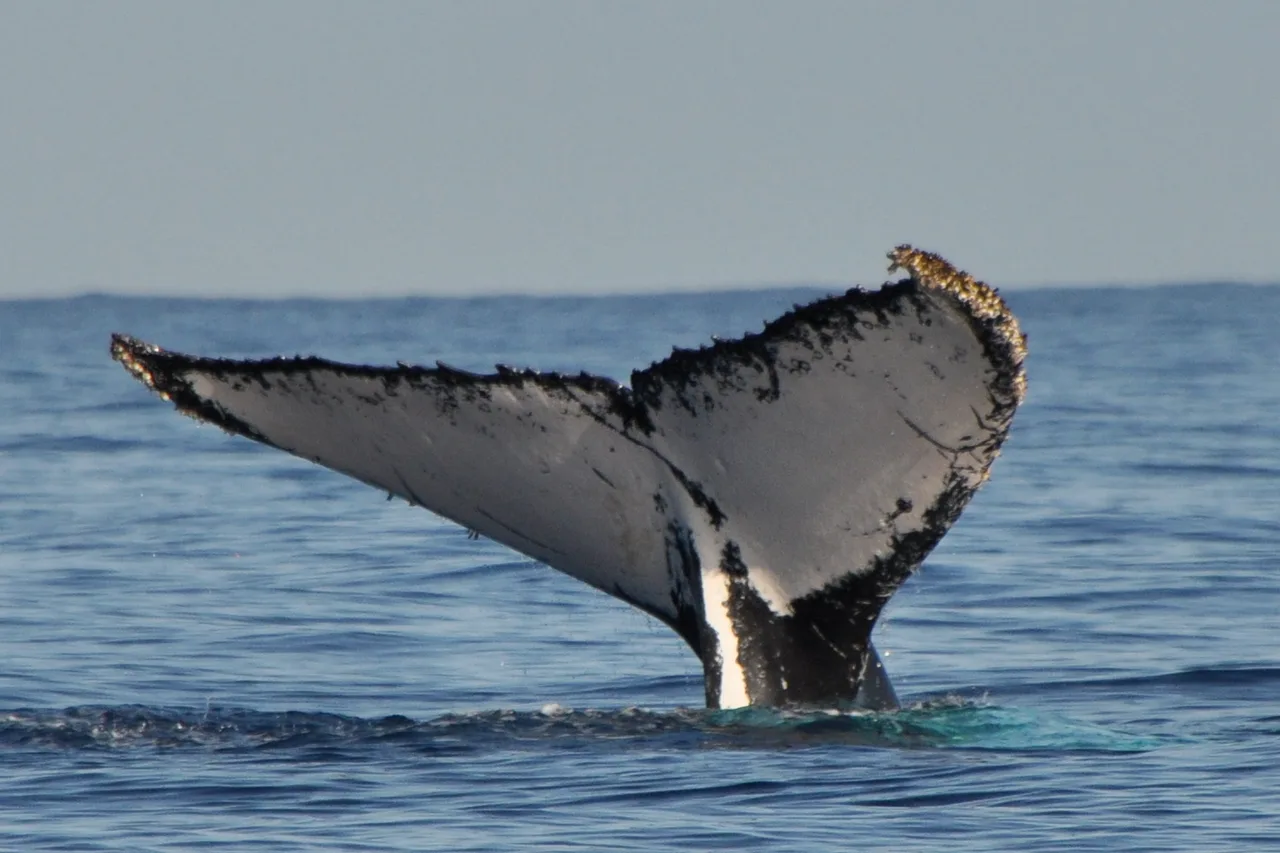
Two species make up whale watching in Mauritius. The humpback whale (Megaptera novaeangliae) is a seasonal visitor: during the southern winter it travels north from the cold waters of Antarctica to mate and calve in warmer water. In a scientific survey of the whales and dolphins of Mauritius (International Whaling Commission, 2020), it was the only species with a clear season. You recognise it by its long white pectoral fins, its breaches and the tail fluke it shows as it dives.
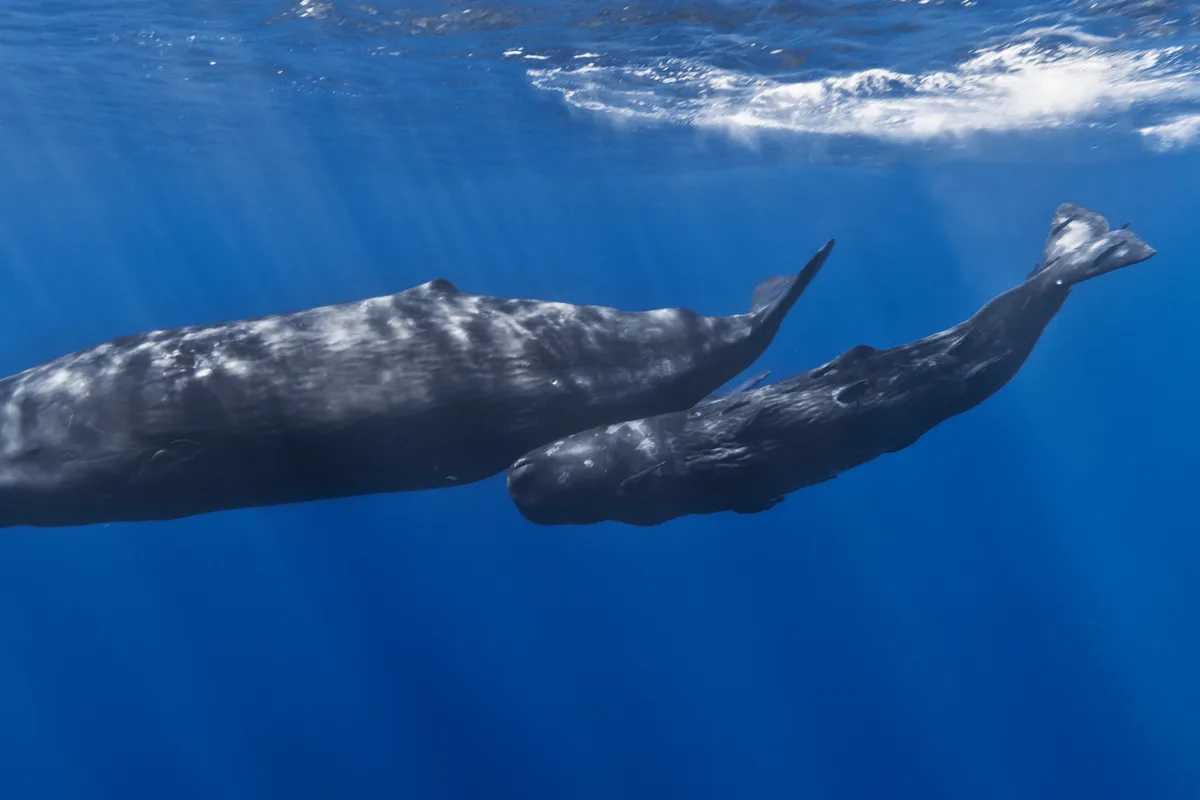
The second is the sperm whale (Physeter macrocephalus), the largest toothed predator on the planet. Off the west coast lives a group all year round: females, juveniles and calves. The conservation group MMCO, which has studied them for about ten years, spoke of around 30 animals in 2021; in 2026 the newspaper l’express counted only some 20 to 25, in a “critical situation”. The slope off the west coast is recognised as an Important Marine Mammal Area (IMMA): the sperm whales hunt and raise their young there.
The best time to see whales
Humpbacks: roughly July to October, into November in some years. The heart of that window, August and September, is considered the safest bet. Handy: those months fall in Mauritius’s dry, mild southern winter — pleasant for travelling, though with stronger trade winds and a sea that can be lively.
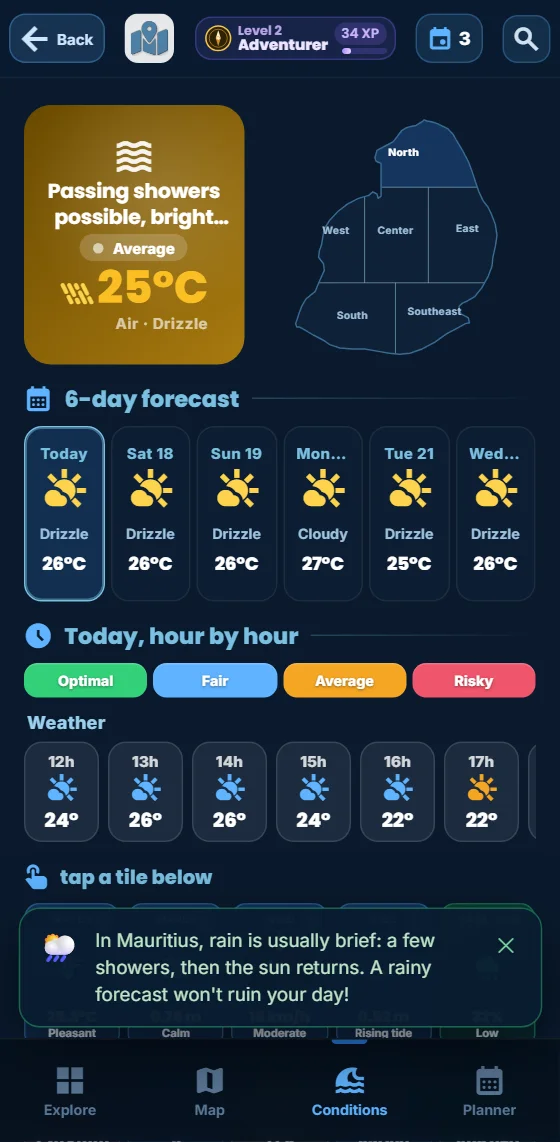
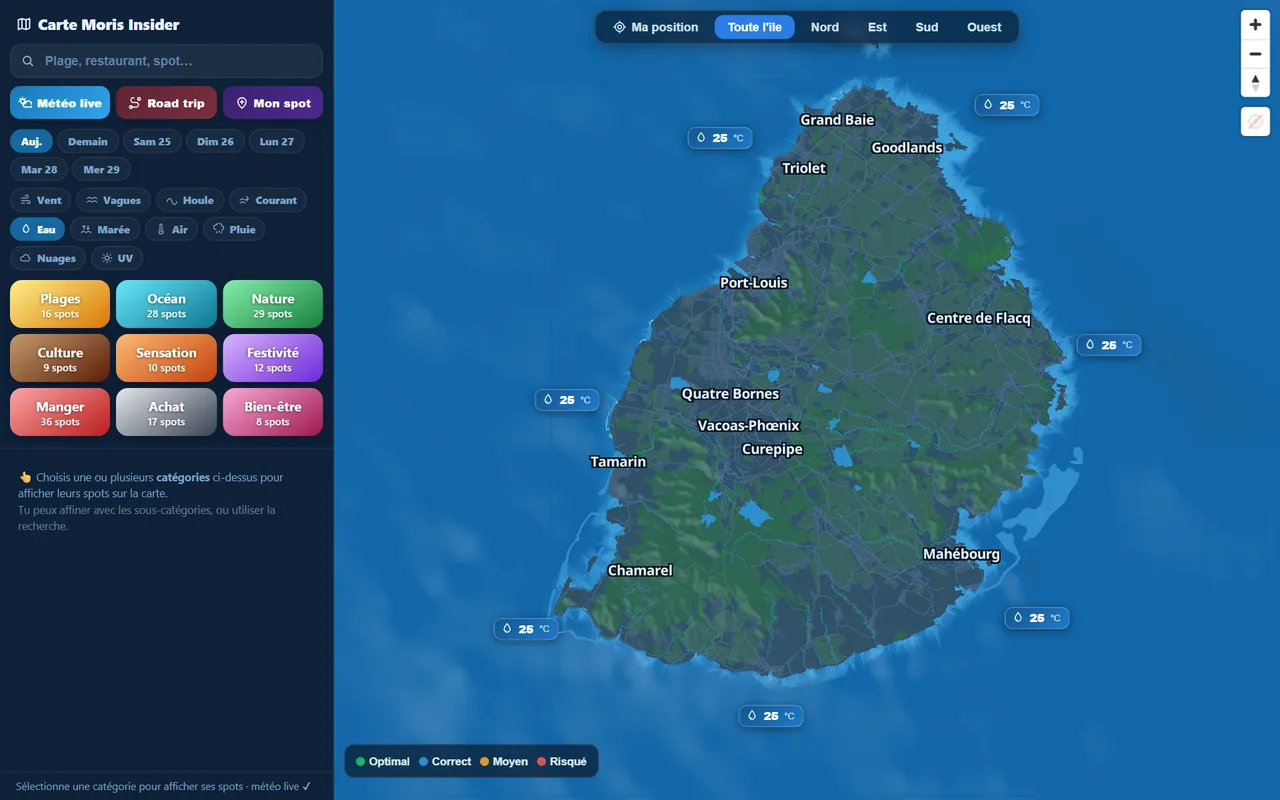
Sperm whales: all year, since the group lives offshore. Still no guarantee: sperm whales dive for a very long time and very deep. Come in summer (November to April) and there are no more humpbacks, but still a chance of the sperm whales and the west-coast dolphins. Whether the sea allows a trip on a given day is settled by the sea weather, zone by zone — in a strong wind, offshore gets uncomfortable fast.
Where to see whales in Mauritius
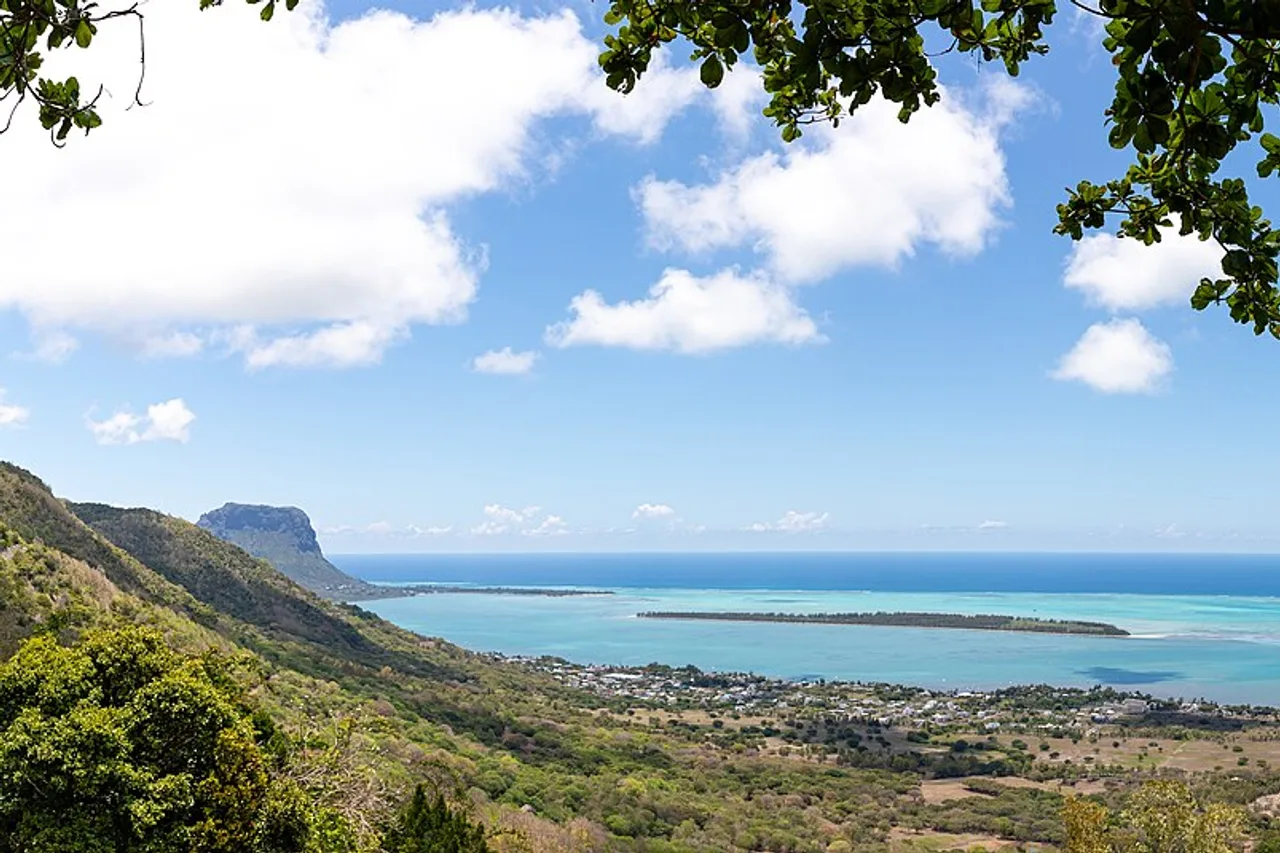
Whale watching happens almost entirely along the west and south-west coasts. Boats leave mainly from Tamarin and Black River (Rivière Noire), some also near Le Morne. They are the same harbours as the dolphin trips: the dolphins rest in the bays in the morning, while the whales pass further out along the slope. Many trips therefore combine both — see our guide Swimming with dolphins in Mauritius: the honest guide.
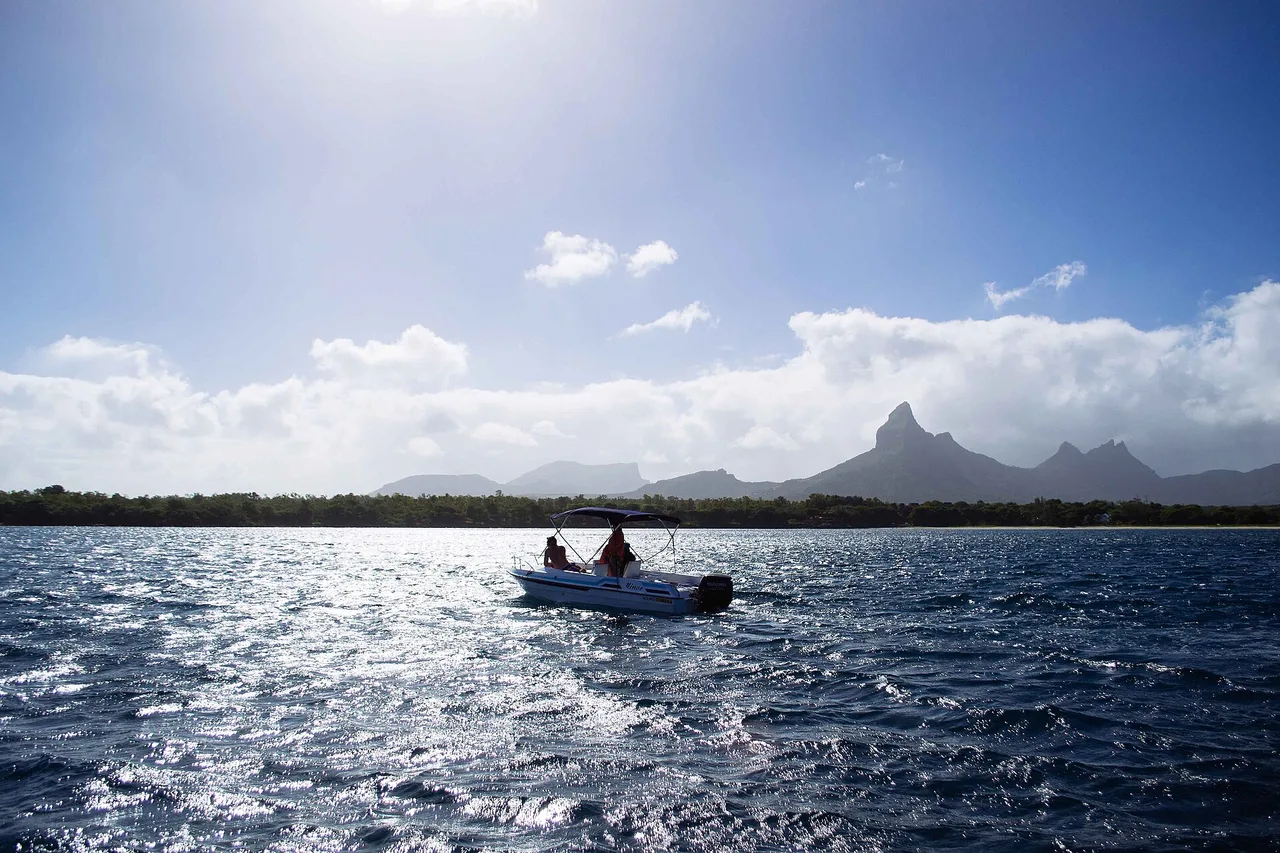
Trips start early: the law only allows paid watching trips between 6 am and noon. If you’re staying in the north or east, allow for the drive — the route can be worked out to the minute on real roads, and Grand Baie to Tamarin takes noticeably longer than the map suggests.
The law: what is banned on the water
The rules are set out in the Tourism Authority (Dolphin and Whale Watching) Regulations 2012, in force since 1 November 2012. The essentials for whales:
- Swimming, diving or snorkelling with a whale is prohibited. (Swimming with dolphins is allowed but strictly regulated — not with whales.)
- 100 metres of distance: no boat may enter this zone around a whale (50 metres for dolphins).
- Between 100 and 200 metres: no-wake speed, approach from the side on a parallel course, never through the middle of a pod, no sudden changes of course or speed.
- Never approach from behind or head-on, never circle, no feeding, no touching, no noise to attract the animals.
- Kitesurfing, jet-skiing, parasailing, diving and windsurfing are banned within 500 metres of a whale or dolphin.
On top of that, the 2023 fisheries law bans harassing or feeding marine mammals. In short: you watch a whale from the boat, at a distance — you have no business in the water with it.
The uncomfortable truth: rules without enforcement
On paper, Mauritius is strict. In practice, it’s another story. In November 2025, the tourism minister admitted that the 2012 rules had never really been enforced. In April 2026, after a parliamentary question, l’express reported that around 100 boats operate on the south-west coast against 278 licences issued, and that more than 35 boats can surround a single group of whales or dolphins. Illegal swims with sperm whales reportedly sell for 150 to 190 euros, against 90 to 110 euros for a standard watching trip. Researchers at the MMCO are calling for a strict ban on swimming with whales.
In October 2026, the tourism ministry announced it would tighten the 2012 rules and enforce them through a Tourism Authority enforcement squad. Whether that reaches the water remains to be seen. For travellers, it means one thing: choosing the operator is the most effective protection — and with such a small group of sperm whales, every trip counts.
How to spot a responsible whale watching trip
A few questions before booking separate the good operators from the rest — a serious skipper is happy to answer them:
- Is it a watching-only trip? Anyone offering to swim with whales, or “guaranteeing” them, is out.
- Does the boat keep 100 metres and cut the engine near the animals?
- How many boats at the same time? Small groups and operators who steer clear of crowds are the better choice.
- Is there a briefing on board? The law requires licensed operators to give passengers the rules in writing.
And if someone on board wants to jump in anyway, or the boat charges at the animals, you are fully entitled to say so. For planning, it pays to put the whale trip on a calm morning in the weekly planner — in a strong wind, stay ashore and reschedule.
Three practical points: binoculars and a camera with a zoom beat any underwater camera, since with whales you stay out of the water. If you get seasick, take your remedy before leaving — out by the slope, the swell is noticeable. And sunscreen, a hat and water on board, even on a cloudy winter morning.
Whales, dolphins, turtles: what you may do in the water
Mauritius’s three big marine encounters follow three different rules, and that’s often what causes confusion. Dolphins: swimming is allowed with a licensed operator, but only in the morning between 6 and 9 am, with at most three people in the water at once and 50 metres of distance for the boat. Whales: watching only, from the boat, at 100 metres. Sea turtles: swimming with them as a recreational activity has been banned since the 2023 fisheries law — all explained in our article Sea turtles in Mauritius. Know these three lines and you won’t go wrong on the water.
And for the days without a boat: the calm lagoons of the west coast, its beaches and snorkelling spots are in the app, among the west-coast addresses with their quirks — from access to parking.
FAQ
When is the best time to see whales in Mauritius?
Humpbacks are around from roughly July to October, sometimes into November; August and September are the safest months. Sperm whales live off the west coast all year round.
Can you swim with whales in Mauritius?
No. The Tourism Authority (Dolphin and Whale Watching) Regulations 2012 prohibit swimming, diving or snorkelling with a whale, and boats must stay 100 metres away. Swimming with dolphins, on the other hand, is allowed but strictly regulated.
Where can you see whales in Mauritius?
Off the west and south-west coasts. Trips leave mainly from Tamarin and Black River, some from Le Morne, and legally run between 6 am and noon.
Are there sperm whales all year in Mauritius?
Yes, a small group lives permanently off the west coast: MMCO spoke of around 30 animals in 2021, l’express of some 20 to 25 in 2026. Seeing them is never guaranteed.
How do you recognise a responsible whale watching trip?
Watching only, 100 metres of distance, engine in neutral near the animals, no crowd of dozens of boats and no invitation to get in the water. Licensed operators must hand out the rules in writing on board.
Is the app paid?
Yes: €24.90 once, for life, no subscription. Every function included — the island’s 225 addresses, hour-by-hour weather zone by zone, routes, the weekly planner, the trip journal and partner discounts. 30-day money-back guarantee.