While half of Europe turns the heating back on, the continent’s mildest winter is four hours away by plane: 20 to 22 °C in the afternoon on Tenerife’s south coast, six to seven hours of sunshine a day — and a sea at 19–21 °C, warmer than the English Channel in high summer. This guide covers what winter really changes on the island: where it is warm (and where it isn’t), the rules that snow on Mount Teide imposes, whether swimming is worth it, and why the “off season” is actually high season. Facts checked on 18 November 2026.
Why winter works in Tenerife
Tenerife sits at the latitude of the Sahara but right in the trade winds — the result is a climate without extremes. In winter, on the south coast, that means 20–22 °C by day and 15–16 °C at night, with an average of six to seven hours of sunshine a day. February often adds a touch more in the south, comfortably passing 22 °C. For comparison: in Britain you wait until May for numbers like that.
Honesty first, though: Tenerife in winter is early summer, not high summer. A jacket comes out in the evening, and if you feel cold in your accommodation it is usually indoors — many buildings here are designed to stay cool, not to be heated. Hence the rule: the further south-west you stay, the more reliable your sunny day.
South or north: two islands in one winter
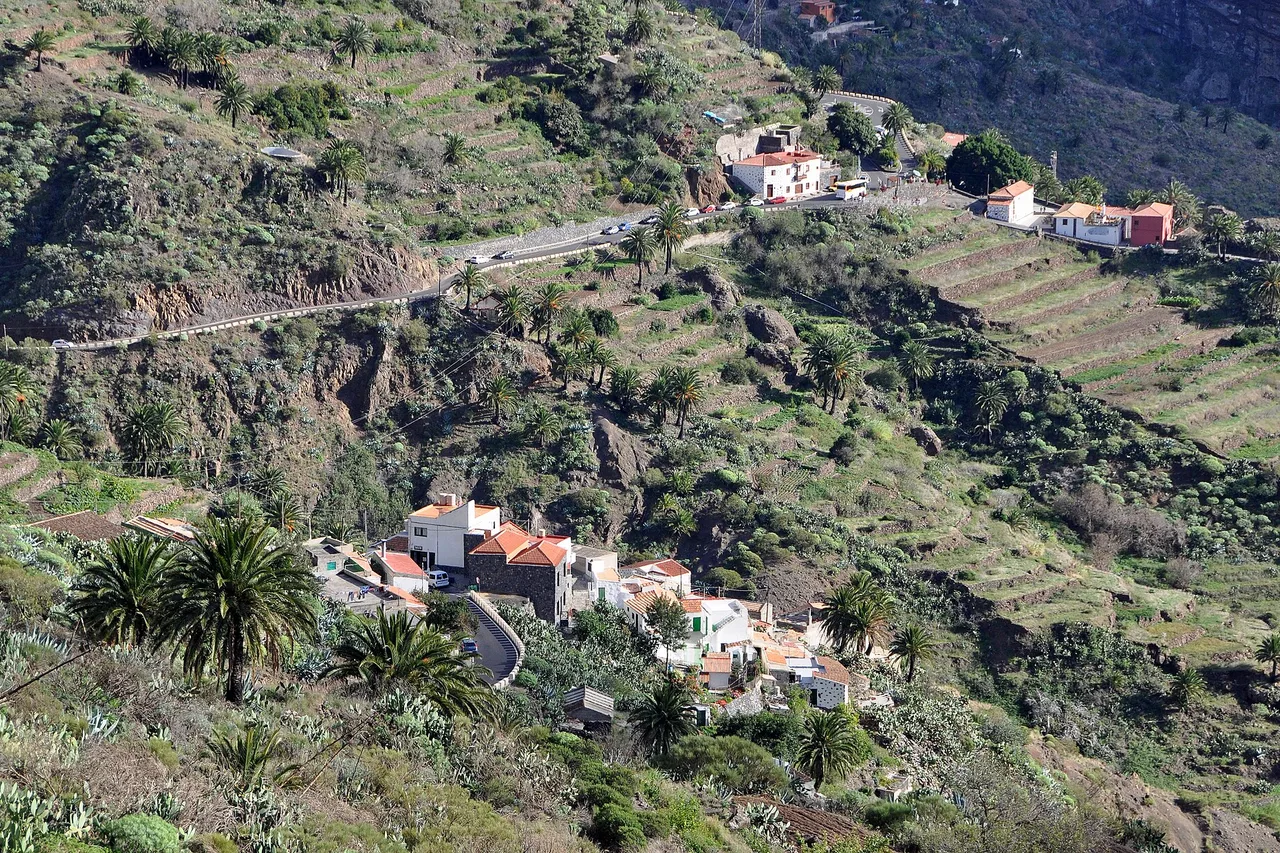
The island’s most important winter rule isn’t in the forecast, it’s on the map: the trade wind piles clouds against the northern slopes while the south stays in the rain shadow. In winter that contrast is at its sharpest — the south collects sunshine hours, the north collects the green. For beach weather, stay between Los Cristianos and Costa Adeje; for laurel forest, terraced fields and empty trails, head north.
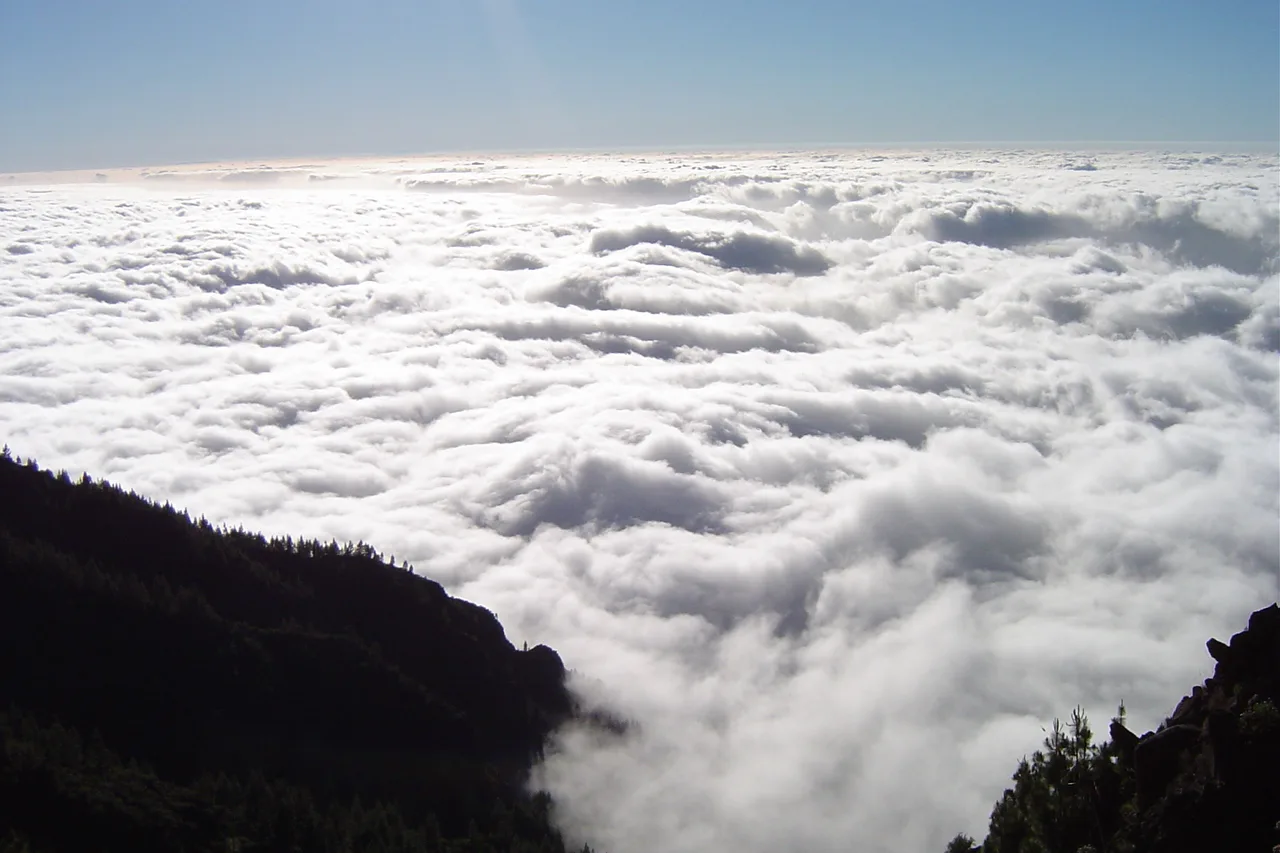
Which leads to the most useful sentence in this article: never judge the day from your window. A grey morning in Puerto de la Cruz says nothing about Costa Adeje, and vice versa — two opposite weather systems often sit 40 minutes’ drive apart. A rainy day in the north is normal in winter; it only becomes a lost day if you don’t get in the car.
Good to knowIn high season, cars get booked up fast and prices rise as the dates approach. Comparing local rental companies before you go lets you lock in the car and the rate in Tenerife, with deposit and insurance shown upfront.
Rent a car in TenerifeCompare rental companies on Discover CarsSnow on Mount Teide: beautiful, but with rules
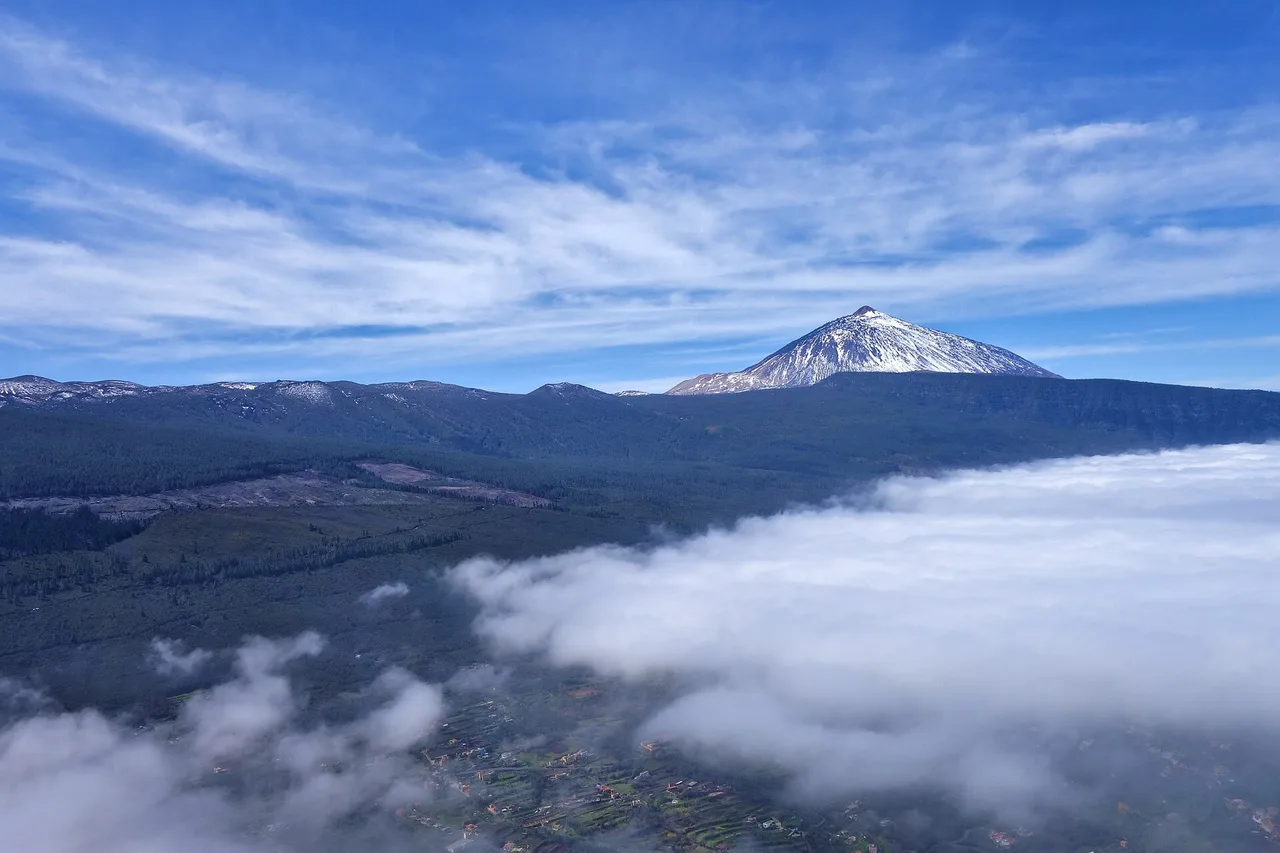
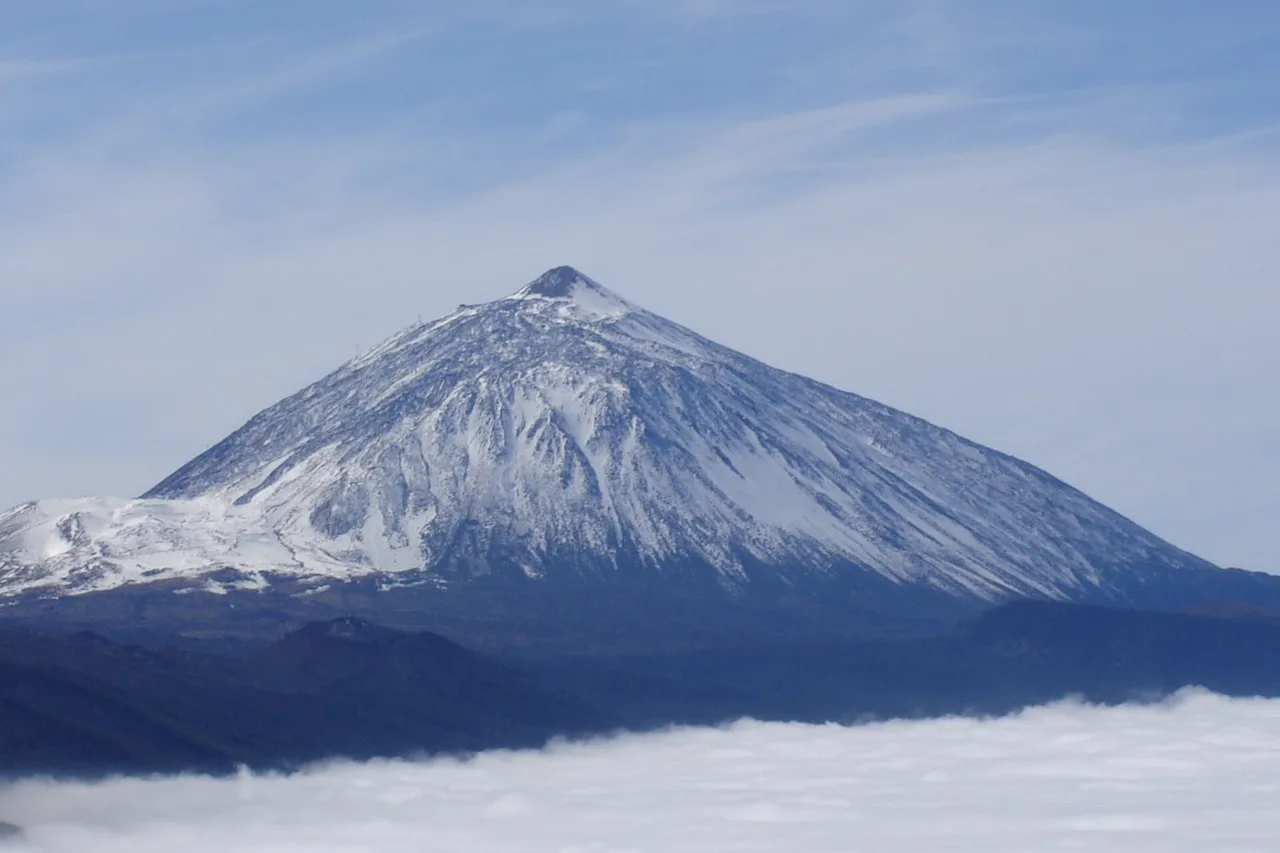
Almost every winter the same scene plays out: an Atlantic low passes through, and next morning Mount Teide wears a white cap — snow above roughly 2,000 m while swimmers paddle below on the coast. It is Spain’s most improbable postcard, and half the island drives up to see it.
Which is exactly why the trip has rules. When there is snow or ice, the Cabildo closes the access roads: in February 2026, for instance, the TF-21 stayed shut between La Caldera and the cable car, along with its Boca Tauce entrance, and the TF-24 from the Los Loros junction, until conditions were safe again. After heavy snowfalls a one-way system has also been used — up via the TF-21, down via the TF-24. Before setting off, check the live status: the Cabildo de Tenerife, AEMET or 112.
Full guide: Renting a Car in Tenerife: Pitfalls and Smart Tips
Up top, high-mountain rules apply: freezing nights, fierce sun, and you still need a permit or a cable-car ticket for the summit — the details are in our Mount Teide guide. The reward exists nowhere else in Europe: a snowball fight at 2,300 m in the morning, barefoot on the sand in the afternoon.
Swimming in December: yes — but honestly
Water temperature is the number the brochures like to round up. The honest figure: around 19–21 °C in winter, bottoming out in January and February. That is invigorating, not Caribbean — but it is swimming, not cold-water therapy, and after two minutes it feels fine. If you feel the cold, aim for midday or the hotel’s heated pool.
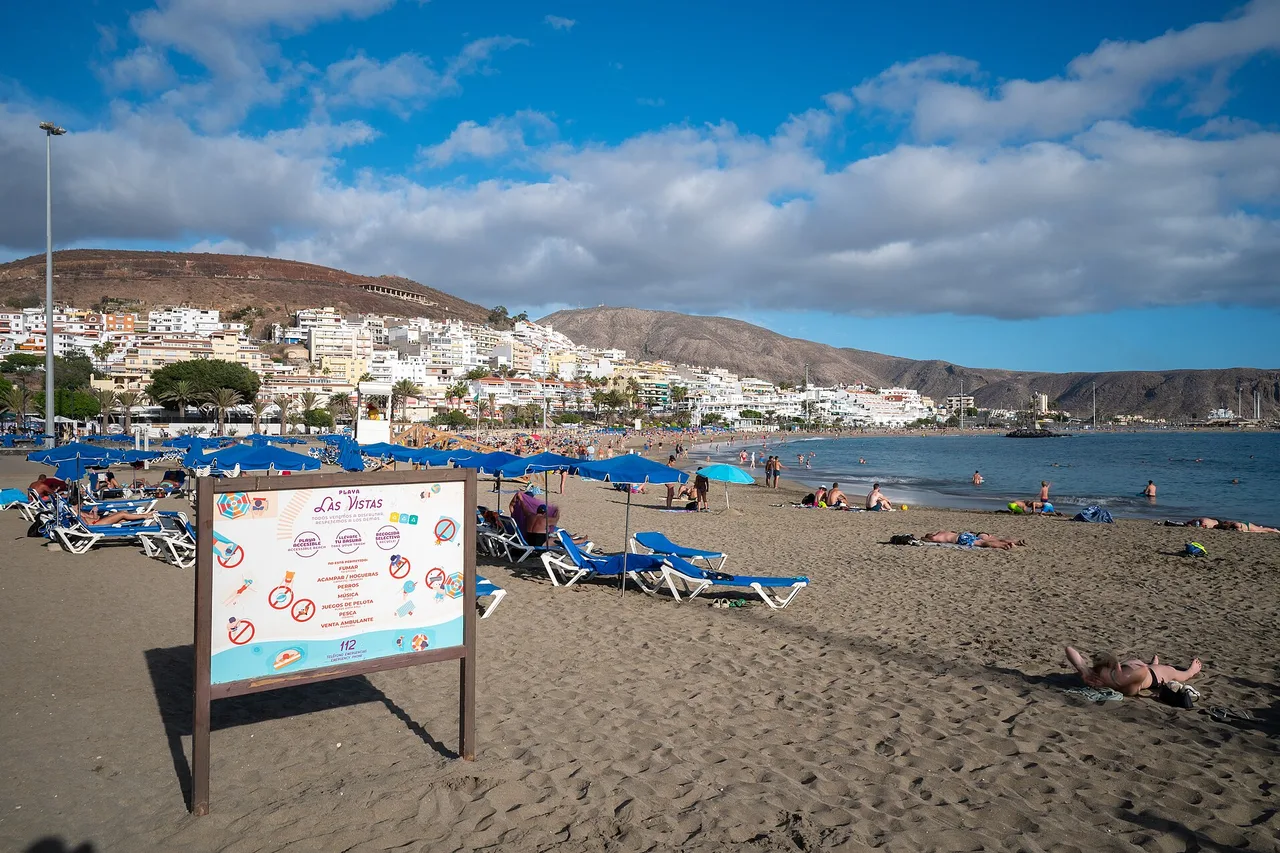
Beach choice matters more than the calendar. The most reliable are the sheltered beaches of the south-west — Las Vistas, El Duque, Fañabé — where breakwaters keep the water quiet. The full tour is in our guide to Tenerife’s best beaches.
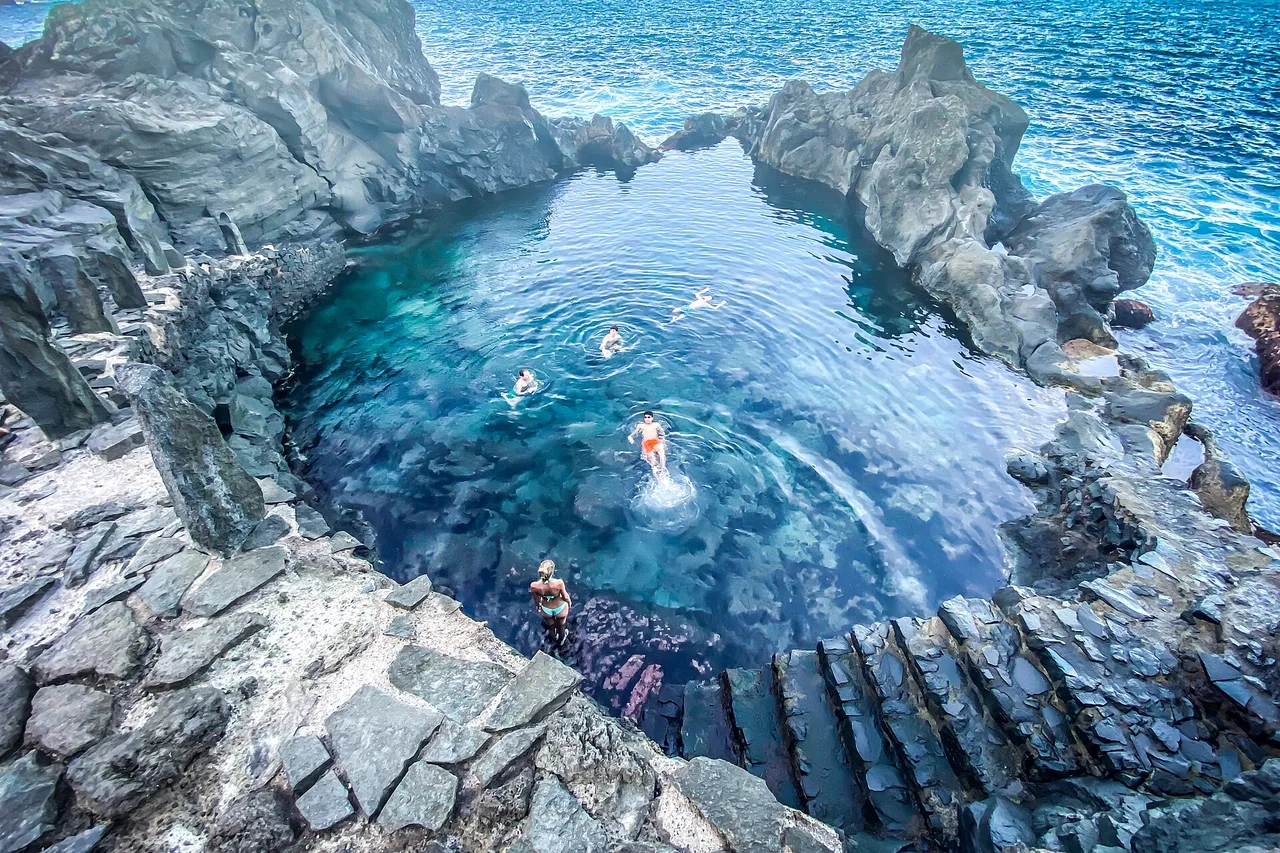
And now the part this blog never leaves out: winter is Atlantic swell season. The wild northern beaches — Benijo, El Bollullo — become magnificent to look at and dangerous to swim: currents, breakers, no lifeguards. The natural pools of the north coast should only be visited in winter when the sea is calm, ideally at low tide — if the swell is coming over the rim, stay out. And everywhere: red flag means nobody in the water, not even up to your ankles.
Carnival, almond blossom, whales: the winter calendar
Winter is also when Tenerife celebrates hardest. The highlight is the Santa Cruz carnival, one of Europe’s biggest street festivals: in 2027 its theme is “Roma Eterna: El Imperio del Carnaval”, with the opening gala on 22 January and the street carnival from 19 to 28 February. What awaits you there — from the carnival queen election to the “burial of the sardine” — is in our carnival guide.

Quieter but just as photogenic: the almond blossom around Santiago del Teide. From late January into February the slopes turn pink and white; the town organises guided walks every year — in 2026 the campaign ran from 24 January to 22 February, and the town hall publishes the 2027 dates. Out at sea, nothing changes at all: the pilot whales off Los Gigantes are residents — whale watching works just as well in January as in July.
Good to knowIn high season the best slots go fast: booking ahead lets you pick your time, and many activities can be cancelled free of charge up to the day before.
See activities in TenerifeTours, tickets and day trips on GetYourGuideFull guide: Things to Do in Tenerife: 25 Unmissable Spots, Chosen by Locals
Practical: prices, packing, daylight
The key planning truth first: winter is high season. Half of northern Europe has the same idea, and the most expensive stretch of the year runs from 20 December to 7 January. If you are flexible, take January after the holidays: noticeably quieter and often cheaper. Either way, book accommodation and a car early — prices climb as the dates approach. To pick your corner of the island, see where to stay in Tenerife.
Packing is all about layers: swimsuit and t-shirt for the coast, fleece and windbreaker for the evening, one warm layer more for Mount Teide — there can easily be 15 degrees between the beach and the national park. Days are shorter than in summer but longer than at home: sunset is after 6 pm, giving ten to eleven hours of daylight. Around the holidays, check opening times before driving far.
Which leaves the question: is winter the best time to come? The detailed month-by-month answer is in our guide to the best time to visit Tenerife; and if you have already booked, our 7-day itinerary organises the route — in winter, with the south as your base and the north as a day trip, not the other way round.